What Are Tiny Japanese Restaurants Called?
The Japanese words for tiny restaurants: izakaya, yokocho counters, tachinomi standing bars and Golden Gai snack bars, what they cost and how tours get you inside.
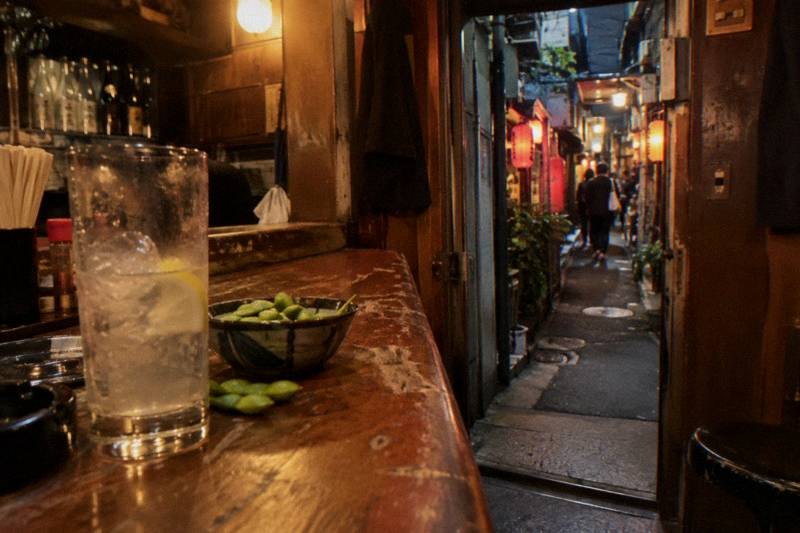
Tiny Japanese restaurants are most often called izakaya when they serve food and drink, yokocho when a cluster of them packs a narrow alley, tachinomi or tachinomiya for standing bars with no seats at all, and snack bars or sunakku, tiny hosted lounges where a mama-san serves regulars that seat a handful of regulars. Each word marks a different species of small. An izakaya is a pub that cooks; a yokocho is the alley it lives in; a standing bar is defined by the absence of chairs; and a snack bar is defined by the conversation, not the menu. Tokyo has thousands of all four, and the smallest districts pack dozens of them into a couple of thousand square metres.
The words matter because they predict what a visit will feel like and what it will cost. An izakaya counter usually adds a small unordered appetizer called otoshi to the bill, a per-person seating charge rather than a tip. A standing bar skips seating entirely, which is part of why a drink there costs so little. A yokocho stall may be cash only, and a Golden Gai bar may add a cover charge of its own. Learn the four words and the bill stops surprising you.
That vocabulary is also why guided crawls exist. A local guide who knows which alleys welcome visitors, which counters take cards and which doors are regulars-only removes most of the friction. The Budget Crawl, No Meal Included option runs about three hours through Shinjuku from $36.15 per person and is rated 4.9 across 2,911 reviews, a low-commitment way to see inside several of these places in one evening. If tiny-bar curiosity is what brought you here, the three crawls further down this page cover the full spread of formats and prices.
The rest of this page walks through each name in turn: where the word comes from, what the venue actually looks like, what you should expect to pay, and how a first-time visitor gets through the door without a word of Japanese.
What Does Izakaya Mean, And Why Are They So Small?
Izakaya combines the words for "stay" and "sake shop", and it names a casual drinking-and-eating house where small shared dishes arrive steadily while the drinking happens; they are small because Tokyo rents reward tiny footprints and because intimacy is the product, with counters of six to ten seats common. The word's history is practical: customers once bought sake to take away, then started staying to drink it on the spot. The staying became the business. Today an izakaya can be a national chain or a five-seat counter run by one cook, but the tiny end of the range is where the category earns its reputation.
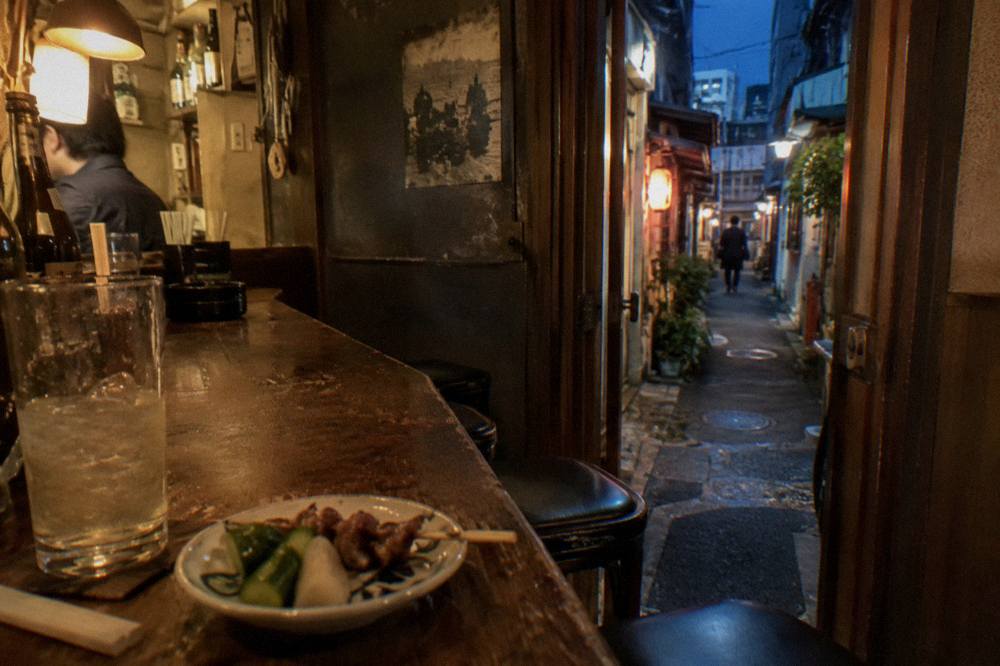
Smallness shapes the meal. At a counter you watch the grill, the cook watches you back, and dishes land one at a time as they are ready rather than all at once. Yakitori skewers at casual counters commonly run 150 to 400 yen each, so a meal assembles itself from a dozen small orders rather than one large plate. Many counters seat so few people that a party of four may be split across two shifts of seating, and the cook may only serve what fits on the counter in front of you.
The otoshi charge deserves a line of its own because it confuses first-time visitors more than anything else. A small unordered appetizer arrives at the start; it functions as a per-person seating or table charge and appears on the bill at many izakaya. At Omoide Yokocho the charge is commonly around 300 to 500 yen and comes with a small starter. It is not a tip, it is not optional, and leaving cash on the table on top of it is not expected, since tipping is not customary in Japan for restaurants, bars, taxis or hotels, as the Japan National Tourism Organization states plainly.
For visitors who want the izakaya experience without the language risk, guided versions exist across the city. The Ueno Walk, Exactly 10 Tastings option is a 3.5-hour walking tour rated 4.76 across 38 reviews, from $107.98 per person, built entirely around small local eateries. In Shinjuku, the Izakaya Crawl with the cultural angle runs three hours, is rated 4.94 across 256 reviews and starts from $129 per person. Both are described as taking groups into places an unaccompanied visitor would struggle to find, let alone order in.
| Type | Typical size | What defines it | Typical extra charge |
|---|---|---|---|
| Izakaya counter | 6 to 15 seats | Cooked food plus drinks, dishes arrive in waves | Otoshi seating charge, often 300 to 500 yen at market-district counters |
| Yokocho stall | 4 to 10 seats | A single alley facing, usually one specialty | Set by each shop; cash still common |
| Tachinomi standing bar | Standing only | No seats, quick drinks, cheapest format | Usually none |
| Golden Gai snack bar | 5 to 8 seats | A bar tended by an owner-host, regulars culture | Cover charge commonly 500 to 1,500 yen |
For a fuller breakdown of the word itself, see our longer piece on what izakaya means in Japanese.
What Is A Yokocho, Tokyo's Tiny Restaurant Alley?
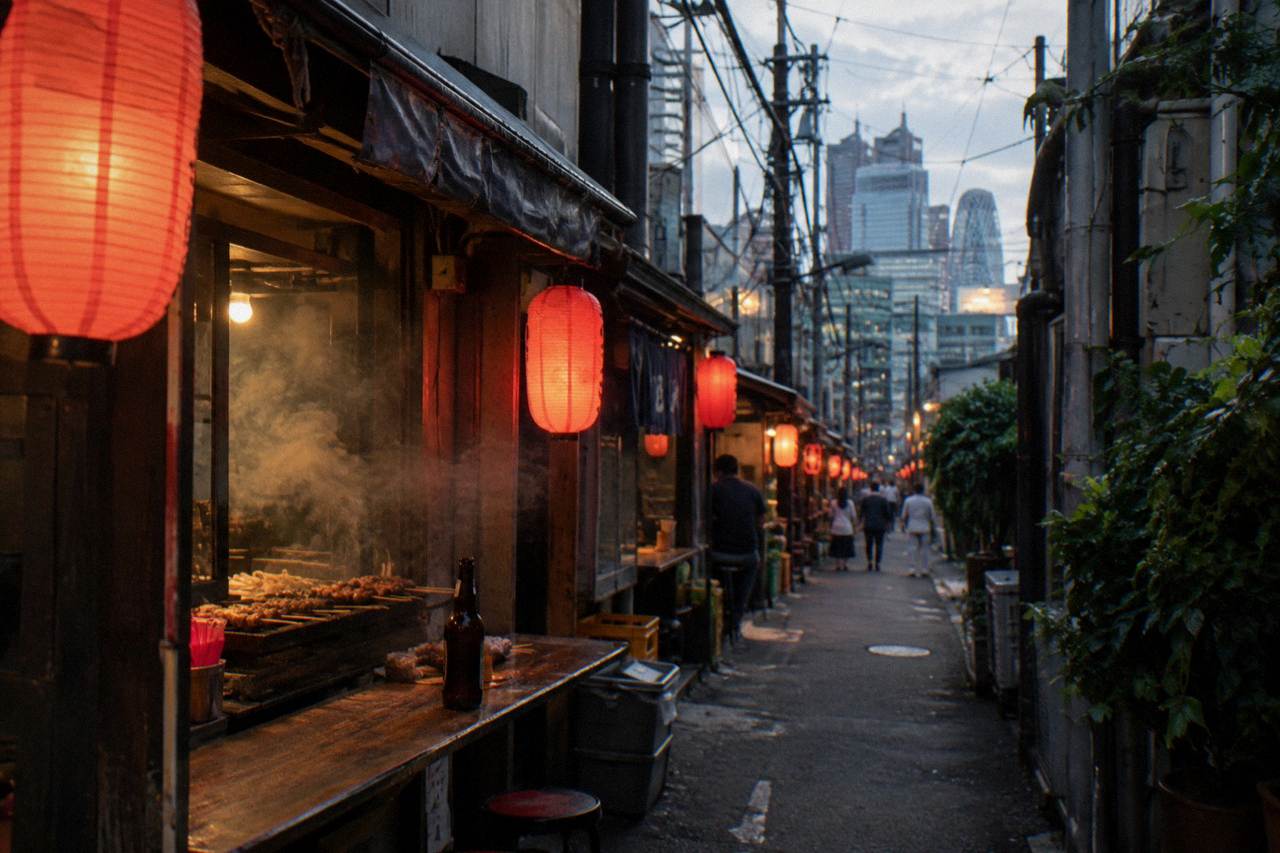
A yokocho is a narrow side-alley of micro-bars and food stalls, the name coming from the words for "side" and "alley"; the most famous in Tokyo is Omoide Yokocho beside Shinjuku Station's west exit, where roughly 80 premises, about 60 of them bars and restaurants, occupy around 2,000 square metres, according to the district's own official site. The lane's official English guide page describes its post-war origins and its modern identity as a cluster of motsuyakiya and yakitoriya, offal and chicken skewer specialists. Walk it and the word stops being abstract: the whole district is smaller than a single supermarket car park, yet it holds more kitchens than many mid-sized towns.
Yokocho hours are set shop by shop, with no alley-wide schedule, though most yakitori and motsuyaki counters open from around 5 p.m. until midnight or later and the lane itself is always walkable. A typical spend for skewers and drinks runs 2,000 to 3,000 yen per person, and cash remains common, with some counters accepting cards or QR payment but preferring cash for small tabs. Neither fact is a promise; each shop posts its own hours and its own payment rules at the door.
The practical traps are few but real. Some counters are cash only, so carry yen. Some add the otoshi charge described above, so check the bill before assuming an error. And because the stalls are tiny by design, a guide with standing relationships at specific counters genuinely changes the evening. The Shinjuku Local Eateries Walk, about three hours and rated 4.9 across 10,498 reviews, from $84.21 per person, moves through exactly this kind of local-eateries territory.
Yokocho culture also has a quieter cousin worth knowing. Ameyoko in Ueno grew from a post-war market into a shopping street full of tiny food stalls, and the Ueno Walk, 10+ Japanese Classics tour covers it over about 3.5 hours, rated 5 across 349 reviews from $107.99 per person. Our Ameyoko food tour guide covers that district in detail.
Wondering whether to book a guided evening or go it alone?
Why Is Golden Gai Full Of Bars That Seat Five People?
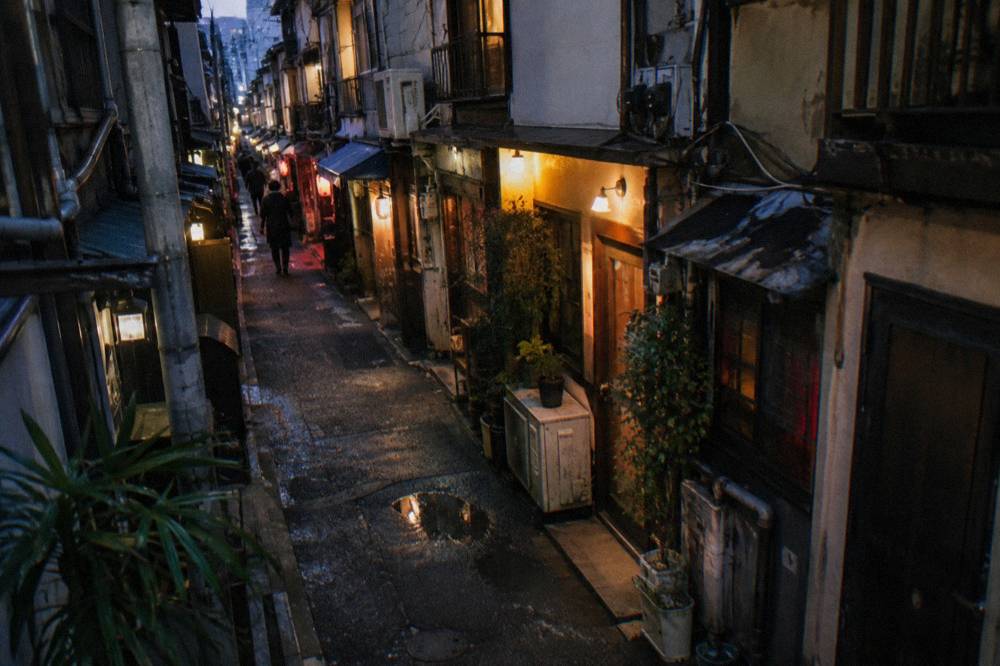
Golden Gai is a Shinjuku district of about 200 bars in six alleys, many seating fewer than ten guests, that survived demolition by organizing as a shopping-street association; its bars are the archetypal "tiny Japanese restaurant", opening around 8 p.m., charging covers of roughly 500 to 1,500 yen and closing between 2 and 5 a.m., with each bar setting its own rules. The alleys are treated as private roads by the association, which is why photography and filming there require permission, and why a sign at the alley mouth asks visitors to respect the residents. Inside the bars, ask before shooting.
The smallness is structural, not accidental. The buildings are post-war wooden structures on tiny plots, and the association has kept them standing as a block. That history produced a district where a single bar can be a jazz listening room, a horror-movie shrine or a whisky counter with eight stools, and the walk between them takes thirty seconds. Many bars welcome foreign visitors; look for English signs, English menus or a posted cover charge at the door. Some are regulars-only, and a closed-looking door with no sign usually means exactly that.
Cash behaviour matters here more than anywhere in the city. Cash remains common at Golden Gai bars and assuming cards are accepted is a mistake; the cover charge, where applied, often includes a small snack and is posted or told up front. The best quick orientation is the standard district guide from a local publisher, which tracks the cover-charge norms and opening patterns across the alleys.
Guided Golden Gai evenings solve the door problem neatly. The Golden Gai Crawl, 2 Hours option is rated 4.8 across 180 reviews and starts from $97.17 per person, a short-format introduction for anyone unsure about going alone. At the fuller end, the Golden Gai Food Tour, Premium runs three hours, is rated 5 across 261 reviews and starts from $217 per person with food included. A third choice, the Arigato Travel Golden Gai Tour, runs about three hours at from $167.41 per person, rated 4.68 across 82 reviews.
What Are Standing Bars And Snack Bars?
Standing bars, tachinomi or tachinomiya, are counter-only venues with no seating at all, built for a fast drink after work, while "snack bars" or sunakku are pocket-sized hosted lounges, usually a counter plus a karaoke box, where you pay largely for the hostess's company and a bottle keep rather than for food; both are among the smallest eating and drinking formats in Japan. Neither translates cleanly into Western categories, which is why visitors often mistake one for the other and end up either pleasantly surprised or quietly shocked at the bill.
The tachinomi is the easier of the two for a visitor. You stand, you drink, you pay, often well under a cocktail-bar price, and the format encourages conversation with whoever is standing beside you. They cluster near office districts and station exits, filling between 6 and 8 p.m. and thinning fast. Food is usually limited to a small snack menu, and the whole point is brevity. Near markets, the standing-sushi format applies the same logic to fish: standing sushi bars around Tsukiji offer nigiri pieces from around 90 to 500 yen each. For meals without a tour, we put together The Tokyo Food List, with 980+ restaurants sorted by cuisine, Google ratings and price ranges.
The sunakku is a different contract. The bar is tended by a female owner-host, the customers are overwhelmingly regulars, and a set charge plus a bottle keep system, where you buy a bottle and leave it with your name on it, drives the price. Many are not aimed at visitors at all, and a walk-in tourist may simply be told the seats are full. This is not rudeness, it is the format working as designed. First-time visitors curious about hosted-bar culture are better served by an izakaya tour where the guide sets expectations in advance.
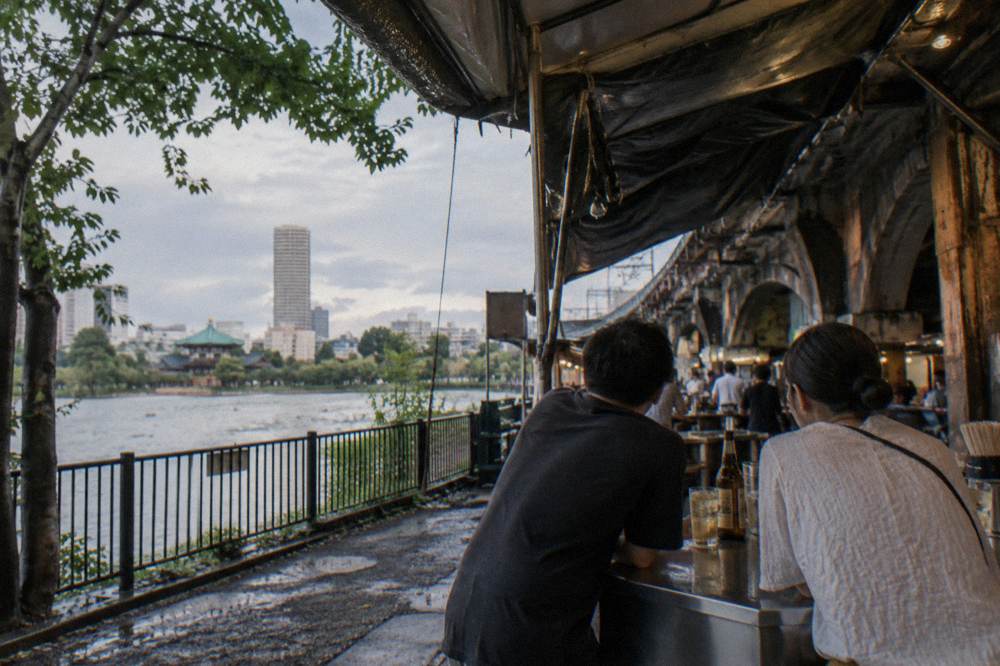
The distinction matters for choosing a tour, too. Most of the crawl-style products on the market, including the Bar Hop, Free Flow Full Dinner option, rated 4.9 across 4,086 reviews from $109.35 per person, are izakaya-and-bar walks that skip hosted lounges entirely. That tour's format, three hours with a free-flow drinks and full-dinner structure inside Shinjuku and Golden Gai, is the closest most visitors will knowingly get to a sunakku door.
How Much Should You Expect To Spend In Tiny Bars?
Plan on roughly 2,000 to 3,000 yen per person for skewers and drinks at an alley counter like Omoide Yokocho, then add cover charges of 300 to 500 yen at some izakaya counters and 500 to 1,500 yen at many Golden Gai bars; if you prefer a guided crawl, fixed prices run from $36.15 per person at the budget end to about $217 per person for premium formats. The ranges come from the districts' own published guidance and from the tour prices listed on each operator's booking page, and they move with the season, so treat them as planning figures rather than quotes.
| Format | Spend per person, self-guided | Extra charges | Guided equivalent (tour price) |
|---|---|---|---|
| Yokocho alley counter | 2,000 to 3,000 yen | Otoshi, 300 to 500 yen at some counters | Budget Crawl, No Meal Included, from $36.15 |
| Izakaya evening | Builds from 150 to 400 yen skewers plus drinks | Otoshi at many counters | Bar Hop, Free Flow Full Dinner, from $109.35 |
| Golden Gai bars | 1,000 to 2,000 yen per bar | Cover, 500 to 1,500 yen | Golden Gai Crawl, 2 Hours, from $97.17 |
| Standing bar | One drink plus snack | Usually none | Not usually toured; most crawls skip them |
Two planning notes round this out. First, cash: independent counters and Golden Gai bars still prefer it, and a wallet with yen notes removes the evening's biggest risk. Second, tax: dining in carries 10 percent consumption tax and takeaway food 8 percent under the National Tax Agency's reduced-rate rules, though on a bar tab the difference is invisible. From 1 April 2027 the food and drink rate is due to be lowered for two years, a future change the tax agency has announced without yet applying it.
Can A Tour Actually Get You Inside These Places?
Yes, and in the smallest districts a guide is often the difference between entering and standing outside: Shinjuku crawl tours from $36.15 to $109.35 per person take groups into cash-only counters and cover-charge bars where an unaccompanied visitor faces language, payment and etiquette barriers, with ratings from 4.8 to 4.9 across review pools of 180 to 4,086 guests. The value is not the food alone. It is that the guide knows which doors are open to newcomers, which bars take cards, what the cover charge includes and how to order without a shared language.
The clearest illustration is Sangenjaya, a residential backstreet neighbourhood where tiny bars hide in a maze of lanes. The Private Sangenjaya Backstreets tour, four hours and rated 5 across 148 reviews, from $289.25 per person, is built entirely on a private food and drink walk through Sangenjaya's backstreets. A private guide there is less a luxury than a key.
For a same-evening decision, the short formats are the safest bets. The Budget Crawl runs three hours from $36.15 per person with the meal not included, so it works as a cheap way to see the alleys before committing to dinner. The Golden Gai Crawl, 2 Hours covers the district's core in the shortest time on offer. And the free-flow dinner crawl remains the most complete single evening, combining the izakaya counter, the yokocho lane and a Golden Gai finish in one booking.
This site, Tokyo Food Tours, exists precisely because the gap between reading about these formats and booking into one is where most travellers stall. The three crawls below span the whole price range of a tiny-bar evening in Shinjuku.
Common Questions About Tiny Japanese Restaurants
What Are Tiny Japanese Restaurants Called?
They are called izakaya when they serve food and drink, yokocho when a cluster of them fills a narrow alley, tachinomi when they have no seats at all, and snack bars or sunakku when they are hosted lounges in districts such as Golden Gai. Each word describes a different format, price structure and etiquette.
What Is The Difference Between An Izakaya And A Restaurant?
An izakaya is a drinking house that cooks, built around drinks and a steady stream of small shared dishes rather than one plated meal. Dishes arrive as they are ready, an otoshi seating charge usually appears on the bill, and the pacing is slower than a restaurant because the evening is centred on conversation.
Why Do Golden Gai Bars Charge A Cover Fee?
Golden Gai bars seat only a handful of guests, so a cover charge of roughly 500 to 1,500 yen, often including a small snack, protects the operator when a guest stays for one drink. It is posted at the door or stated on arrival, and it replaces any tipping, which is not customary in Japan.
Can Tourists Enter Tiny Japanese Bars Without Speaking Japanese?
Often yes, especially where English menus or signs are posted, but cash, cover charges and regulars-only doors are real barriers. Many bars in yokocho alleys and Golden Gai welcome visitors; a guided crawl removes the remaining risk by handling ordering and payment.
How Much Does An Evening In Omoide Yokocho Cost?
Typical spend for skewers and drinks runs 2,000 to 3,000 yen per person, with some counters adding a 300 to 500 yen otoshi charge and some taking cash only. Hours vary by shop, with most counters opening around 5 p.m. and running to midnight or later.
Do I Need To Book A Tour To Visit Tiny Tokyo Bars?
No, but a tour helps most in the smallest districts. Crawl tours in Shinjuku run from $36.15 per person for a no-meal budget format to about $217 per person for premium Golden Gai food tours, and a guide handles the cash-only counters, cover charges and etiquette that stop many independent visitors.