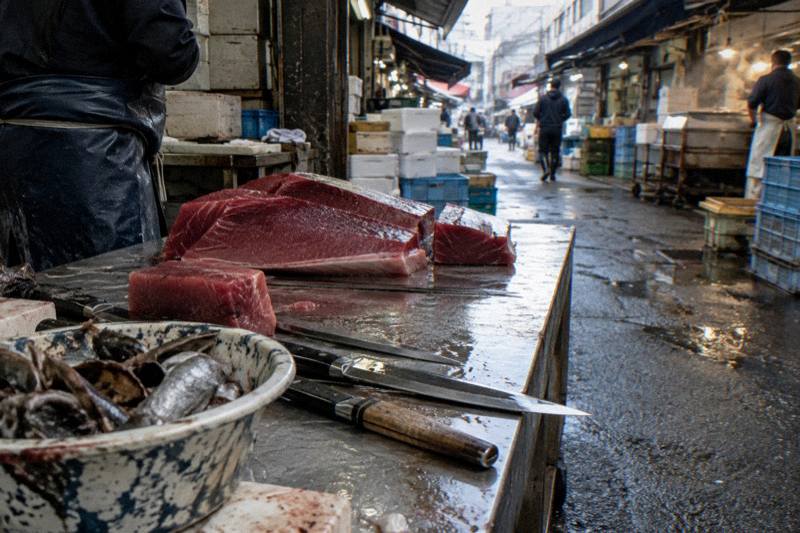
Is It Still Worth Going To The Tsukiji Fish Market?
The wholesale auction moved to Toyosu, but the Outer Market stayed. What visitors actually get there now, what it costs, and when to go.
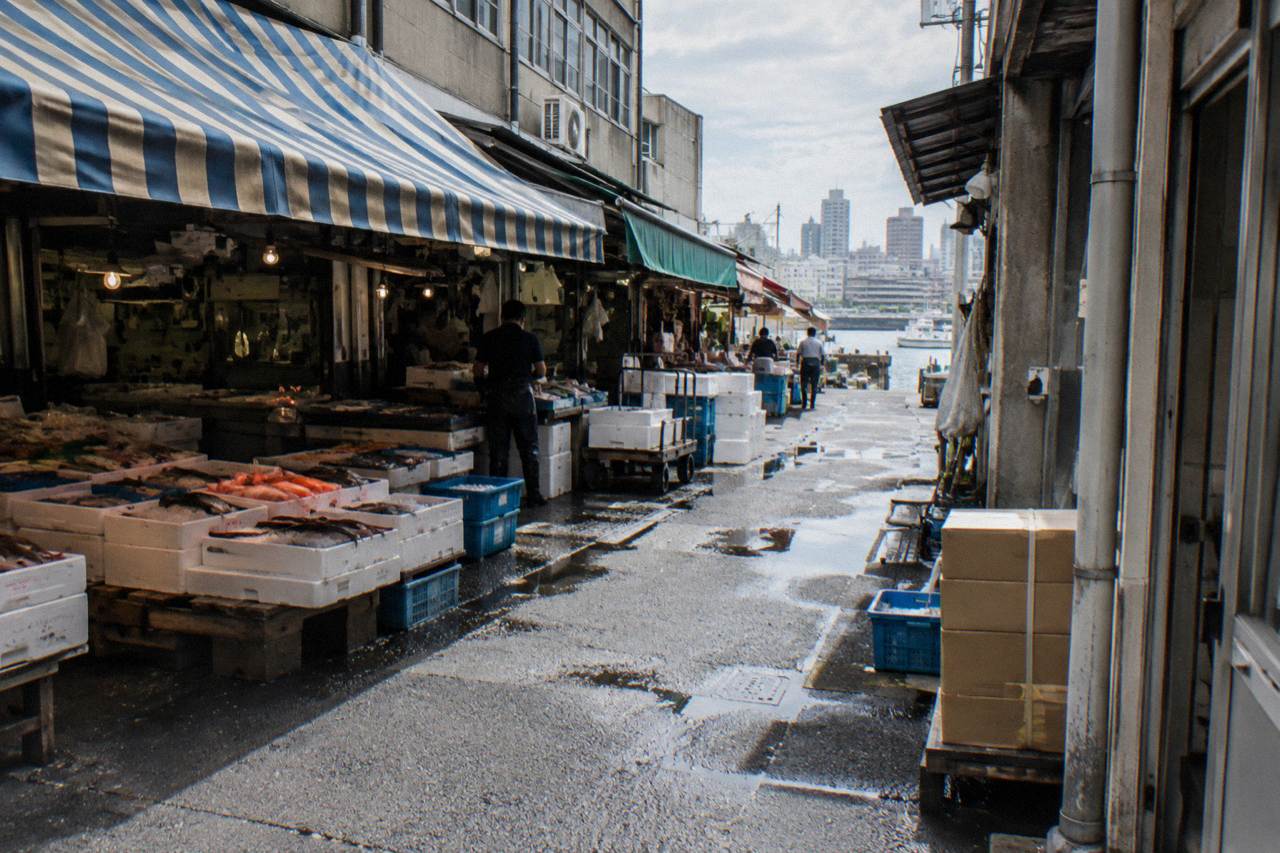
The famous tuna auction left Tsukiji when the wholesale market relocated to Toyosu, yet the Outer Market never went anywhere. Hundreds of independent shops still sell tamagoyaki, knives, dried fish and street snacks a one minute walk from two subway stations, and the question for a visitor now is not whether Tsukiji exists but what kind of visit it delivers. The short answer is that the market is absolutely still worth the trip, provided you go for the right reasons and at the right time of day.
Decades of postwar trading history shaped these lanes, and although the wholesale floor relocated across Tokyo Bay to Toyosu, the visitor-facing half of Tsukiji kept operating without pause. What remains is a dense grid of small businesses, fresh and processed seafood sellers, kitchenware shops, tamagoyaki specialists and tiny eateries, working much as they did before the move. The scale surprises first-time visitors: this is not a food court built for tourists but a functioning retail market where trade customers still shop in the early morning before the sightseers arrive. If you're weighing a stop at the new site too, our comparison of Toyosu versus Tsukiji explains what each location actually offers a visitor.
The confusion is understandable, because for decades "Tsukiji" meant one thing: the largest fish market on earth, with a predawn tuna auction that travel writers treated as a rite of passage. When the inner wholesale market decamped to Toyosu, plenty of guidebooks and forum threads declared Tsukiji finished. That verdict was premature. The Outer Market, the section beside the former wholesale site that visitors could always freely enter, is the part people actually walked, ate and photographed, and it never closed for a single day of relocation.
Yes, for most visitors it is still worth going, with one adjustment to expectations: you are going to the Outer Market, a retail and eating district of hundreds of independent shops, not a wholesale fish auction. Opening hours vary by shop, and professional buyers get priority before 9:00, and the lanes sit a one minute walk from Tsukijishijo or Tsukiji Station. Go for food, knives and atmosphere, not tuna bidding.
That distinction, outer versus inner, is the whole key to the question. The inner market was the gated wholesale arena with crates, forklifts and the auction. Toyosu inherited that function, complete with viewing galleries and its own booking system. The Outer Market, by contrast, was always the street-level sprawl where the public shopped, and it is precisely that sprawl people remember from their first visit: tamagoyaki on a stick, uni sold by the spoonful, octopus on skewers, and knife shops where smiths still grind blades in the back.
If your image of Tsukiji is "watch the tuna auction at dawn," you will be disappointed, because that experience now belongs to Toyosu. If your image is "eat extremely fresh seafood in cramped lanes and buy a Japanese kitchen knife from a shop that has sold them for generations," that Tsukiji is not only alive but easier to enjoy than it was during the auction years, when the crowds surged through before 7 a.m. and dissipated by lunch. Today the market has a steadier daily rhythm oriented around mid-morning through early afternoon.
It also helps to arrive with a plan. The lanes look manageable but fork into side alleys where similar-looking stalls differ wildly in queue length and price. A guided option such as the Tsukiji Market, 5 Tastings walk, about 3 hours from $97.17 per person, rated 4.9 across 3,868 reviews, handles that filtering for you; independent walkers do fine too, just more slowly and with more guesswork.
For context on how a market morning fits a wider Tokyo eating plan, the comparison piece on Toyosu versus Tsukiji breaks down the two sites side by side, and the guide to the Tsukiji Outer Market walk covers the district in more depth than this article can.
What Actually Moved To Toyosu, And What Stayed Behind?
The wholesale function moved: tuna auctions, the licensed dealer floor and the forklift traffic all relocated to Toyosu. What stayed is the Outer Market, the retail district of several hundred privately owned shops selling seafood, dried goods, kitchen tools and prepared food. None of those businesses moved, and the lanes you eat in today predate the relocation entirely.
The relocation itself was a saga, delayed for years over soil contamination concerns at the Toyosu site, and when the inner market finally moved, a popular misconception took hold that the whole market had gone. In practice the two halves of Tsukiji had always been physically and commercially distinct. The wholesale market was run under the Tokyo Metropolitan Central Wholesale Market system; the Outer Market is an association of independent shops on private and leased premises that happened to sit at the gateway.
What that means practically is that the eating and shopping experience never skipped a season. Tamagoyaki specialists kept grilling the rolled omelets that queue-forming reputation was built on. Knife retailers kept their glass cases of single-bevel yanagiba and double-bevel gyuto. Seafood vendors kept selling uni, ikura and hamo to restaurants and household customers who never had wholesale credentials in the first place.
One knock-on effect worth knowing: with the auction gone, the character of the district drifted slightly toward eating and tourism, and more shops now orient their hours around visitors. The trade side persists, professional buyers still work the stalls until 9:00 and the official visitor guidance asks the public to give them priority until then, but the balance has shifted toward the mid-morning crowd that now defines a Tsukiji visit.
A second-order effect is scheduling freedom. Under the auction-era model, the "correct" visit was brutally early. Now the market's own calendar is the place to check, since each shop sets its own schedule and the professional rush has passed. For anyone who does not function at 5 a.m., that is a quiet improvement over the old Tsukiji experience, not a downgrade.
When Should You Visit, And What Days Is Tsukiji Closed?
Plan for arrival between 9:00 and 11:00. Regular retail trade for general visitors comes after 9:00 a.m., when professional buyers are no longer prioritized, though each shop keeps its own hours operating at their own discretion after 14:00. Many shops close Sundays, national holidays and market closure days, which often fall on Wednesdays, so check the official closing calendar before you travel.
No single opening hour exists for the market, and any article that prints one is guessing. The official position is that each shop keeps its own schedule, loosely clustered around that mid-morning window, with the calendar page of the market's own site tracking the Tokyo Central Wholesale Market closure days that many (not all) shops follow. Some specialists go their own way entirely; at least one famous tamagoyaki shop lists hours of 6:00 to 15:30 and opens 365 days a year.
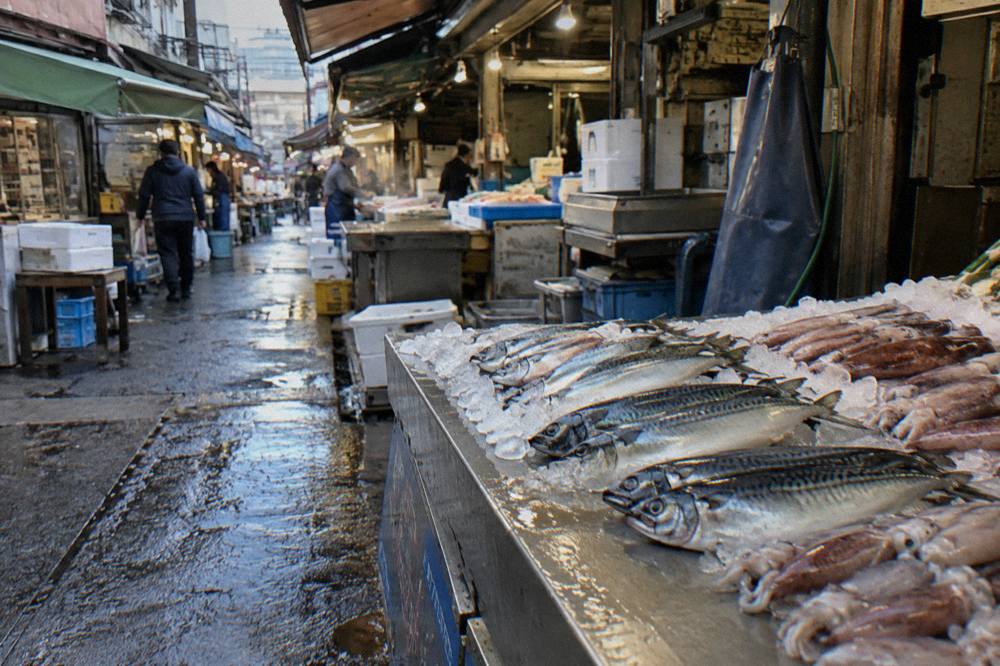
The closure-day trap catches a lot of visitors. Arrive on the wrong Wednesday, or on a Sunday expecting the full spread, and a meaningful share of shutters will be down. The market association publishes its calendar at the official Tsukiji calendar page, and two minutes there the night before saves a wasted trip across the city.
Timing within the day matters almost as much as the date. Before 9:00 you share the lanes with working buyers and deliveries, which is atmospheric but occasionally in the way. From 9:00 to about 11:00 you get the full range of shops open with queues still short. From 11:30 onward the lanes fill quickly, the famous tamagoyaki and uni stops build long lines, and by early afternoon shops begin selling out and closing at will. If food is your priority, earlier is simply better.
If a market morning forms part of a bigger day, the Plat Tsukiji information centre on site can store a stroller for 500 yen, and each shop in the market keeps its own hours, with closure days tied to the wholesale market calendar. Strollers can be stored there for 500 yen, useful because the lanes are narrow and the official etiquette guidance asks visitors to move in small numbers.
For a first-time visitor weighing independent wandering against a guided morning, the Tsukiji Market walk with five tastings is the site's featured option: about 3 hours, from $97.17 per person, rated 4.9 across 3,868 reviews, with a guide who already knows which stalls justify their queues.
What Does A Tsukiji Morning Cost Without A Tour?
Realistically, budget a few thousand yen per person for a graze-across-stalls visit, and more if you sit down for a seafood rice bowl. Street snacks at the market are not fixed or listed market-wide, they vary by shop, but comparable casual Tokyo benchmarks run about 150 to 400 yen for yakitori skewers and 90 to 500 yen per piece at standing sushi counters nearby.
The market's own site declines to publish standard prices for tamagoyaki, tuna, uni or oysters, because no market-wide price exists; each shop prices its own product. What a visitor can rely on are the wider benchmarks for casual Tokyo eating, which frame expectations honestly. A recent survey of 81 ramen shops in the Takadanobaba-Waseda area put the average basic bowl at 993 yen, with the cheapest at 600 yen, and the national average for a serving of nigiri sushi sat at 1,592 yen as of September 2026 per the official retail price survey.
| Item | Typical planning range | Notes |
|---|---|---|
| Tamagoyaki on a stick | a few hundred yen | varies by shop, no market-wide price |
| Uni or ikura by the spoonful | premium pricing, check the counter | prices move with the catch, no fixed standard |
| Yakitori-style skewers (Tokyo benchmark) | 150 to 400 yen each | casual counter norm citywide |
| Standing sushi, per piece (nearby benchmark) | 90 to 500 yen | standing bars around market districts |
| Nigiri sushi, per serving (national benchmark) | around 1,592 yen | official retail price survey, September 2026 |
| Knife from a specialist retailer | check the shop | engraving often available |
Two money mechanics are worth knowing before you go. Cash remains widely accepted and often preferred at independent stalls, though cards and cashless payment are increasingly common in mid-range and chain venues, so carry yen for the small counters. And tax treatment differs by how you eat: dining in attracts 10% consumption tax while takeaway food carries the reduced 8% rate, a distinction set by the National Tax Agency and explained on the agency's English page. A further rate change on food and drink sales is scheduled for the two years from April 2027, so treat the current split as the rule for now.
Is Tsukiji A Tourist Trap Now?
Partly, at the edges, but not at its core. The stalls nearest the main entrances skew toward visitors and queue culture, yet the market remains a working retail district where restaurants buy knives and households buy dinner. Crowds cluster around a handful of famous stops; two alleys over, trade looks ordinary. Judge the whole district by its busiest thirty metres and it feels like a trap; walk the full grid and it does not.
The honest version of the criticism is this: some stalls now optimize for photos and turnover, prices at the most famous stops sit above what locals pay elsewhere, and at peak midday the lanes feel more like a festival than a market. The equally honest counterpoint is that the underlying businesses mostly predate the tourism boom, the seafood is genuinely market-adjacent fresh, and the knife and kitchenware shops sell working tools to working cooks, not souvenirs.
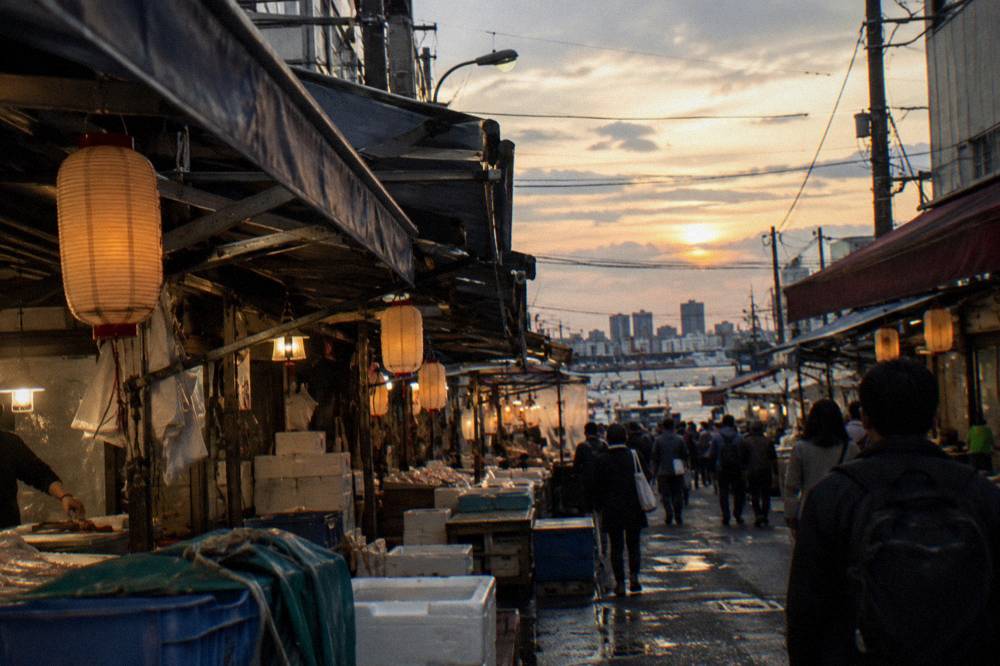
The crowd question has a fuller treatment in the companion piece on whether Tsukiji is a tourist trap, but the short tactical advice holds either way: go early, walk past the first queue you see, and let the second and third rows of the grid earn your money. The market rewards depth. Most visitors never leave the two main arteries, which is exactly why those arteries carry the crowds and the markups.
A related question, whether the market's best years are behind it, gets asked constantly, and the market's own staying power suggests the opposite: the Outer Market remained a draw after the auction left precisely because the eating and shopping, the parts that were always public, did not depend on the auction at all. The atmosphere shifted from industrial to festive, and whether that is a loss or an improvement depends on what you came for.
What Rules Are Visitors Asked To Follow Inside?
Eat inside the eatery or directly in front of the store, never while walking; give professional buyers priority before 9:00; ask before photographing; do not touch food on display; do not bargain; smoke only in designated areas; and leave large luggage in a coin locker. Guides are asked to consult the Plat Tsukiji centre before running tours, and sampling in stores without permission is asked against.
These come straight from the market's official visitor guide, published at tsukiji.or.jp, and they exist because the lanes are narrow, working commercial spaces shared with trade that continues all morning. The eating rule is the one visitors break most often, usually without knowing: eating while walking obstructs others, so the pattern is to buy at the counter, consume it standing at that storefront, then move on.
The photography rule matters more than it sounds. The alleys are narrow enough that a camera held mid-lane stops foot traffic, and vendors have reasonable objections to endless shooting of their product without a purchase. Ask, and most will say yes. The no-bargaining rule is cultural rather than merely local: the market states plainly that items are sold at carefully selected prices and haggling is not customary, which matches the wider Japanese retail norm.
Allergy-aware visitors should plan a step ahead. Japan's mandatory allergen labelling covers packaged processed foods, with cashew nuts added to the specified list from 1 April 2026, but restaurant and stall dishes are generally not required to carry such labelling. The practical version: tell your guide before booking, or ask at the counter directly, and treat packaged labels as your reliable source inside the market. You can open The Tokyo Food List on your phone and pick a place by neighborhood, with a map of what is within a 10-minute walk.
Should You Walk Tsukiji Alone Or Book A Guided Tour?
Walk alone if you are confident finding your own way, happy to research stalls in advance, and flexible on what you eat; book a guide if you want curation, tasting inclusions and the etiquette handled for you. Independent visits cost less and move at your pace, while guided visits compress the market's learning curve into about three hours and typically include several tastings in the price.
The independent route suits confident travelers with time. Arrive at 9:00, walk the full grid once before committing, then loop back to your chosen stops. Budget for cash, expect queues at the famous counters, and accept that some choices will be gambles. The market is compact enough that a mistake costs one stall visit, not a morning.
The guided route suits first-timers, tight schedules and anyone who wants tastings pre-arranged. The featured Tsukiji walk covers five tastings over about 3 hours from $97.17 per person, rated 4.9 across 3,868 reviews, and a guide also handles the etiquette questions, the ordering at counters with no English menus, and the judgment calls on which premium items justify their price on a given day. Group sizes vary across Tokyo food tours, and the featured Tsukiji walk caps its groups at 20 people, so anyone wanting closer attention can weigh a private option through the wider private tour guides on Tokyo Food Tours.
If the market morning leaves your day open, two neighbouring districts pair naturally with Tsukiji and carry their own guided walks. The Asakusa walk with 12 dishes covers the temple district's old-town eating scene, about 2 hours 30 minutes from $75.30 per person, rated 4.85 across 73 reviews. The Ueno walk with 10+ tastings of Japanese classics runs about 3 hours 30 minutes from $107.99 per person, rated 5 across 349 reviews, through the Ameyoko shopping streets, both a short subway hop from Tsukiji and both substantially different in character from a market morning.
Common Questions About The Tsukiji Fish Market
Is It Still Worth Going To The Tsukiji Fish Market?
Yes. The Outer Market, the eating and shopping district visitors actually came for, never moved and never closed. Each shop sets its own hours, so check the official market calendar before you plan, and go for food and atmosphere rather than a tuna auction, which now happens at Toyosu.
Can You Still See The Tuna Auction At Tsukiji?
No. The wholesale auction moved to Toyosu when the inner market relocated. Tsukiji today is the Outer Market: independent retail shops, eateries and kitchenware sellers. Toyosu runs its own visitor galleries with a separate booking system for anyone who wants to watch trading.
What Time Does Tsukiji Outer Market Open?
There is no single opening hour. Shops set their own schedules, with professional buyers prioritized until 9:00 a.m.before 9:00 and trading at each shop's discretion after 14:00. Some specialists keep individual hours, and at least one tamagoyaki shop opens 365 days.
What Days Is Tsukiji Closed?
Many shops close Sundays, national holidays and selected Wednesdays aligned with the Tokyo Central Wholesale Market closure calendar, but each shop decides independently. Check the market's official calendar page before travelling, since arriving on a closure day means finding many shutters down.
How Much Money Do You Need At Tsukiji Outer Market?
Plan on a few thousand yen per person for grazing stalls, more if you sit down for a seafood rice bowl. Prices are set shop by shop with no market-wide standard, cash is still widely preferred at independent counters, and takeaway food carries 8% tax versus 10% for dining in.
Is Tsukiji Or Toyosu Better For Tourists?
For most visitors, Tsukiji. The Outer Market concentrates eating, shopping and atmosphere in walkable lanes with no booking required, while Toyosu is a purpose-built wholesale facility with viewing galleries. Tsukiji is the better food stop; Toyosu is the better place to watch wholesale trading happen.