Is The Tsukiji Market A Tourist Trap?
An honest verdict on Tsukiji Outer Market: what is real, what is crowded, when locals shop, and how a guided walk changes the visit.
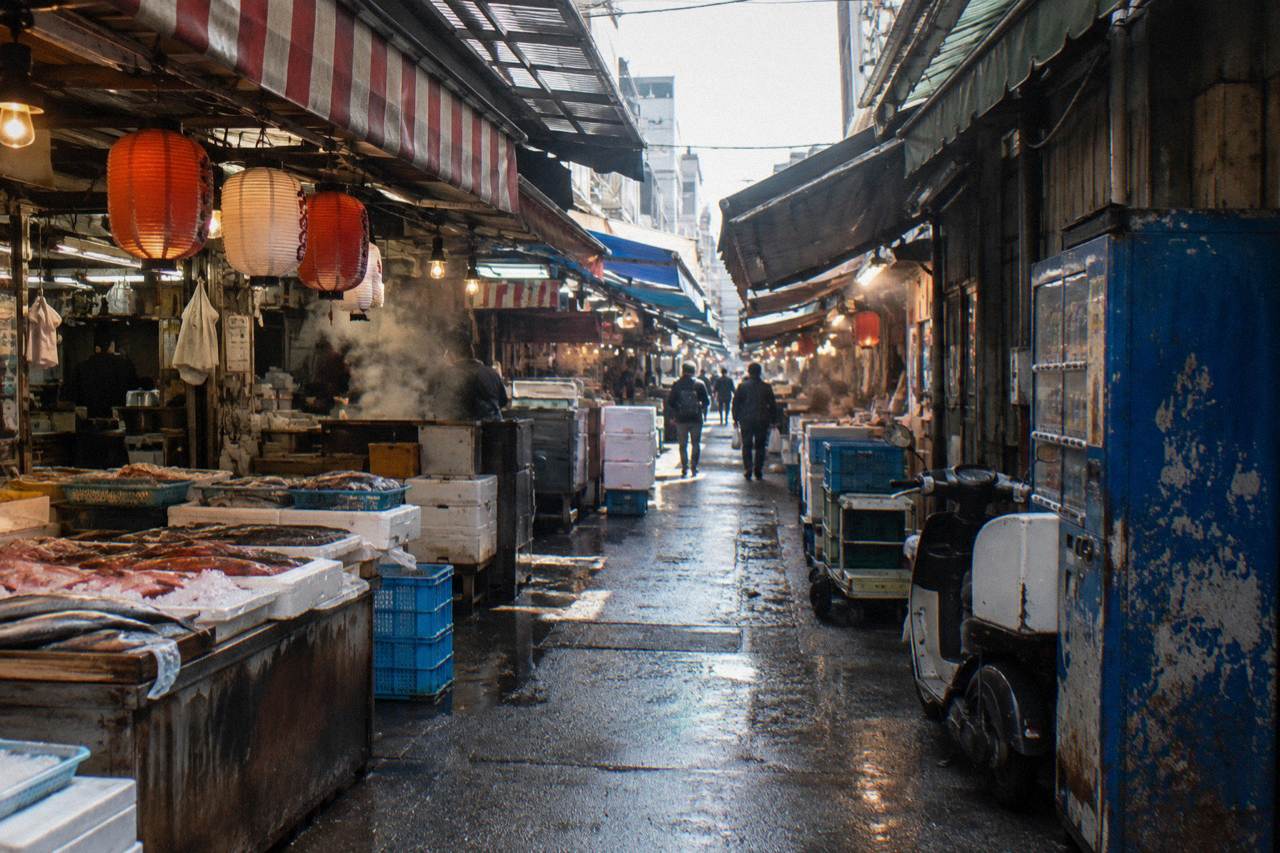
No, Tsukiji is not a tourist trap, but it is a working market that tourists have overrun at peak hours. The Outer Market is a collection of hundreds of independent shops, from knife sellers to tamagoyaki specialists, that sell to locals and professionals every morning. The trap feeling comes from timing: arrive midday on a Sunday and you meet a crowd, not the market.
That distinction matters, because "tourist trap" implies a place that exists to extract money from visitors and offers nothing else. Tsukiji fails that test on the facts. The market association's own guidance asks visitors to give way to professional buyers until 9:00 in the morning, which is a strange request to make of a pure tourist attraction. The wholesale function has since moved to Toyosu, and a persistent myth says the whole area died with it. It did not. What remained, the Outer Market, is the retail and eating strip that was always the part visitors could actually enter. If you're wondering what a visit actually looks like now, our guide to what the Outer Market offers today covers the food, the prices, and the best hours to show up.
The crowded reputation is nonetheless earned on certain days. The official calendar follows the Tokyo Central Wholesale Market closure days, and many shops close on Sundays, national holidays and selected Wednesdays, which concentrates the remaining open stalls and the crowds onto fewer days. A visitor who walks in on a busy Sunday afternoon sees the worst version of the market: lines at the famous tamagoyaki counters, slow shuffling along the lanes, and priced-up street snacks aimed squarely at people who will never return. That version feels like a trap. It is also a scheduling problem, not the market itself.
A good frame is this: Tsukiji rewards preparation and punishes improvisation. If you know the closure calendar, arrive before the late-morning rush, eat where the shop tells you to eat, and move in small numbers, you get a genuinely working food district. If you show up hungry at noon with a suitcase, you get the tourist corridor. Many visitors close the gap by booking a guided walk; the Tsukiji Market, 5 Tastings tour, about 3 hours from $97.17 per person, rated 4.9 across 3,868 reviews, exists precisely for people who want the working market without the guesswork. Some travellers also pair the morning here with an Asakusa Walk, 12 Dishes tour later the same day to cover two food districts in one plan.
For readers deciding between Tsukiji and other mornings in the city, the comparison piece on Tsukiji versus Toyosu breaks down the two markets directly, and the deeper Tsukiji Outer Market food tour guide covers shop categories and access in full.
What Is Actually At The Outer Market?
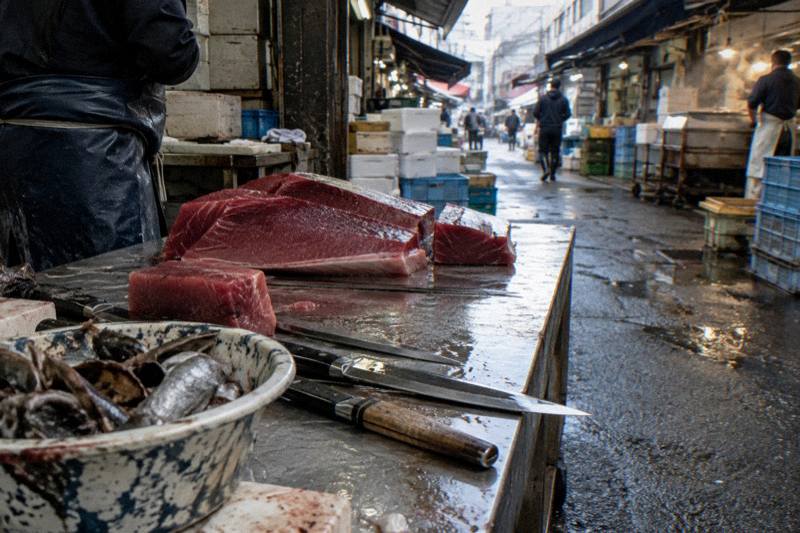
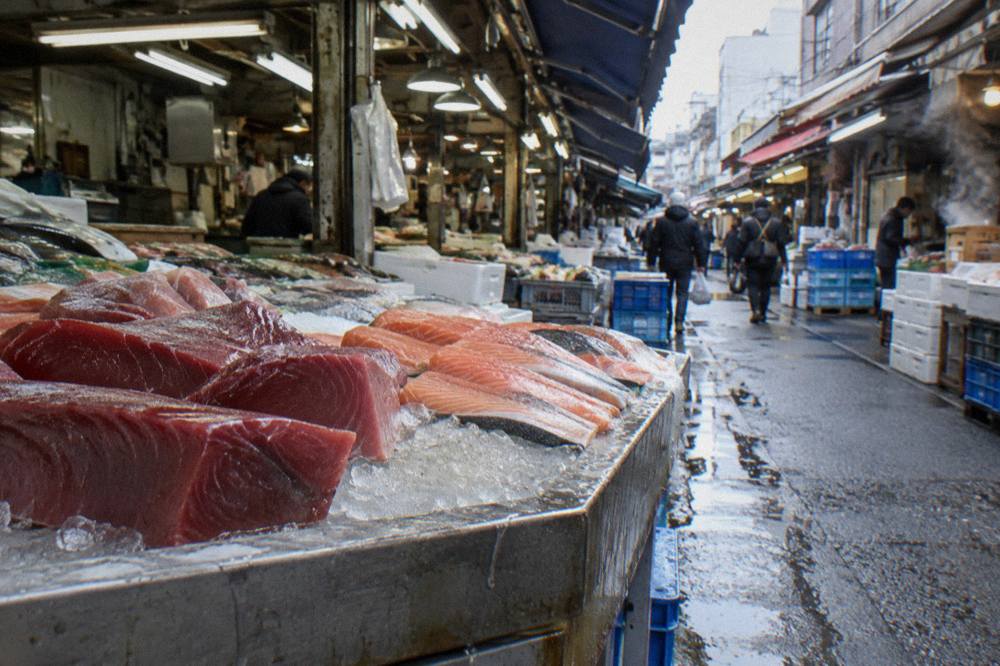
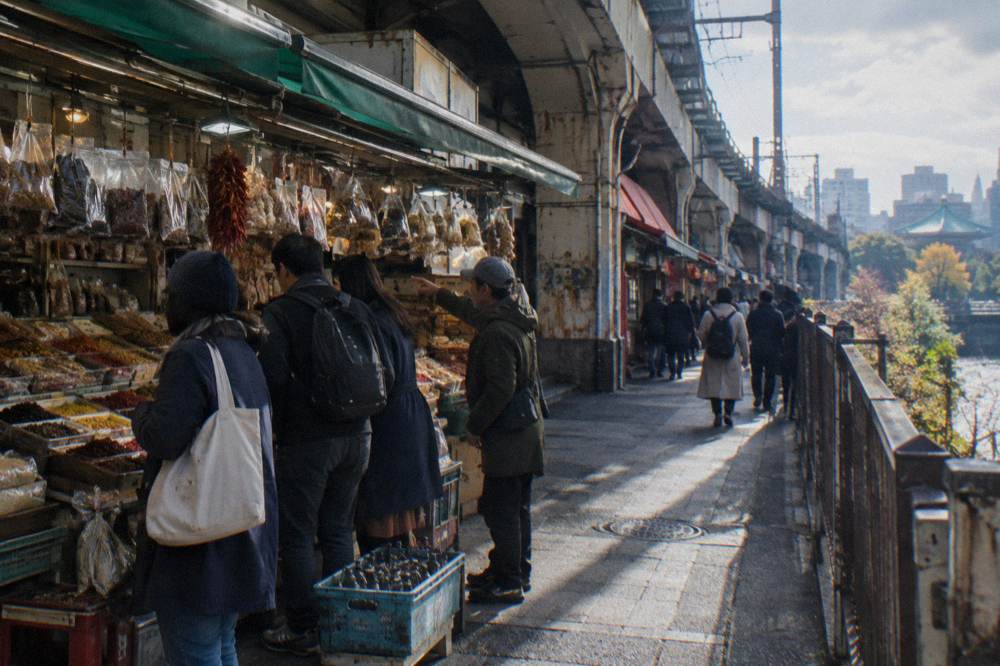
The Outer Market holds hundreds of independent shops across categories that include fresh and processed seafood, dried foods, perishables, kitchenware and utensils, tamagoyaki specialists and full eateries. It is a retail district, not a single attraction with one owner, and every shop sets its own hours, prices and closing days. That structure is the reason generalizations about Tsukiji fail: one lane can hold a knife shop that has traded for decades beside a souvenir stand that opened last year.
The official shop list groups the market into those categories, and the mix is what keeps it a real food district. A restaurant buyer can still pick up dried kelp, tools and ceramics here in the same trip, which is why the professional-priority window exists. The famous snacks, tamagoyaki omelette skewers, tuna cuts, uni and grilled items, are sold by individual shops, and the official site is explicit that no market-wide fixed prices exist for them. Prices vary by shop, and the honest planning answer is that street snacks commonly run a few hundred yen to around a thousand yen each, with the exact figure confirmed at the counter.
| What you find | Who it mainly serves | Tourist-trap risk |
|---|---|---|
| Fresh seafood and processed fish shops | Chefs, local shoppers, visitors | Low, prices are posted |
| Dried goods, tea, pickles | Local and trade buyers | Low |
| Kitchenware and knife shops | Trade and serious home cooks | Low, genuine craft goods |
| Tamagoyaki and snack counters | Mostly visitors | Medium at peak, queue-driven |
| Full-seating eateries and sushi bars | Mixed locals and visitors | Medium, varies by shop |
The trap perception concentrates in the last two rows. Snack counters with long lines and sit-down eateries nearest the station exits absorb the tourist flow, and a visitor who never leaves that strip can reasonably conclude the market is a theme park. Two lanes deeper, the trade shops feel like anything but.
Do Locals Still Shop At Tsukiji?
Yes, locals and trade buyers still shop at Tsukiji, mainly in the earlier hours and in the shop categories visitors walk past fastest: dried goods, knife and kitchenware stalls, tea, and the seating-only eateries tucked off the main lanes. The tourist crowd and the local crowd share the market but not the same hours or the same aisles. That separation is the single biggest reason two visitors can leave with opposite verdicts.
The evidence is structural rather than anecdotal. A market that had become a pure attraction would not maintain a professional-buyer priority window, a guides' check-in rule at the information centre, or an official request that visitors not sample in stores without permission. Those rules exist to protect a functioning trade, and the shop-category mix backs them up. The seafood and dried-goods stalls that anchor the district do not survive on tamagoyaki queues alone.
The local presence also explains the food economics. Dine-in restaurant meals in Tokyo carry 10% consumption tax while takeaway food carries 8%, a split set by the National Tax Agency, and Tsukiji operates across both: you buy a skewer at the takeaway counter, or you sit at an eatery and order properly. A visitor who only does the first gets the more expensive-per-bite, more crowded version of the market.
Timing drives everything here, and it is worth being blunt about the pattern. Weekday mornings before about 10:00 are the closest thing to the working market; late mornings are busy but manageable; weekend middays after many shops have closed for the day are the worst combination, full crowds on a reduced market. Anyone who can only visit on a Sunday should go early, accept that some stalls will be shuttered, and treat a sit-down eatery rather than lane grazing as the plan. Tokyo Food Tours covers this timing question across the whole city, and the guide to the best time for a Tokyo food tour applies the same logic to tours as to independent visits.
What Are The Rules Visitors Should Know?
The official visitor rules are: give professional buyers priority until 9:00, eat inside the eatery or in front of the store rather than while walking, ask before photographing, do not touch food on display, leave large luggage in a coin locker, move in small numbers, do not bargain, and smoke only in designated areas. They are posted by the market association and they are the difference between a welcome guest and an obstruction.
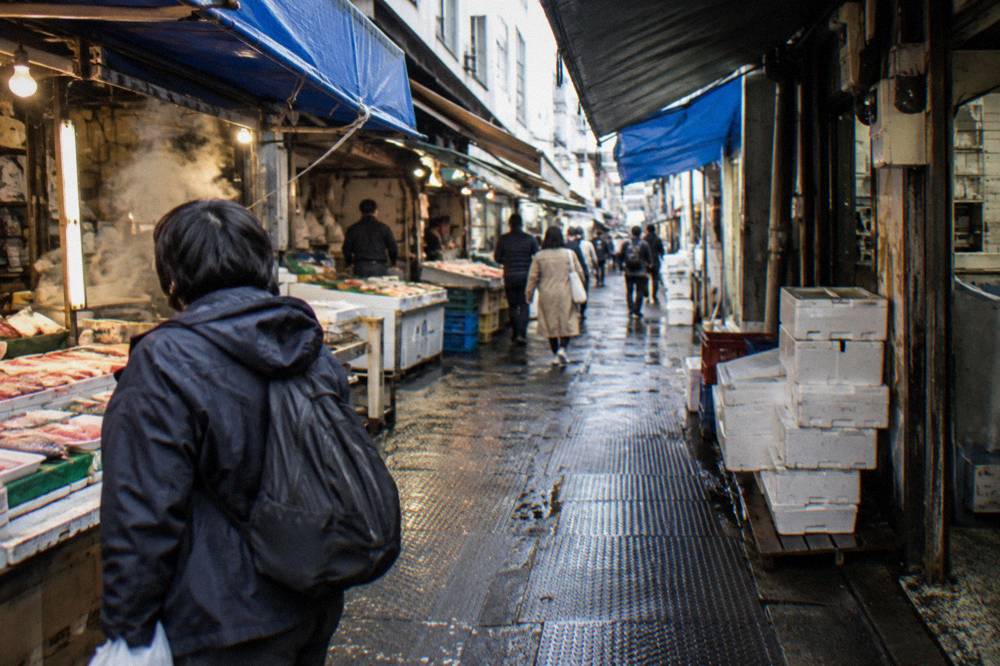
Two of those rules surprise visitors most. The eating rule exists because the lanes are narrow and a crowd of people eating while walking blocks them entirely; the photograph rule exists because many stalls are trade counters, not photo sets. Neither is hostile, and both are easy to follow once you know them. The no-bargaining rule is likewise cultural and practical: the official shopping guidance notes items are sold at carefully set prices, and haggling is simply not part of the transaction anywhere in the market.
A second layer of rules governs what you can assume about food safety and allergies. Japan's Consumer Affairs Agency requires allergen labelling on packaged processed foods for a specified list that grew to nine items when cashew nuts were added on 1 April 2026, joining egg, milk, wheat, shrimp, crab, walnut, peanut and buckwheat. That duty covers packaged goods, not restaurant dishes, so a market eatery is under no obligation to label anything. Travellers with serious allergies should tell a guide or message an operator before booking, not rely on labelling at the counter. The agency's own allergy page sets out the packaged-food scope: Consumer Affairs Agency allergen labelling. Eating by neighborhood is easier when The Tokyo Food List shows you what is within a 10-minute walk on a map.
Payment and etiquette quirks round out the picture. Cash remains widely accepted and often preferred at independent Tokyo eateries, and the market is no exception; do not assume every snack counter takes a card. Tipping is not customary in Japan, per the Japan National Tourism Organization, and attempting it at a market counter creates confusion rather than gratitude. The full manners guide from the market association is the primary source: Tsukiji Outer Market visitor guide.
When Should You Visit To Avoid The Crowds?
Visit on a weekday morning, arriving close to 9:00 when professional-buyer priority ends and most retail shops are open, and plan to finish before early afternoon. Avoid Sundays and national holidays, when more shops close and the remaining open stalls absorb the full crowd, and check the market closure calendar before you set out. Regular retail activity for visitors effectively runs from about 9:00 to 14:00, with shops operating at their own discretion after that.
The calendar point deserves emphasis because it is the least-known fact about Tsukiji. The market has no single opening hour; the official site publishes a closure calendar aligned with the Tokyo Central Wholesale Market's schedule, and individual shops layer their own days off on top, with many closing Sundays, holidays and selected Wednesdays. A "bad day" at Tsukiji is usually a closure day that concentrated everyone into fewer open stalls. The calendar to check before any visit is the official one: Tsukiji Outer Market calendar.
Access shapes timing too. The market is a one-minute walk from Toei Oedo Line Tsukijishijo Station or Tokyo Metro Hibiya Line Tsukiji Station, and about three minutes from Higashi-ginza Station, which makes an early arrival painless from most of central Tokyo. Suica and PASMO cards work interchangeably across the subway and JR lines, so there is no ticket friction at that hour. The short transfer is exactly why the midday crowd is so large: Tsukiji is one of the easiest food stops in the city to reach, and everyone knows it.
| Timing | What you get | Verdict |
|---|---|---|
| Weekday, 9:00 to 10:30 | Most shops open, thinner lanes, trade still visible | Best version |
| Weekday, 10:30 to 13:00 | Busy but full market, eateries at peak | Good with patience |
| Weekday afternoon | Shops closing at their own discretion | Diminishing |
| Sunday or holiday | Many shutters down, crowds on the rest | Worst version |
For travellers who cannot do mornings, or who want the market interpreted rather than just navigated, a guided walk compresses the learning curve. The Tsukiji Market, 5 Tastings tour pairs the market lanes with five food tastings across its roughly 3 hours, from $97.17 per person, and it is the only food walk in this district among the tours on this site, with 3,868 reviews, rated 4.9 across 3,868 reviews. Guides also handle the manners question for you, which matters if the eating-while-walking rule would otherwise catch you out.
How Does A Guided Tour Change The Experience?
A guided tour at Tsukiji mainly buys three things: shop selection without guesswork, compliance with the market's etiquette rules, and a schedule that beats the crowds to the counters. Guides must check in at the Plat Tsukiji information centre before leading tours, which is itself a sign of how regulated the market's tourism has become. The price of a walk in this district sits within the range typical of small-group Tokyo food tours, roughly $50 to $100 per person, so a guided visit costs more than grazing solo, though tastings and a guide come built into the price, minus the risk of choosing badly.
That last point is the practical one. The market's snack prices are not fixed market-wide, the queues move in waves, and the difference between a great tamagoyaki counter and a mediocre one is invisible from the lane. A guide who walks the district weekly makes those calls in seconds. On the etiquette side, the official rules about eating in place, photography and buyer priority are exactly the rules an unguided visitor is most likely to break by accident, and a guide absorbs them into the route.
The same logic extends to the rest of a Tokyo food itinerary. In Asakusa, the Asakusa Walk, 12 Dishes tour, about 2 hours 30 minutes from $75.30 per person and rated 4.85 across 73 reviews, applies the guide-as-filter idea to an old-town district where the souvenir stretch otherwise swallows visitors whole.
And for a premium version of the same argument, the Old Town Premium Walk, about 3 hours 30 minutes from $231 per person, rated 4.9 across 71 reviews, pairs the historic districts with a higher tier of stops for travellers who want depth over breadth.
Is Tsukiji Worth It Compared To Other Tokyo Food Stops?
Yes, Tsukiji remains worth it as a food stop, provided you go early and treat it as a market morning rather than an all-day attraction. Compared with neighbourhood walks like Ueno's Ameyoko strip or the izakaya lanes of Shinjuku, Tsukiji offers the densest concentration of seafood and market culture in central Tokyo, at the cost of heavier daytime crowds.
The honest comparison is not really Tsukiji versus other markets but Tsukiji versus a neighbourhood food walk. The Ueno Walk, 10+ Japanese Classics tour, about 3 hours 30 minutes from $107.99 per person and rated 5 across 349 reviews, covers a market-adjacent shopping street with more variety and fewer tourists per square metre. The 7 Eateries, Shopping Streets Walk, about 2 hours 30 minutes from $75 per group and rated 5 across 42 reviews, delivers a local-street grazing format at a per-group price that suits families. Neither replicates the seafood-and-knives density of Tsukiji; neither carries its crowds either.
| Option | Format | From (basis) | Rating and reviews |
|---|---|---|---|
| Tsukiji Market, 5 Tastings | Guided market walk, ~3 h | $97.17 per person | 4.9 across 3,868 reviews |
| Asakusa Walk, 12 Dishes | Old-town walk, ~2 h 30 m | $75.30 per person | 4.85 across 73 reviews |
| Old Town Premium Walk | Premium walk, ~3 h 30 m | $231 per person | 4.9 across 71 reviews |
| Ueno Walk, 10+ Japanese Classics | Neighbourhood walk, ~3 h 30 m | $107.99 per person | 5 across 349 reviews |
| 7 Eateries, Shopping Streets Walk | Street grazing, ~2 h 30 m | $75 per group | 5 across 42 reviews |
The verdict, then, is conditional rather than simple. Tsukiji is not a trap; it is a real market with a tourist load that peaks exactly when uninformed visitors arrive. Go on a weekday, go early, eat where the rules say to eat, and it is one of the best food mornings in Tokyo. Go on a Sunday afternoon expecting an authentic slice of old Japan at your own pace, and you will leave convinced it is a trap, wrongly but understandably.
Common Questions About Tsukiji Market
Is The Tsukiji Market A Tourist Trap?
No. The Outer Market is a working retail district of hundreds of independent shops that also draws heavy tourist traffic. The trap feeling comes from visiting at peak weekend hours when many shops are closed, not from the market being fake. Go on a weekday morning and the working market is fully visible.
What Time Does Tsukiji Outer Market Open?
There is no single opening hour. Professional buyers have priority until 9:00, regular retail activity for visitors varies by shop and by day, since each seller keeps its own schedule around thewholesale-market closure calendar. Check the official calendar before visiting, since many shops close Sundays, holidays and selected Wednesdays.
Can You Eat While Walking Around Tsukiji?
No. The official rule is that eating happens inside the eatery or in front of the store, not while walking, because the lanes are narrow and moving eaters block them. The same guide asks visitors not to obstruct professional buyers before 9:00, not to touch food on display, and to ask before photographing.
Is Tsukiji Or Toyosu Better For Visitors?
For most visitors, Tsukiji. Toyosu hosts the wholesale auctions in a modern facility with viewing decks, while Tsukiji's Outer Market holds the eat-and-shop experience people actually mean when they say Tsukiji. The two are often done together, with Tsukiji as the eating stop.
Do You Need Cash At Tsukiji?
Bring some. Cash remains widely accepted and often preferred at independent Tokyo eateries and market counters, and you should not assume every stall takes a card. There is no tipping anywhere in the market, and no bargaining: prices are set, and the official shopping guidance is explicit that haggling is not part of the transaction.
Is A Guided Food Tour Of Tsukiji Worth It?
For most first-time visitors, yes. A guide handles shop selection, queue timing and the market's etiquette rules in one move. The Tsukiji Market, 5 Tastings tour runs about 3 hours from $97.17 per person and is rated 4.9 across 3,868 reviews, making it the most reviewed guided option in the district.