Is Toyosu Or Tsukiji Market Better?
Toyosu hosts the wholesale trade while Tsukiji Outer Market is where visitors eat, shop and take food tours. Here is how the two compare for a Tokyo trip.
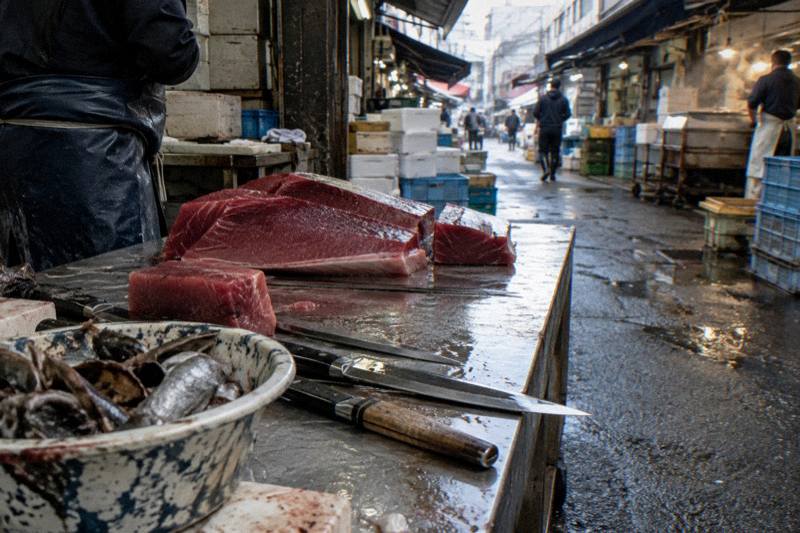
Toyosu and Tsukiji are not two versions of the same thing, and that is where most of the confusion starts. The wholesale fish trade that once filled Tsukiji's inner market now happens at Toyosu, in purpose-built halls on the bay. What most travellers picture when they imagine "the fish market", the cramped lanes, the tamagoyaki skewers, the tuna knives and the shouting vendors, is Tsukiji Outer Market, and that part never moved. The eating stayed put. If you're deciding whether the Outer Market alone justifies the trip, a look at what Tsukiji actually offers visitors now covers the food, the prices, and the best hours to go.
This site exists to help people book food experiences in Tokyo, and the Toyosu versus Tsukiji question is one Tokyo travelers weigh more carefully than almost any other. The short answer for anyone whose goal is eating: Tsukiji Outer Market wins, comfortably. The longer answer, including who should still consider Toyosu and how to visit Tsukiji without getting in the way of the trade, is below.
For eating, shopping and atmosphere, Tsukiji Outer Market is better for nearly every visitor. It is the part of the old market that survived the relocation of the wholesale trade, hundreds of independent shops selling everything from fresh and processed seafood to dried foods, kitchenware and ready-to-eat street food. Toyosu hosts the wholesale trade itself, which is a working business operation rather than a food district, and it offers far less to actually eat on site.
The split came when the inner wholesale market moved from Tsukiji to a new site on Toyosu island. Newspaper coverage at the time framed it as the end of an era, and in one sense it was: the famous dawn auction now happens inside Toyosu's temperature-controlled halls. But the Outer Market, the ring of shops and eateries that grew up around the wholesale core over decades, stayed exactly where it was. Vendors there buy from whichever wholesale channel suits them and sell to the public, and the morning crowds are as thick as ever.
What that means in practice is that the two places answer different questions. Toyosu answers "where does Tokyo's wholesale fish trade physically happen?" Tsukiji Outer Market answers "where can I eat well, buy knives and tea and dried fish, and feel the texture of an old commercial district?" If your trip has room for only one morning and food is the point, Tsukiji is the choice. If you have a specific interest in watching the wholesale machinery of a major city, and you plan around the restrictions that come with it, Toyosu can fill half a day.
There is also a practical middle path that many visitors take: spend the morning eating and browsing at Tsukiji Outer Market with a guide, and treat the wholesale question as background knowledge rather than a destination. One well-reviewed way to do that on this site is the Tsukiji Market, 5 Tastings walk, a roughly 3-hour guided food tour rated 4.9 across 3,868 reviews, from $97.17 per person. It exists precisely because the Outer Market is dense, half the signage is Japanese, and a guide who knows which counter does the best tamagoyaki saves you an hour of guesswork.
All three are guided, all three include food, and none of them requires you to be awake at 4 a.m.
What Is The Difference Between Toyosu And Tsukiji?
The difference is wholesale versus retail. Toyosu is a modern wholesale facility where licensed buyers purchase seafood in volume, with public access managed through viewing galleries and timed systems. Tsukiji Outer Market is a walk-in retail district of independent shops and eateries that anyone can enter freely. Professional buyers get priority until 9:00 a.m., and beyond that each shop keeps its own schedule, with opening hours and closing days varying from one storefront to the next, so check ahead before you visit.
The word "market" does double duty here and that is the root of the whole debate. At Toyosu you are, in the most literal sense, a spectator to commerce. The auction and the loading bays are the show, the setting is industrial, and the experience is organized around not getting in the way of people doing a job. Restaurants do exist in and around the Toyosu complex, and sushi counters there trade heavily on their proximity to the wholesale source, but you go to them the way you go to any restaurant: by reservation or queue, not by wandering.
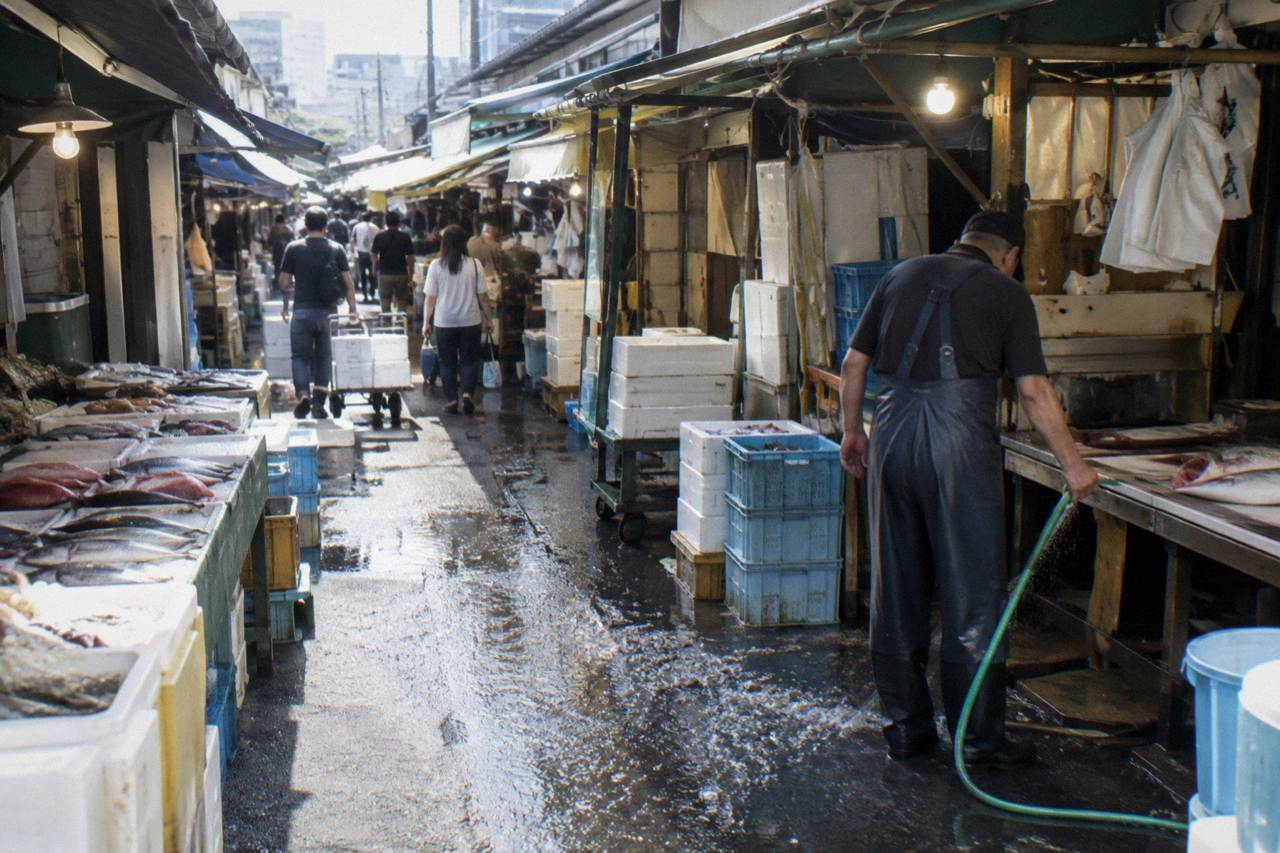
Tsukiji Outer Market is the opposite of industrial. The lanes are narrow, the shopfronts are individually owned, and the range runs from fresh seafood and processed fish to perishables, dried goods, kitchen knives, tamagoyaki specialists and full sit-down eateries. The official shop categories on the market's own site read like a department store directory. There is no gate, no ticket and no viewing gallery, because nothing needs to be viewed from behind glass: it is all happening at street level, a minute's walk from the station.
One more difference worth naming: atmosphere. Tsukiji's Outer Market grew organically over decades and it looks and sounds like it, with hand-painted signs, delivery trolley traffic and vendors who have worked the same counter for a generation. That texture is exactly what the wholesale relocation could not take with it, and it is the reason the area still draws crowds years after the "real market" supposedly left. The verdict on Toyosu versus Tsukiji, in plain terms, is that people do not miss the auction nearly as much as they feared they would; they miss, or never wanted to give up, the lanes.
What Can You Actually Eat At Tsukiji Outer Market?
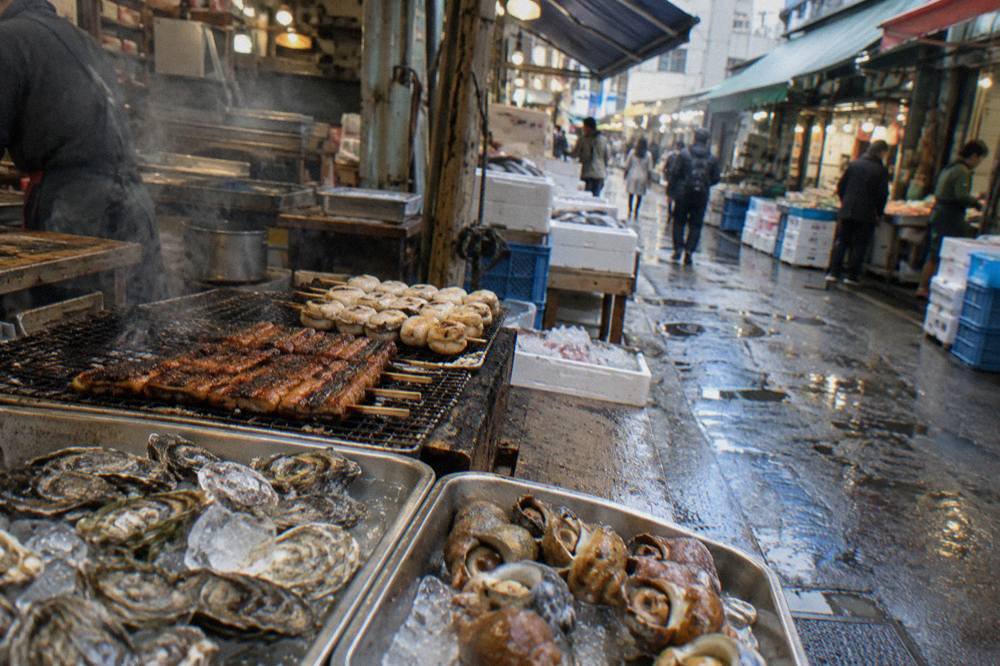
Expect ready-to-eat seafood above all: tamagoyaki omelette on a stick, grilled scallops and shellfish, tuna skewers, uni and ikura served in small cups, oysters, fish cakes and croquettes, plus sit-down sushi and unagi counters in the back lanes. There is no market-wide price list, each shop sets its own, so the honest answer is to budget per item rather than per visit.
The market's official guidance asks visitors to eat inside the eatery or directly in front of the store rather than while walking, and that single rule shapes the rhythm of a visit. You buy, you step aside, you eat standing, and then you move on. It keeps the lanes passable for the trolleys and it concentrates the crowds into small polite clusters rather than a moving wall of people nibbling as they drift.
Prices at street-food level are set shop by shop and are not published market-wide, so treat any specific figure you read online with suspicion, including friendly round numbers. What is reliable is the structure of the spend: a skewer here, a cup of uni there, an oyster, a tamagoyaki, and the total creeps up in small pleasant increments. For frame of reference from outside the market, standing sushi bars near Tsukiji commonly price nigiri from around 90 to 500 yen per piece, and conveyor-belt chains in Tokyo start plates at 110 to 150 yen, so Tsukiji's ready-to-eat items sit in a recognizably casual bracket even without a fixed tariff. To plan what to actually order once you are there, the Tokyo street food guide with real prices and etiquette tips walks you from Omoide Yokocho's yakitori counters back to Tsukiji's tamagoyaki stalls.
The dine-in counters are the other half of the answer. Sushi restaurants, unagi specialists and seafood donbiri shops pack the inner rows, and these are the places to sit down for a proper meal once the street snacking has taken the edge off your hunger. Reservations are recommended at popular spots and no-shows can incur fees, so if a specific counter is on your list, book it or accept the queue.
If the thought of a self-directed scramble through those lanes sounds like work, the guided version solves it. The Tsukiji Market, 5 Tastings walk mentioned earlier is built for exactly this: a guide walks you through the market's etiquette, picks the counters worth stopping at and builds five tastings into the route. And if you would rather have your old-town eating with temples instead of trolleys, the Asakusa Walk, 12 Dishes tour covers the same idea in a different district, about 2 hours 30 minutes, rated 4.85 across 73 reviews, from $75.30 per person.
Between those two, the choice is really about neighbourhood. Tsukiji gives you bay-side commerce and seafood intensity; Asakusa gives you Senso-ji, Nakamise and a slower, older rhythm with twelve dishes spread across local eateries rather than market stalls. Some travellers do both on consecutive mornings and report the pairing works well, since both start near a Metro station and neither requires a car or a long transfer.
When Is The Best Time To Visit Tsukiji Outer Market?
Professional buyers get priority until 9:00 a.m., so many casual visitors arrive after that. Beyond this there is no single visiting window to aim for: each shop in the Outer Market sets its own opening hours, and closing days follow the Tokyo Central Wholesale Market calendar rather than a fixed weekly pattern. Some days see many shops shut entirely, so check the market's official calendar before you set out.
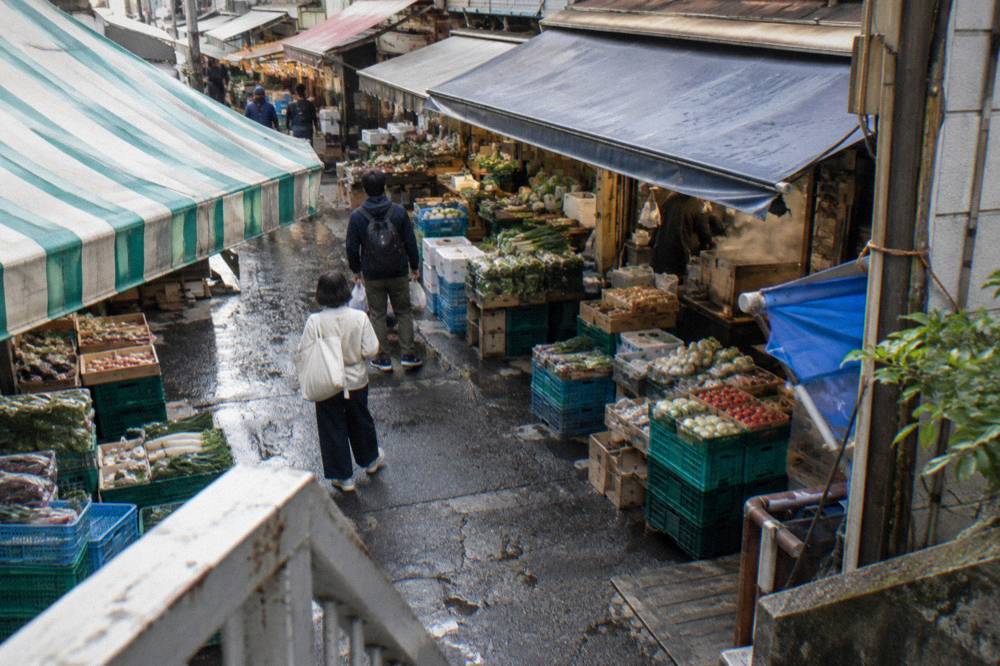
The weekday advice is not superstition, it follows directly from how the market operates. The Outer Market sits beside a functioning wholesale system, and its rhythms are inherited from it. Sundays and holidays see a wave of closures, and selected Wednesdays do too, aligned with the Tokyo Central Wholesale Market's closing days. The market's own calendar page is the authoritative source for which dates those are, and checking it before you lock in a morning is the single highest-value piece of planning for this visit: the official Tsukiji closure calendar.
Timing within the day matters almost as much. Arrive much before 9:00 and you are sharing the lanes with professionals moving stock, which the market's manners guide explicitly asks visitors not to obstruct. Arrive after 14:00 and you find a market winding down, with shops shuttering at their own discretion. The 9:00 to 11:00 stretch is the sweet spot most experienced visitors aim for: fully open, fully stocked, and before the late-morning tour groups thicken the lanes.
Season is a softer variable. Autumn in Tokyo, September through November, is widely noted as peak season for ingredients like sanma, mushrooms and new rice, which translates into a richer display at the seafood and produce counters. There is no bad month for tamagoyaki, but if you want the market at its most abundant, an autumn weekday morning is the strongest combination.
How Much Does A Tsukiji Food Tour Cost?
The flagship Tsukiji walking tour with five tastings costs from $97.17 per person for a roughly 3-hour guided walk, rated 4.9 across 3,868 reviews. Comparable guided food walks in Tokyo cluster between the After 5 walk at from $72.47 per person and the Ueno classics walk at from $107.99 per person, with premium and private versions running well above that. If those prices feel steep, the guide to free Tokyo walking tours with food stops explains how pay-what-you-want walks work and when a paid tasting tour still makes sense.
Cost is one place where the guided versus solo decision can be made with actual numbers, so here is the honest breakdown. Going solo at Tsukiji costs only what you eat: a handful of street items plus a sit-down counter meal, paid per item with no guide fee. A tour costs a fixed per-person price that bundles the guide, the route and a set of tastings. The tour is worth it when the guide's local knowledge and the guarantee of hitting the right counters matters to you; solo wins when you enjoy the wandering itself and are comfortable pointing at what looks good. Eating by neighborhood is easier when The Tokyo Food List shows you what is within a 10-minute walk on a map.
| Tour | District | Duration | Rating | Price |
|---|---|---|---|---|
| Tsukiji Market, 5 Tastings | Tsukiji | ~3 hours | 4.9 across 3,868 reviews | from $97.17 per person |
| Asakusa Walk, 12 Dishes | Asakusa | ~2h 30m | 4.85 across 73 reviews | from $75.30 per person |
| Ueno Walk, 10+ Japanese Classics | Ueno | ~3 hours 30 minutes | 5 across 349 reviews | from $107.99 per person |
| Old Town Premium Walk | East Tokyo | ~3 hours 30 minutes | 4.9 across 71 reviews | from $231 per person |
| Shinjuku Local Eateries Walk | Shinjuku | ~3 hours | 4.9 across 10,498 reviews | from $84.21 per person |
The table makes the pricing landscape easy to read: the mid-band is dense, and Tsukiji sits comfortably inside it. What you are paying for at Tsukiji specifically is not just the food, it is navigation through a district where the rules (where to eat, when to yield, which closures apply) are genuinely non-obvious to a first-time visitor. The Ueno option at from $107.99 per person is the closest structural cousin, a market-and-eateries walk with more sit-down dishes, and it suits travellers who want a fuller meal rather than a market crawl. If you want to see more of how these compare across the whole city, the Tokyo food tour cost guide breaks down every price band.
One practical note on money beyond the tour price: cash is still widely accepted and often preferred at many independent Tokyo eateries and market stalls, so carry some even if your tour is prepaid. Tipping is not customary in Japan for restaurants, bars, taxis or hotels, and at some izakaya a small per-person table charge called otoshi appears on the bill as a seating fee, not a gratuity. The national tourism organization states this plainly: tipping is not common in Japan.
Which Tsukiji Tour Should You Book?
Book the 5 Tastings walk if you want the market itself, about 3 hours, from $97.17 per person, rated 4.9 across 3,868 reviews. Choose the Ueno walk for a longer route with more substantial dishes, or the Asakusa walk if temples matter as much as food. All three are guided food walks with free cancellation, and none requires advance logistics beyond a booking.
Getting to any of these is simple, which is part of why they book well. Tsukiji Outer Market is a one-minute walk from Toei Oedo Line Tsukijishijo Station, a one-minute walk from Tokyo Metro Hibiya Line Tsukiji Station, and about three minutes from Higashi-ginza Station on the Toei Asakusa and Hibiya lines, per the official access page: Tsukiji Outer Market access details. Suica and PASMO IC cards work interchangeably across JR East and Tokyo Metro lines, so one charged card covers the whole morning.
For a side-by-side view of what each walk emphasizes:
| Question | Tsukiji 5 Tastings | Asakusa 12 Dishes | Ueno 10+ Classics |
|---|---|---|---|
| Best for | Seafood and market lanes | Old-town temples plus food | Market and sit-down classics |
| Duration | ~3 hours | ~2h 30m | ~3h 30m |
| Setting | Working outer market | Historic temple district | Park, market street, eateries |
| Food style | Market tastings | 12 dishes at local eateries | 10+ Japanese classics |
| Rating | 4.9 across 3,868 reviews | 4.85 across 73 reviews | 5 across 349 reviews |
A reasonable rule of thumb: first visit to Tokyo, food-motivated, one free morning, choose Tsukiji. Second visit, or a trip that already includes a night food walk, choose Asakusa or Ueno to avoid doubling up on the market experience. Travellers weighing the broader question of which walk suits which kind of visitor will find the first-timers food tour guide useful, and the best food tours overview covers the full range including izakaya evenings and cooking classes.
So, back to the original question. Toyosu is where the wholesale fish business went; Tsukiji Outer Market is where the eating stayed, and for a visitor whose goal is food, atmosphere and a walk you can book a guide for, Tsukiji is the better market. Book the morning, arrive after 9:00 on a weekday, check the closure calendar first, and eat standing in front of the counter the way the market asks.
Common Questions About Toyosu Vs Tsukiji
Is Toyosu Or Tsukiji Market Better?
For eating and atmosphere, Tsukiji Outer Market. The wholesale trade moved to Toyosu, but the retail shops, street food and eateries stayed at Tsukiji, and that is the part visitors actually enjoy. Toyosu suits travellers with a specific interest in the wholesale operation.
Can Tourists Visit Toyosu Market?
Public access at Toyosu is managed through the facility's systems, and the emphasis is on viewing a working wholesale operation rather than eating your way through it. Restaurants exist in and around the complex, but the walk-in food experience most people want is at Tsukiji Outer Market.
Is Tsukiji Outer Market Open Every Day?
No. Many shops close on Sundays, national holidays and selected Wednesdays aligned with the Tokyo Central Wholesale Market closure calendar, and each shop sets its own hours. Check the official Tsukiji calendar before planning your morning.
What Time Should I Get To Tsukiji?
Aim for roughly 9:00 to 11:00 on a weekday. Professional buyers have priority until 9:00 a.m., and after about 14:00 shops close at their own discretion, so mid-morning is the fully open window.
Do I Need A Tour For Tsukiji Outer Market?
You can visit solo for the cost of what you eat, but a guided walk handles the etiquette, the counter selection and the route. The Tsukiji Market, 5 Tastings tour runs about 3 hours from $97.17 per person, rated 4.9 across 3,868 reviews.
Is It Rude To Eat While Walking At Tsukiji?
Yes, the market asks visitors to eat inside the eatery or in front of the store, not while walking, because the lanes are working thoroughfares. Stepping aside to eat keeps the market passable for vendors and buyers.