How Much Does A Tokyo Food Tour Cost?
Guided food walks in Tokyo cluster into clear price bands, from a $36.15 bar crawl to a $289.25 private backstreets evening, and most of the difference comes down to what is actually on the plate.
Short answer
Most small-group food tours in Tokyo cost between $75 and $110 per person, with tastings included. Budget bar crawls start from $36.15 per person without a meal, market walks run near $97.17, and private food tours run from $110.23 to $289.25 per person. One street food tour is priced from $75 per group rather than per person.
Money is usually the last question before the booking button. A visitor finds a walk that looks right, reads the inclusions, and then stares at the price wondering whether it is normal for the city. The honest answer is that Tokyo guided food experiences run from under $40 to nearly $300, and almost every dollar of that spread is explainable. This guide breaks the current prices into bands, shows what each band buys, and lists the small extra costs that surprise first-time visitors, from izakaya seating charges to the 10 percent tax on restaurant meals. Once you know what a tour should cost, the next question is which dishes deserve your money, and our guide to the Tokyo foods worth trying covers everything from counter sushi to late-night izakaya plates.
Every price shown is a per-person starting price, and nearly every tour here can be canceled for free if plans change., per person or per group. Where a detail such as a meeting point varies, the advice is to check the booking page, because schedules in Tokyo shift with the seasons. If you're wondering which tables actually live up to the hype, our guide to Tokyo's most famous restaurant explains why the answer depends on taste and how tours solve the booking problem.
How Much Does A Guided Food Walk In Tokyo Cost?
A guided food walk in Tokyo costs from $36.15 to $289.25 per person across the range of options on offer, with the bulk of small-group tasting tours sitting between $75 and $110 per person. The cheapest format is a bar crawl without a meal, the most expensive is a private backstreets evening, and one street food walk is priced from $75 per group, not per person. If some of the places you're hoping to eat require booking ahead, our Tokyo restaurant reservations guide for visitors explains how to reserve without speaking Japanese and when a food tour makes the whole problem disappear.
That spread sounds wide until you sort the options into tiers. At the bottom sit the crawls and short walks, where you are mostly paying for a guide to lead you between bars and you buy your own drinks or snacks. In the middle sits the classic small-group tasting walk, three hours, eight to fifteen dishes, a local guide, and the price of the food folded in. At the top sit premium and private formats, where a dedicated guide, a smaller group, or a famous nightlife district pushes the number up.
The Shinjuku Local Bar and Izakaya Crawl, for instance, is priced from $36.15 per person and rated 4.9 across 2,911 reviews, but no meal is included, so the low entry cost reflects a no-food format rather than a bargain dinner. Step up one band and the Ueno walk with ten or more tastings of Japanese classics costs from $107.99 per person, rated 5 across 349 reviews, with the food itself included across roughly three and a half hours.
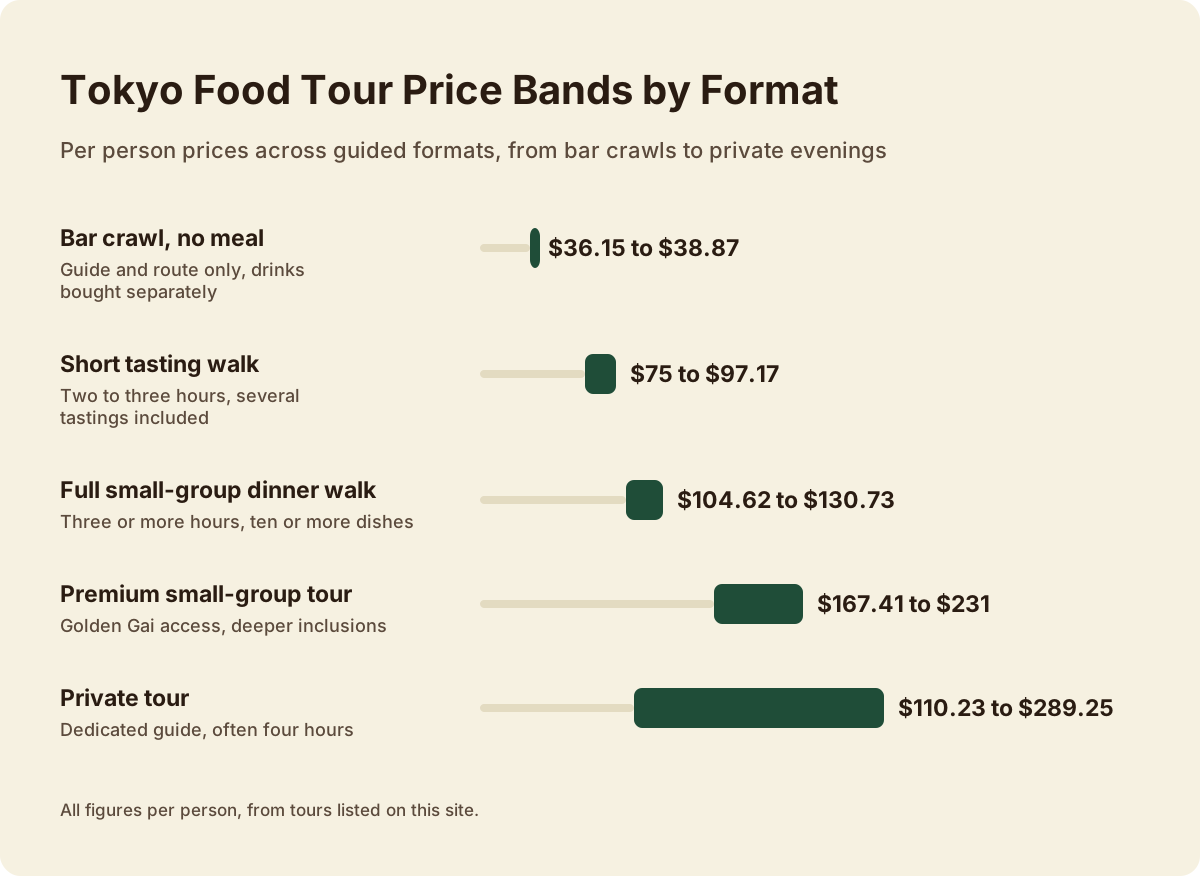
Here is the range laid out by format:
| Format | Price range | What moves the price |
|---|---|---|
| Bar crawl, no meal | from $36.15 to $38.87 per person | Guide and route only, drinks bought separately |
| Short tasting walk | from $75 to $97.17 per person | Two to three hours, several tastings included |
| Full small-group dinner walk | from $104.62 to $130.73 per person | Three or more hours, ten or more dishes |
| Premium small-group tour | from $167.41 to $231 per person | Golden Gai access, deeper inclusions |
| Private tour | from $110.23 to $289.25 per person | Dedicated guide, often four hours |
A useful benchmark from outside the tour world: the national retail survey put the average price of a bowl of shoyu ramen at 750 yen, and a serving of nigiri sushi at 1,592 yen. A $100 tasting tour that includes ten or more dishes plus guiding is therefore buying a lot of food, not just a chaperone. If you'd like to see how much a single bowl can run from one neighborhood to the next, our plain guide to ramen prices across Tokyo covers everything from budget chains to premium shops.
What Do Tokyo Food Tour Prices Include?
Most Tokyo food tour prices include the food and non-alcoholic drinks served during the walk, a local English-speaking guide, and any stated number of tastings, typically five to fifteen dishes. They generally exclude hotel pickup, extra alcohol beyond what is listed, souvenirs, and the trip to the meeting point, which is usually a named station exit.
The number of dishes is the single clearest value marker on any listing. The Shibuya walk with thirteen dishes across three eateries costs from $84.21 per person and is rated 4.9 across 1,437 reviews. The Asakusa guided walk with twelve dishes at local eateries costs from $75.30 per person, rated 4.85 across 73 reviews, over about two and a half hours. When you compare two tours at similar prices, count the dishes and the hours before anything else.
Two inclusions deserve close reading. First, drinks: some mid-band tours include a set number of drinks, such as the Shinjuku walk with fifteen dishes and three drinks at from $76.10 per person, rated 4.84 across 487 reviews. Others include nothing alcoholic, which is why the bar-hopping formats exist separately. Second, the "free-flow" label: the Shinjuku bar hop with a full dinner and free-flow drinks runs from $109.35 per person, rated 4.9 across 4,086 reviews, and the drinks allowance explains why it costs three times the basic crawl despite both being evening Shinjuku products.
What is almost never included is worth a short list:
| Usually included | Usually not included |
|---|---|
| Stated tastings and dishes | Transport to the meeting point |
| Local guide, English language | Hotel pickup and drop-off |
| Some or all soft drinks | Extra alcohol beyond the stated allowance |
| A seating charge where the tour books tables | Souvenirs and personal shopping |
| A route through two to seven eateries | Food you order beyond the set menu |
If you are weighing whether a guided walk is worth it at all, the what to expect on a Tokyo food tour guide walks through the format minute by minute, and it is worth reading before you commit to a band.
Which Price Band Fits Your Budget In Tokyo?
Budget travellers should target the $36.15 to $75 band, which buys bar crawls and the per-group street food walk; mid-range travellers get the best choice between $75 and $110 per person, where most ten-plus-dish tasting tours sit; and anyone wanting premium or private guiding should expect to pay from $130.73 to $289.25 per person.
The budget band is more interesting than it looks. The standout is the street food tour through seven eateries with more than ten tastings, priced from $75 per group, rated 5 across 42 reviews over roughly two and a half hours. That per-group basis is unique in the current options and means a couple or small family can split a single figure, which changes the arithmetic completely. The Shibuya bar hop at from $38.87 per person, rated 5 across 1,107 reviews, is the other budget anchor, with the same caveat that no meal is included. To eat well without spending much, sort The Tokyo Food List by price range and check the Google ratings before you pick a place.
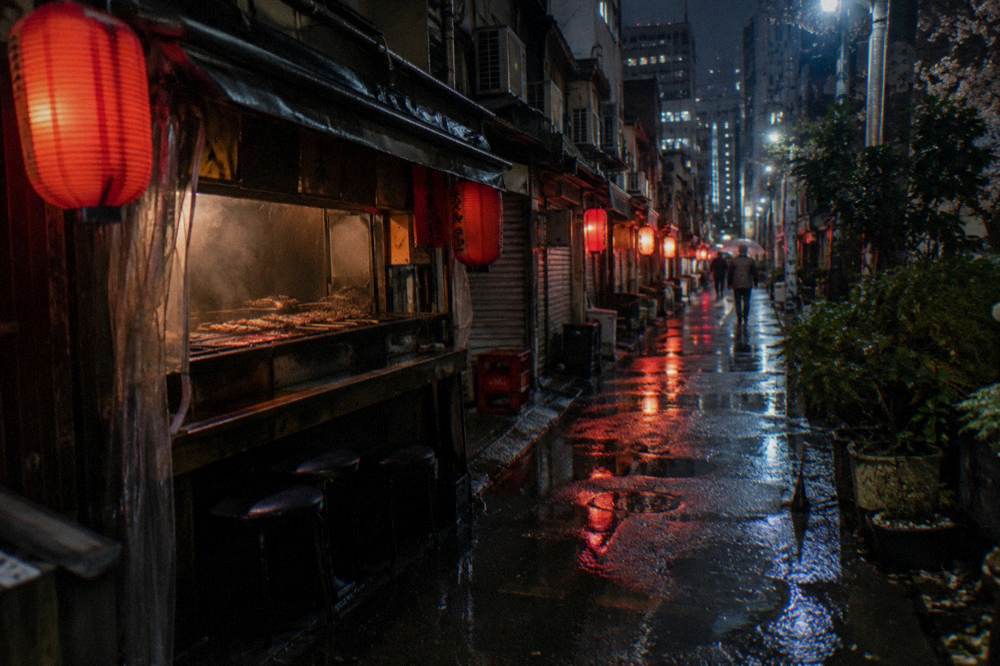
The middle band is where Tokyo food tours are strongest. The Tsukiji market walk with five tastings costs from $97.17 per person and is rated 4.9 across 3,868 reviews. The Togoshi Ginza street food walk, a small-group format, costs from $93.85 per person, rated 5 across 34 reviews. The Kichijoji backstreet izakaya crawl runs from $104.62 per person, rated 5 across 38 reviews. All of these include food, last two and a half to three hours, and are led in English by local guides.
At the top, the premium band buys access rather than quantity. The Shinjuku Golden Gai food tour costs from $217 per person, rated 5 across 261 reviews, and the price reflects small-venue cover charges and the difficulty of getting groups into bars that seat five people. The Old Town premium walk at from $231 per person, rated 4.9 across 71 reviews, and the private Sangenjaya backstreets evening at from $289.25 per person, rated 5 across 148 reviews, round out the ceiling.
| Tour | Duration | Price | Rating and reviews |
|---|---|---|---|
| Shibuya bar hop, no meal | ~3 hours 30 minutes | from $38.87 per person | rated 5 across 1,107 reviews |
| 7 Eateries, Shopping Streets Walk | ~2 hours 30 minutes | from $75 per group | rated 5 across 42 reviews |
| Tsukiji Market, 5 Tastings | ~3 hours | from $97.17 per person | rated 4.9 across 3,868 reviews |
| Ueno Walk, 10+ Japanese Classics | ~3 hours 30 minutes | from $107.99 per person | rated 5 across 349 reviews |
| Bar Hop, Free Flow Full Dinner | ~3 hours | from $109.35 per person | rated 4.9 across 4,086 reviews |
| Old Town Premium Walk | ~3 hours 30 minutes | from $231 per person | rated 4.9 across 71 reviews |
| Private Sangenjaya Backstreets | ~4 hours | from $289.25 per person | rated 5 across 148 reviews |
The most reviewed option of all, for context, is the Shinjuku local eateries walk, rated 4.9 across 10,498 reviews at from $84.21 per person, which tells you the mid-band small-group format is what most visitors actually book. For timing that value against the calendar, the best time for a Tokyo food tour guide to the best time of year for Tokyo food tours.
Why Do Some Tokyo Tours Cost More Than Others?
Tokyo tour prices rise with four factors: the number of included dishes and drinks, the fame and cover charges of the district, the group size, and whether the guide is dedicated to you privately. Golden Gai and Omoide Yokocho products cost more because the venues charge per-seat fees, while market and arcade walks stay cheaper because vendors operate at volume.
District economics matter more than most visitors expect. Golden Gai bars commonly charge a cover or seat fee of 500 to 1,500 yen per person, often including a small snack, and many close as late as 2 to 5 a.m. with individual schedules. Omoide Yokocho counters frequently add an otoshi seating charge of 300 to 500 yen, and typical independent spending there runs 2,000 to 3,000 yen per person for skewers and drinks. A tour that books tables in these lanes absorbs those charges, which is a large part of why the Golden Gai food tour at from $217 per person costs double a standard Shinjuku walk.
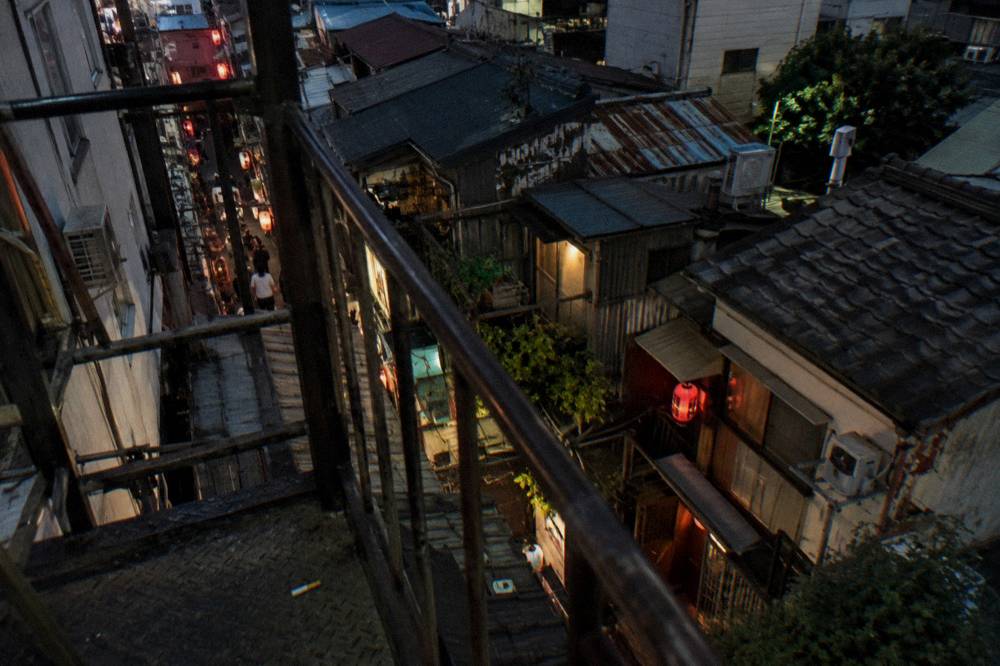
Group size is the second lever. Standard Tokyo food tours cap participation at a headcount each operator sets for itself, and the small-group and premium formats hold fewer guests, which raises the per-person cost of the guide, the bookings, and the seating. Fully private formats, such as the private Shinjuku evening with unlimited sake, listed from $110.23 per person, or the private Sangenjaya backstreets tour, spread one guide across your party alone, and the pricing reflects that exclusivity even where the per-person figure looks moderate.
Duration explains the rest. A one-hour product cannot cost like a four-hour one, and Tokyo's offerings span both ends: the Ginza izakaya hopping tour with a local guide runs just one hour at from $195 per person, rated 5 across 36 reviews, an unusually high hourly rate because it compresses a guided crawl into a single hour, while the four-hour market-to-table cooking class costs from $84.21 per person, rated 5 across 405 reviews, because a longer class spreads fixed costs thinner.
For evening value specifically, the izakaya and nightlife end of the spectrum is covered in the Tokyo night food tour guide, where cover charges and drink inclusions are compared format by format.
How Do Tour Prices Compare With Eating On Your Own In Tokyo?
Eating independently in Tokyo can cost far less than a tour, with conveyor-belt sushi meals commonly totalling 1,500 to 3,000 yen and yakitori skewers running 150 to 400 yen each at casual counters, but self-guided eating buys no translation, no bookings, and no route through the backstreets. A tour price is best understood as food plus access plus guiding.
The honest math is on the side of independent eating if your only goal is calories. A survey of 81 ramen shops around Takadanobaba found an average basic bowl price of 993 yen, with the cheapest at 600 yen. Standing sushi bars near Tsukiji sell nigiri from around 90 to 500 yen a piece. Monjayaki dishes at Tsukishima association shops sit around 1,500 yen including tax. Two people can each eat a full conveyor-belt sushi meal for 1,500 to 3,000 yen apiece, far below the per-person cost of a mid-band tour ticket.
What the tour adds is harder to price. Many of the best small venues in Omoide Yokocho and Golden Gai have no English menu, cash-only policies, and regulars-only doors, and the fresh reporting on Golden Gai notes that plenty of bars welcome tourists but some do not, with cover charges posted at the door. A guide who has standing relationships with those venues is buying access you cannot easily replicate. Independent visitors also routinely underestimate the otoshi seating charge at izakaya, a small unordered appetizer that functions as a per-person table charge, typically itemised on the bill.
| Cost item | Independent estimate | On a typical mid-band tour |
|---|---|---|
| Ten tasting dishes | Varies by venue, conveyor meals 1,500 to 3,000 yen each | Included in the ticket |
| Izakaya seating charge | 300 to 1,500 yen per person | Absorbed by the operator |
| English guidance and translation | None | Included |
| Finding five to seven venues on your own | Your own research | Route and bookings handled |
| Evening in Golden Gai | Cover charges and refusals possible | Venues pre-arranged |
There is also a tax angle worth knowing. Restaurant meals in Tokyo carry 10 percent consumption tax, takeaway food carries 8 percent, and the National Tax Agency states that dining out is excluded from the reduced rate, a detail explained on its English consumption tax page. Tour prices already account for this, but independent budgeting should too.
For readers deciding between a market walk and a solo market visit, the Tsukiji planning piece compares the two approaches, and the free Tsukiji question guide covers whether the market itself justifies the ticket.
What Extra Costs Should You Budget For In Tokyo?
Beyond the ticket, budget for transport to the meeting point, extra drinks beyond any included allowance, souvenirs, and any food you order past the set menu. Restaurant bills carry 10 percent tax, tipping is not customary in Japan, and cash is still preferred at many independent counters, so carry yen for anything outside the tour itself.
Tipping deserves a clear statement because it confuses North American visitors: it is not common in Japan for restaurants, bars, cafes, taxis or hotels, and the national tourism organisation says so plainly on its official tipping page. Staff may chase you down to return money left on the table. The tour ticket and the printed bill are the whole cost of the experience.
Transport is the other quiet add-on. The Yamanote Line serves Shinjuku and Shibuya directly, the Hibiya Line serves Tsukiji near the Outer Market, and the Ginza Line reaches Asakusa, all on mutually usable Suica and PASMO IC cards across JR East and Tokyo Metro. A few hundred yen each way is the realistic cost of reaching most meeting points, and since tours meet at named station exits, budgeting one short train fare per direction is enough.
Allergies and dietary needs are a cost question in one sense: messaging the operator before booking is free, and doing it can prevent a wasted ticket. Japan now requires labelling of nine specified allergens on packaged processed food, with cashew nuts added to the list, but the Consumer Affairs Agency's allergen rules cover packaged goods, not restaurant dishes, so a tour can never be assumed allergy-safe without asking first.
| Extra cost | Planning range |
|---|---|
| Train to meeting point | A few hundred yen per ride within central Tokyo |
| Extra drinks at a crawl | 500 to 1,000 yen per drink at small bars |
| Otoshi seating charge, if visiting bars independently | 300 to 1,500 yen per person |
| Souvenirs at Tsukiji or Nakamise | Set your own cap, prices vary by shop |
| Gratuity | Not customary, not expected |
The free-flow dinner crawl in Shinjuku is the clearest example of paying up front to avoid these extras, since its from $109.35 ticket folds in the dinner and the drinks allowance that would otherwise appear as line items all evening.
Is A Cheaper Tokyo Food Tour Ever The Better Buy?
Yes, frequently. The $36.15 bar crawl rated 4.9 across 2,911 reviews outperforms many pricier products on satisfaction, and the from $75 per group street food walk is a 5-star, 2.5-hour walk from $75 per person, because cheap in Tokyo tours usually means a narrower format, not worse guiding or worse food.
Reading price as a quality signal is the main mistake. The two most reviewed products on the site, the Shinjuku local eateries walk at 4.9 across 10,498 reviews and the free-flow dinner crawl at 4.9 across 4,086 reviews, both sit in or near the middle band, not the premium one. Satisfaction in this category tracks the guide and the route far more than the ticket price, and review counts of that size make the ratings meaningful.
The real reason to pay more is scope, not quality. You move up the bands to get a full meal rather than a route, a private guide rather than a shared one, or Golden Gai seating rather than street-level tastings. If none of those three matter to you, the cheap end does the same job. The Ueno walk with exactly ten tastings, from $107.98 per person and rated 4.76 across 38 reviews, and the Ginza and Shimbashi walk at from $145.85 per person, rated 4.64 across 40 reviews, are both fine products whose prices reflect district and format, not a tier of experience the budget options lack.
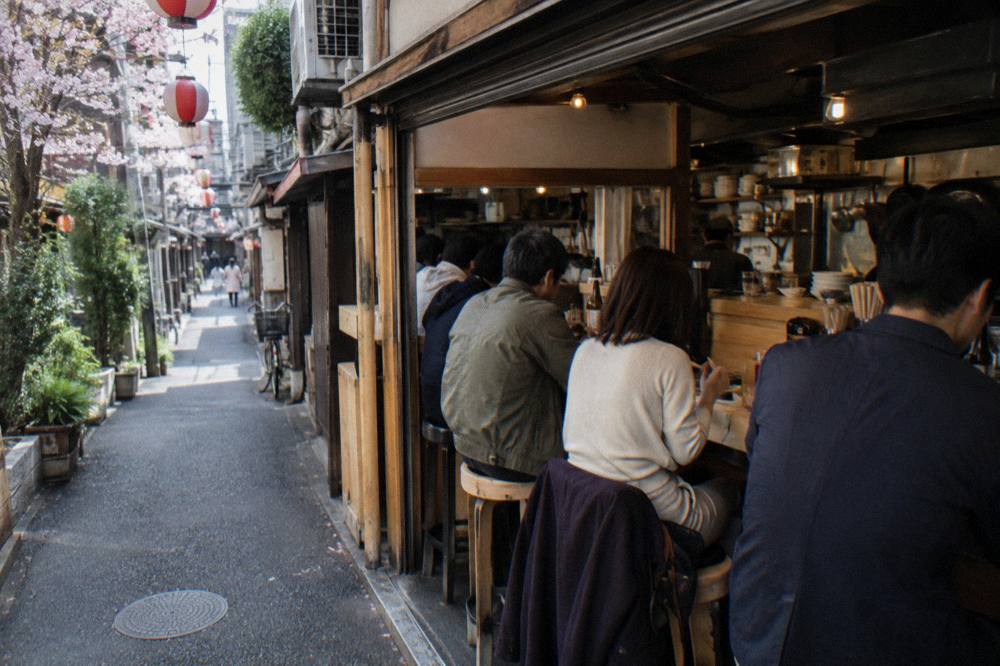
One planning tip that saves real money: match the format to your appetite, not the other way round. A light eater on a fifteen-dish walk is paying for food they will not finish, and finishing matters culturally, a point the 80 percent eating rule in Japan explains. A couple of light eaters are often better served by the five-tasting Tsukiji walk than by the biggest menu on the list. If you want a lower-commitment way to explore, the free walking tours in Tokyo with food stops explain how the pay-what-you-want model works and when a paid tasting route makes more sense.
Common Questions About Tokyo Food Tour Costs
How Much Does A Tokyo Food Tour Cost?
Small-group tasting tours mostly cost from $75 to $110 per person with food included. Bar crawls without meals start from $36.15 per person, premium small-group tours run from $167.41 to $231 per person, and private tours reach $289.25 per person. One street food walk is priced from $75 per group rather than per person.
Are Food And Drinks Included In The Tour Price?
On tasting tours, yes: the stated number of dishes, usually five to fifteen, is included, along with a local English-speaking guide. Some tours include set drinks, such as the Shinjuku walk with fifteen dishes and three drinks. Extra alcohol beyond any stated allowance, transport, and personal shopping are not included.
Why Is A Bar Crawl Cheaper Than A Food Tour In Tokyo?
Because a crawl sells a route and a guide, not a meal. The from $36.15 Shinjuku crawl leads you between izakaya and bars, but drinks and food are bought separately, while a mid-band tasting tour folds the food cost into the ticket.
Do I Need To Tip My Tokyo Food Tour Guide?
No. Tipping is not customary in Japan for restaurants, bars, taxis or hotels, and the national tourism organisation confirms this on its official guidance. The ticket price and any printed bill are the full cost.
What Extra Costs Should I Plan For Beyond The Ticket?
Budget a train fare to the meeting point, cash for drinks or snacks outside the included tastings, and anything you buy in the markets. Restaurant meals carry 10 percent consumption tax and takeaway 8 percent, and many small counters still prefer cash.
Is A More Expensive Tokyo Food Tour Better?
Not necessarily. The mid-band tours draw the largest review pools, so their scores rest on plenty of feedback, including a 4.9 across 10,498 reviews at from $84.21 per person. Higher prices buy scope, such as private guiding, free-flow drinks or Golden Gai seating, rather than better guides.