What Is The Most Famous Restaurant In Tokyo?
There is no single most famous restaurant in Tokyo, and the honest answer depends on what kind of fame you mean. Here is how to think about it, and how tours sidestep the booking problem.
Tokyo has no single most famous restaurant, since fame here splits between Michelin-listed counters, historic market stalls, and post-war alley bars, each famous to a different crowd. The practical route to that famous-food experience is a guided table, which is why the Omakase Sushi and A5 Wagyu tour, rated 4.72 across 329 reviews from $130.73 per person, delivers it without a booking fight. If you'd rather fight for a table on your own, the guide to booking Tokyo restaurants as a visitor covers which spots need reservations and how to make them without speaking Japanese.
Ask ten Tokyo residents to name the most famous restaurant in the city and you will get ten different answers, because fame here is not one ladder. A sushi counter can hold three Michelin stars and seat eight people. A yakitori stall in a Shinjuku alley can be world famous among chefs and invisible to guidebooks. The Michelin Guide Tokyo 2026 alone added 16 new Bib Gourmand designations, including ramen shops such as Teuchi Asama and Ginza HARU CHAN Ramen, which tells you something important: in Tokyo, a bowl of noodles can carry the same international recognition as a kaiseki dinner costing twenty times more.
That spread is exactly why the question frustrates travellers. The fame you are chasing probably belongs to a category, sushi, ramen, wagyu, izakaya food, rather than to one address, and each category has its own famous names and its own booking reality. The Omakase Sushi and A5 Wagyu Premium Foodie Tour is built around precisely this problem: roughly 3 hours, two of Japan's most internationally famous foods, and a guide who holds the relationships instead of you holding a phone at 3 a.m. trying to reach a reservation line that opened a month ago.
Fame also moves. The counters that dominated food media a decade ago have been joined, and in some conversations overtaken, by ramen shops with Bib Gourmand status, standing sushi bars near the market, and wagyu experiences that were once the preserve of expense-account dining. If your goal is to eat at the level that made Tokyo famous, the category matters more than the name on the door.
Which Tokyo Restaurants Are Actually Famous, And Why?
Tokyo's genuinely famous eating places fall into four groups: Michelin-recognised sushi and kaiseki counters, Bib Gourmand ramen shops, market institutions around Tsukiji, and the alley bars of Omoide Yokocho and Golden Gai. Each is famous for a different reason, technique, value, history or atmosphere, and only the first group is genuinely hard to book. Notably, the Michelin Guide Tokyo 2026 gave Bib Gourmand status to 16 new restaurants, including multiple ramen shops.
Start with the Michelin layer, because that is what most people mean by famous. Tokyo has spent well over a decade as one of the most star-decorated dining cities in the world, and the 2026 guide continued the pattern by adding 16 new Bib Gourmand entries. The Bib Gourmand designation matters for travellers more than stars do: it flags high-quality food at moderate prices, which in Tokyo increasingly means ramen. Teuchi Asama and Ginza HARU CHAN Ramen are two of the names recognised in the 2026 guide, and a bowl at that level costs a fraction of a tasting menu.
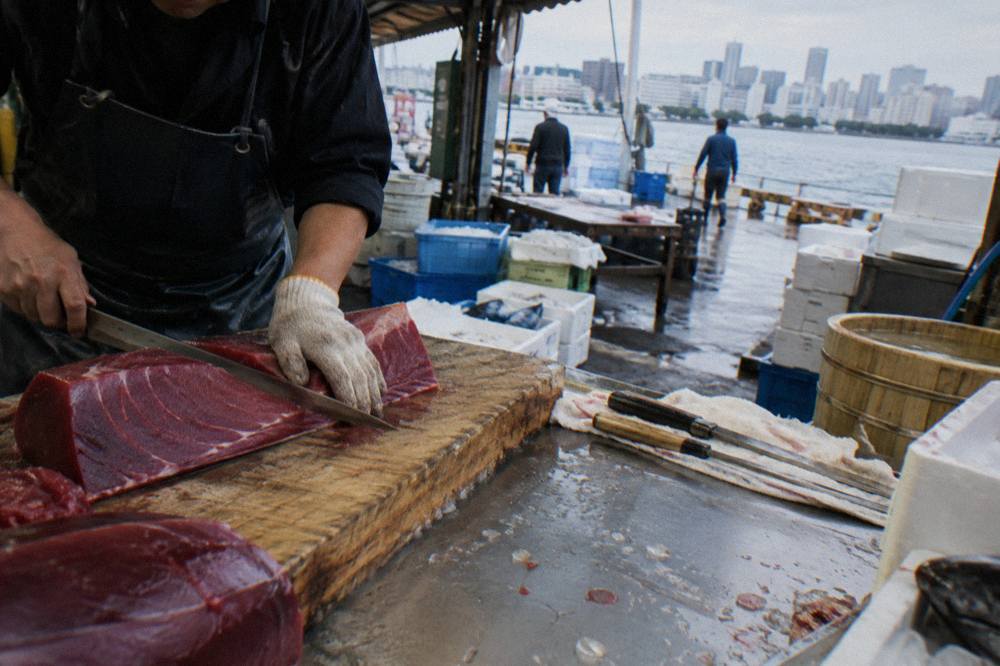
Then there is the market layer. Tsukiji's Outer Market remains famous even though the inner wholesale market moved to Toyosu, and its hundreds of independent shops, covering fresh and processed seafood, dried goods, tamagoyaki, kitchenware and small eateries, are the reason. Standing sushi bars around the Tsukiji area serve nigiri pieces from roughly 90 to 500 yen each, and the national average price of a nigiri sushi serving was 1,592 yen as of September 2026, so fame and expense do not always travel together. The market's own rules shape the visit: professional buyers have priority until 9:00 a.m., eating happens inside the eatery or in front of the store rather than while walking, and shops largely follow the Tokyo Central Wholesale Market closure calendar, with many closing on Sundays, holidays and selected Wednesdays.
The third layer is the alley layer. Omoide Yokocho, a post-war bar district near Shinjuku Station's West Exit, packs about 80 premises, roughly 60 of them bars and restaurants, mostly grilling yakitori and motsuyaki, into around 2,000 square metres. Typical spend there runs about 2,000 to 3,000 yen per person for skewers and drinks, and many counters add an otoshi seat charge of 300 to 500 yen that includes a small starter. These lanes are famous for atmosphere and history rather than for any single named venue, which is why guided walks through them, such as the Shinjuku Local Eateries Walk, rated 4.9 across 10,498 reviews and priced from $84.21 per person, work so well: the fame belongs to the district, and a guide turns the district into a route.
The fourth layer is the one you cannot see at all: the reservation-only counters, often with a handful of seats, often booked out weeks or months ahead, frequently requiring introductions or concierge help. This is where the phrase most famous restaurant usually points, and it is the layer where independent travellers most often come away empty-handed.
Why Famous Restaurants Are Hard To Book
Famous Tokyo restaurants are hard to book because many seat fewer than a dozen people, take reservations by phone in Japanese during business hours, and penalise no-shows, which forces travellers to compete for a tiny number of seats from another time zone. Reservations are recommended and sometimes required at popular and high-end venues, and no-shows or late cancellations can trigger fees. A tour sidesteps the whole mechanism by bringing its own table.
The arithmetic is brutal. A counter with eight seats running two seatings a night sells 16 covers a day. Even a modest surge of international interest clears that inventory instantly, and the venue has no incentive to change, because scarcity is part of what makes it famous. Meanwhile many casual Tokyo eateries operate first-come, first-served with no reservations at all, while destination spots want advance booking by phone, website or concierge. The gap between those two worlds is where most visitors lose their dinner.
Language and timing compound it. Reservation lines often open during Tokyo business hours, which is the middle of the night in North America and Europe, and politely insistent Japanese-language phone etiquette does not survive machine translation well. Cancellation policies add pressure: venues ask to be notified if plans change, and fees for no-shows are established practice. None of this is hostile; it is a small room protecting itself.
This is the honest case for tours, stated plainly. A guided experience such as the Tsukiji Market, 5 Tastings tour, roughly 3 hours, rated 4.9 across 3,868 reviews, from $97.17 per person, turns a famous market with its own etiquette rules into a guided walk with tastings without you needing to negotiate anything. The same logic applies at the premium end with the Omakase Sushi and A5 Wagyu Premium Foodie Tour, which you can also reach directly through Omakase Sushi and A5 Wagyu alongside our Omakase and wagyu guide.
| Fame barrier | Why it happens | How a tour handles it |
|---|---|---|
| Tiny seat counts | Famous counters seat 6 to 12 guests | Free cancellation offered on this tour |
| Phone-only booking in Japanese | Many venues do not use booking apps | The operator makes and manages the contact |
| No-show fees | Small rooms penalise empty seats | Tour cancellation terms are on the booking page |
| Etiquette and language gaps | Menus and customs assume local fluency | A guide translates and sequences the meal |
| Market timing rules | Buyer priority and closure days at Tsukiji | Guided walks run when visitor access is appropriate |
What Fame Does Not Tell You About A Meal
A famous name tells you a restaurant mattered to someone, somewhere, but it tells you nothing about whether you can get in, whether the style suits you, or whether the same ingredient appears down the street at a fifth of the price. Tokyo's most satisfying meals often sit one block off the famous address, at a standing sushi bar or a counter ramen shop, where the cooking standard is high because the whole city competes at it.
Consider what the numbers above actually show. A Bib Gourmand ramen shop and a three-star sushi counter share a guide, and the ramen costs about the same as a coffee and pastry in a Western capital. The national average for a bowl of shoyu ramen stood at 750 yen as of September 2026, and even in the pricier Takadanobaba-Waseda survey the average basic bowl was 993 yen. When the baseline is that high, chasing one famous name costs you the depth of everything around it.
Fame is also a poor predictor of fit. A famous omakase counter assumes you will eat what is served, at pace, for two hours, in near silence. Some travellers find that the best meal of their lives; others find it stressful. A cooking class flips the relationship entirely: in the Small-Group Wagyu Beef and 7 Japanese Dishes Tokyo Cooking Class, rated 5 across 202 reviews and from $71.26 per person, you cook the famous food yourself, with a recipe you take home. Fame becomes a skill instead of a ticket. Check availability if that trade appeals. When you are picking a restaurant in Tokyo on your own, The Tokyo Food List gives you tourist favorites and local spots with Google Maps pins.
There is a mid-point too, for people who want someone else's hands on the food but conversation in their own language. The Sushi Class, Michelin-Listed Venue experience puts sushi making inside a Michelin-listed hidden gem, rated 5 across 80 reviews, from $90.69 per person in about 90 minutes. You are inside a recognised venue, learning the technique, without winning a reservation lottery to do it.
The lesson is not that famous restaurants disappoint. It is that in Tokyo the fame is unusually distributed, so a strategy of eating widely at a high standard usually beats a strategy of hunting one name. If a specific chef's counter is your dream, book it properly, months out, through whatever channel it accepts. For everything else, the city rewards moving.
How Food Tours Turn Fame Into A Table
Food tours convert fame from a booking contest into an itinerary: the operator secures the hard-to-get venues, the guide sequences the dishes, and you spend the evening eating instead of negotiating. The options run from a $36.15 bar crawl to a $289.25 private backstreet walk, including the Omakase Sushi and A5 Wagyu tour from $130.73 per person, which covers two of Japan's most famous foods in a three-hour run.
The economics are worth stating. You could assemble a famous-food day independently: a market breakfast, a Bib Gourmand ramen lunch, a standing sushi stop, an izakaya evening. Each is individually affordable, as the survey numbers above show. What you would spend instead is time, standing in lines, reading closure calendars, and guessing which of eight identical counters is the good one. A tour concentrates that research. The Shinjuku Local Eateries Walk, about 3 hours, rated 4.9 across 10,498 reviews, from $84.21 per person, is the most-reviewed of the options for a reason: Shinjuku is the district where finding your own way is hardest, hundreds of options, small signage, everything looking alike after dark.
At the premium end, the Omakase Sushi and A5 Wagyu Premium Foodie Tour comes closest to a famous-restaurant experience, with the booking already handled. It pairs the two food categories most associated with Japanese fame internationally, and at roughly 3 hours it fits an evening without consuming a day. Our premium tastings overview covers how wagyu grading and omakase formats actually work, and our guide to what a food tour costs breaks down the price bands across the whole menu of options.
One honest caveat: a tour is a guided table, not a specific starred counter. If the single most famous sushi restaurant on earth is the only thing that will satisfy you, no tour substitutes for it, and you should pursue that reservation through proper channels. What a tour does is deliver the category, sushi, wagyu, izakaya food, market street food, at a reliably high standard, in company, on a schedule you control.
Michelin, Bib Gourmand, And Tokyo's Standing
Tokyo's international food reputation rests on the sheer breadth of its recognised dining rather than on one champion restaurant: the Michelin Guide Tokyo 2026 added 16 new Bib Gourmand entries, including ramen shops, while the city's average prices for sushi and ramen stayed remarkably low by global standards. That combination, top-tier recognition at street-food prices, is why the most famous restaurant question keeps dissolving.
The 2026 Bib Gourmand list is the clearest illustration. When a guide created to find fine dining at value repeatedly decorates ramen shops, it is confirming what locals already knew: the famous-food economy of Tokyo runs from 750 yen bowls to counter seats costing hundreds of dollars, and quality is not locked to the top of that range. Our piece on how much one bowl of ramen costs in Tokyo goes deeper on the noodle end of that spectrum.
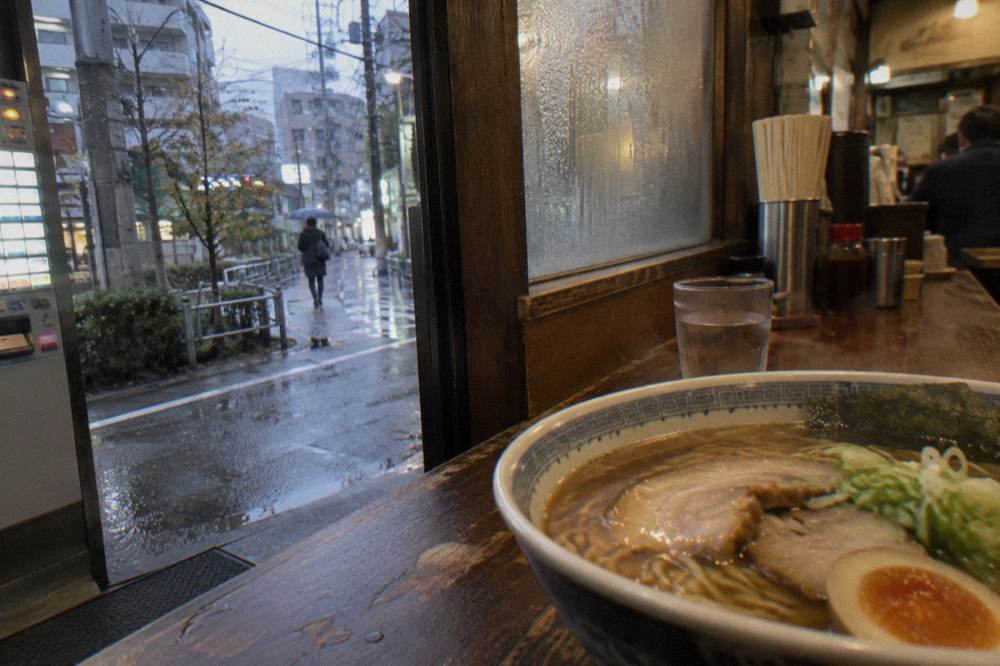
For travellers, a few practical notes govern any famous-food day in Tokyo. Consumption tax runs 10 percent on restaurant meals and 8 percent on takeaway food, and the National Tax Agency states that for the two years from 1 April 2027 the rate on food and drink sales is due to be lowered, a future change worth knowing if you are reading this before then. Tipping is not customary; the Japan National Tourism Organization notes it is not common to tip in bars, cafes, restaurants, taxis or hotels, and an otoshi appetizer that appears unbidden at an izakaya is a seating charge, not a gratuity. And if you have a serious allergy, Japan's mandatory allergen labelling covers packaged foods, nine specified items including cashew since 1 April 2026, but restaurant dishes generally are not labelled, so tell the operator before booking rather than the server on the night. Full detail on that lives in our pre-restaurant etiquette primer.
| Famous-food category | Typical price signal | Booking reality |
|---|---|---|
| Michelin-starred counters | Highest tier, often tasting-menu pricing | Tiny rooms, long lead times, sometimes introduction-only |
| Bib Gourmand ramen | National average shoyu bowl 750 yen | Queue-based, no reservations at most shops |
| Standing sushi near Tsukiji | Nigiri pieces from about 90 to 500 yen | Walk-in, turnover is fast |
| Omoide Yokocho counters | About 2,000 to 3,000 yen per person plus otoshi | Walk-in, cash still common at small counters |
| Guided premium tours | Omakase and wagyu tour from $130.73 per person | Book online, fixed schedule, guide holds venues |
None of these categories crowns a champion, and that is the real answer to the question. Tokyo is a city where the most famous restaurant is whichever one you are sitting in, because the baseline is ferociously high and the fame is spread across thousands of rooms. Plan for breadth, book the one counter that truly matters to you, and let a guided table carry the rest of the load. Tokyo Food Tours exists for exactly that third job.
Common Questions About Tokyo's Most Famous Restaurants
What Is The Most Famous Restaurant In Tokyo?
There is no single answer. Fame is distributed across Michelin-starred sushi and kaiseki counters, Bib Gourmand ramen shops recognised in the Michelin Guide Tokyo 2026, market institutions at Tsukiji, and the historic alley bars of Omoide Yokocho and Golden Gai. Each group is famous to a different audience, and none holds the title outright.
Can Tourists Book Tokyo's Famous Restaurants?
Some, with effort. Reservation-only counters seat very few guests and often take bookings by phone in Japanese during Tokyo hours, and no-shows can incur fees. Casual famous spots, including most top ramen shops, are queue-based walk-ins. Guided tours hold their own tables and skip the reservation contest entirely.
Is A Food Tour A Good Substitute For A Famous Restaurant?
For the category, yes. A tour such as the Omakase Sushi and A5 Wagyu Premium Foodie Tour, about 3 hours, rated 4.72 across 329 reviews, from $130.73 per person, delivers two of Japan's most famous foods with a guide handling venues and translation. It does not replicate one specific starred counter, so if a single address is your dream, book that separately.
How Much Does Famous Food Cost In Tokyo?
Less than the fame suggests. The national average shoyu ramen bowl was 750 yen as of September 2026, average nigiri sushi servings ran 1,592 yen, and standing sushi bars near Tsukiji serve pieces from about 90 to 500 yen. Premium counter dining sits far above that, which is why breadth beats a single splurge for most visitors.
Do I Need To Tip At Famous Tokyo Restaurants?
No. Tipping is not customary in Japanese restaurants, bars or taxis, and staff may return money left by mistake. An otoshi appetizer at an izakaya is a standard per-person seating charge, not a gratuity. Upscale venues that add a service charge include it in the bill.