How Much Is One Bowl Of Ramen In Tokyo?
A plain answer to what one bowl of ramen costs in Tokyo, with survey averages, neighbourhood price ranges, tax and tipping rules, and how class prices compare.
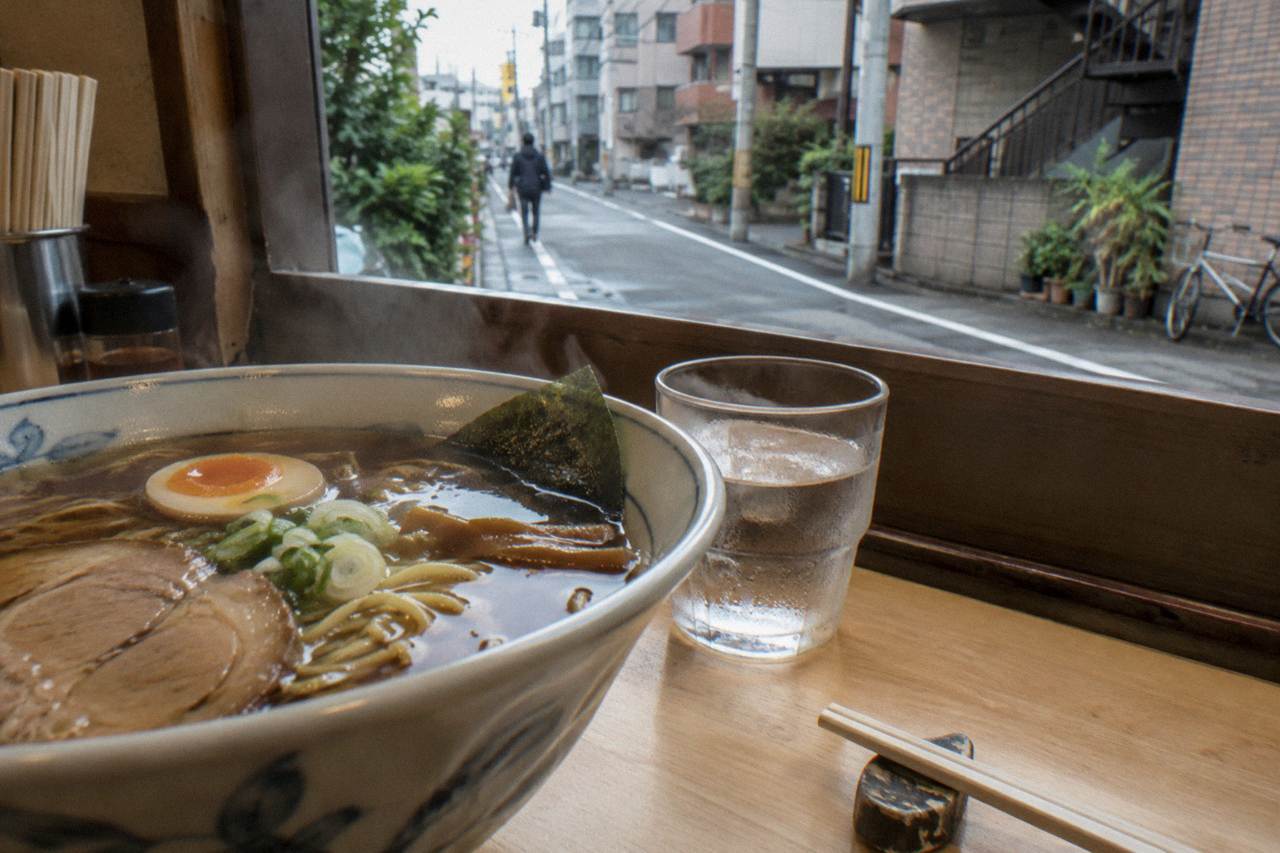
The honest short answer: the cheapest bowls cluster in student neighbourhoods, the national average for a shoyu bowl was 750 yen as of a September 2026 official retail price survey, and a survey of 81 ramen shops in the Takadanobaba and Waseda area put the average basic bowl at 993 yen with the cheapest at 600 yen. Specialty bowls climb well past that, and a few famous shops charge two or three times the average without apology.
That spread is the interesting part. Ramen is one of the few foods in Tokyo where the price of a bowl still maps loosely onto rent and labour rather than prestige, though the Michelin era has started to change that. The Michelin Guide Tokyo 2026 added 16 new Bib Gourmand restaurants, and several of them were ramen shops, which puts counter noodles on the same list as far pricier kitchens. This page walks through what a bowl costs, why the numbers move, how the tax and tipping rules shape the final bill, and how the price of eating ramen compares with the price of learning to make it. For the rest of the evening's budget, the guide to what a full dinner in Tokyo costs takes you from standing counters to izakaya crawls, with tax and cover charges included.
A basic bowl of ramen in Tokyo typically runs from the 600 yen floor at the cheapest counters to the 993 yen neighbourhood survey average, with the national average for a shoyu bowl at 750 yen. A September 2026 retail survey set that national figure, and an October 2026 count of 81 shops around Takadanobaba and Waseda averaged 993 yen for a basic bowl.
Three numbers do most of the work here. The 750 yen figure is a national average for shoyu-style bowls including tonkotsu shoyu, drawn from an official retail price survey in September 2026. The 993 yen figure is Tokyo-specific but neighbourhood-narrow: 81 shops in the Takadanobaba and Waseda area, a dense student and office district where competition should keep prices honest. The 600 yen floor shows the category still has a real bottom end.
Above the average, the ceiling is soft. Rich tonkotsu bowls with extra chashu, premium noodle shops using domestic wheat and long-simmered broth, and Michelin-recognised counters can push a single bowl toward 1,500 yen. At that level you are paying for a chef's craft the way you would at any recognised restaurant, and queues form anyway. The gap between the survey floor and the recognised counters is not a mark-up on the same product; it is a different product entirely, built on more hours of labour per litre of broth.
Ramen holds its value in a way few other Tokyo meals do. Many shops sell gyoza for a few hundred yen alongside the bowl, so a full, filling dinner at a counter still frequently lands well under 1,500 yen before tax. Our cheap eats in Tokyo guide covers how ramen fits into a low-budget eating day alongside conbini onigiri and standing sushi.
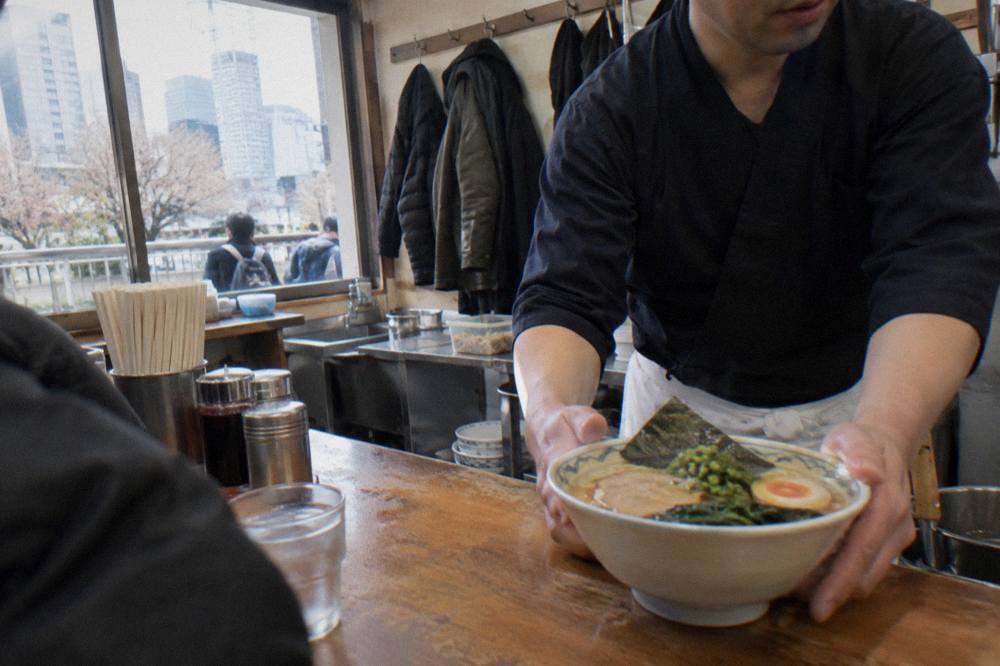
The eating itself is fast and structured. Counter seats turn over quickly, solo diners are the norm rather than the exception, and the whole transaction, from ticket machine to empty bowl, can take less than twenty minutes at a quiet hour. That speed is part of the economics: a shop serving hundreds of bowls a day at the survey average can stay profitable where a slow table-service restaurant could not.
If the question behind the question is whether learning to make the bowl beats buying it, the three most instructive options in the city right now are the Ramen Class, Tonkotsu Shoyu Miso in Shibuya, the Ramen Class Plus Akihabara Tour, and the full Ramen Chef in a Restaurant experience. The band below compares them side by side.
Why Ramen Prices Vary So Much Across Tokyo
Ramen prices vary because broth, noodles and toppings each carry their own cost curve, and because neighbourhood rent and a shop's ambition matter more than the menu category does. A 600 yen counter and a shop charging three times the average can sit ten minutes apart on the same train line, selling food built from the same four components.
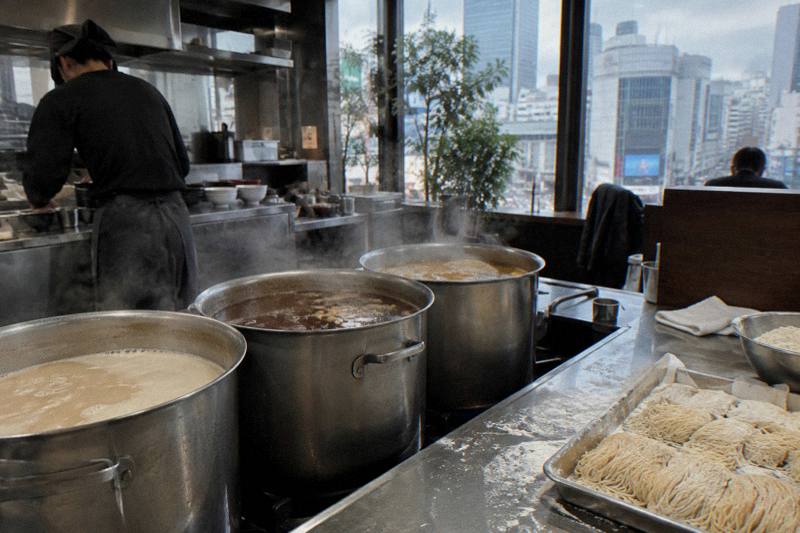
Broth is the biggest driver. A tonkotsu pork bone broth simmers for many hours in large stockpots, consuming gas, bones and a cook's attention, which is part of why rich bowls skew dearer than a clear shoyu soup built on chicken and dashi. Noodle choice matters too: shops that cut noodles in-house, or specify a blend from a trusted mill, pay more than those ordering standard dried noodles by the case. The broth-to-bowl ratio is invisible on the menu but obvious in the price.
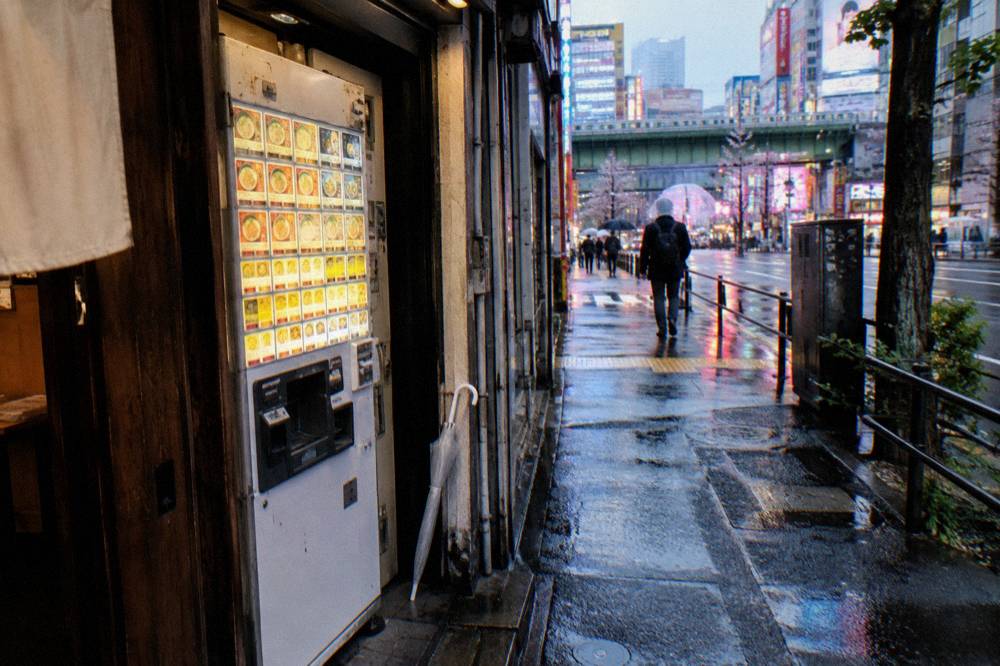
Toppings are where the menu quietly expands the bill. Chashu, ajitama egg, nori, menma and extra noodles each add a modest amount, and a fully loaded bowl can end up costing half again more than the base price. None of this is hidden; ramen ticket machines with picture buttons make every surcharge visible before you pay, which is one of the friendliest ordering systems in the city for visitors with no Japanese. Press the picture, take the ticket, hand it over.
Recognition now moves prices as well. The Michelin Guide Tokyo 2026 awarded Bib Gourmand status to 16 new restaurants, including ramen shops such as Teuchi Asama and Ginza HARU CHAN Ramen. A Bib Gourmand signals good value by fine-dining standards, but a recognised ramen counter can still charge noticeably more than the 750 yen national average, and the queues that follow recognition tend to hold prices up. Scarcity of seats does the rest: a twelve-seat counter with a line out the door has no reason to compete on price.
For context against other quick meals in the city: conveyor-belt sushi chains in Tokyo start plates at 110 to 150 yen with typical meals totalling 1,500 to 3,000 yen, and casual yakitori counters commonly price skewers at 150 to 400 yen each. Ramen remains the cheapest complete hot meal per yen among these, which explains its grip on the city's lunch economy. It is also the most geographically dense, with counter shops clustered around every major station, so the cheap option is rarely more than a few minutes' walk away.
If you would rather understand the bowl from inside the kitchen than from the counter, the Ramen Class, Tonkotsu Shoyu Miso in Shibuya runs 1 hour 30 minutes, is rated 5 across 259 reviews, and costs from $113.36 per person.
What A Bowl Costs By Shop Type
Ticket-machine shops in student and office districts cluster at the bottom of the range, from the 600 yen survey floor up toward the 993 yen Takadanobaba average, and recognised or premium counters can ask 1,500 yen and more. The pattern holds across the city: the more craft on display, the higher the bowl.
The table below gathers the real reference points from the October 2026 shop survey and current street pricing. Treat it as planning ranges rather than promises, since every shop sets its own prices and they move with ingredient costs.
| Shop type | Typical basic bowl | Notes |
|---|---|---|
| Cheapest counters (survey floor) | 600 yen | Takadanobaba and Waseda area, 81-shop survey |
| Student and office district average | 993 yen | Same survey, average basic bowl |
| National average, shoyu bowl | 750 yen | Official retail price survey, September 2026 |
| Loaded bowl with toppings | up to 1,500 yen | Base bowl plus chashu, egg, extra noodles |
| Michelin Bib Gourmand ramen counters | higher, set per shop | 16 new Bib Gourmand entries in the 2026 guide include ramen shops |
Convenience stores sit below all of this and are worth knowing about as a floor, not a substitute: October 2026 pricing put salt onigiri at 145 to 149 yen and larger multi-filling onigiri at up to 376 yen at Lawson. A conbini rice ball is a snack, while even the cheapest 600 yen bowl is a full meal with broth, protein and noodles, which is the comparison that matters when budgeting a day.
Neighbourhood matters as much as shop type. The Takadanobaba and Waseda figures come from a student district, where shops price for people eating there four nights a week. The same quality of bowl in Ginza or a hotel-adjacent lane can carry a premium simply because the surrounding rent does, and because the customers are eating out occasionally rather than habitually. Neither price is wrong; they are answering different questions about what the local market will bear.
Ramen Classes In Tokyo: Cost Versus The Bowl
A ramen class in Tokyo costs from $75 to $165.19 per person depending on length and setting, against a 750 to 993 yen bowl at a counter, but the two purchases are not substitutes. The class buys method, recipes and hands-on practice; the counter buys lunch. Deciding which you want is easier with the actual figures side by side.
The cooking classes span a wide range. At the accessible end, the Fully Vegan Ramen Class costs from $75 per person for 2 hours 30 minutes and is rated 5 across 62 reviews. The Ramen Class, Tonkotsu Shoyu Miso in Shibuya costs from $113.36 per person. Longer experiences climb: the Ramen Class Plus Akihabara Tour combines a 3 hour 30 minute class with a neighbourhood walk for from $121.14 per person, rated 5 across 143 reviews, and the Ramen Chef in a Restaurant experience puts you behind the line in a working shop for 3 hours 30 minutes at from $165.19 per person, rated 5 across 235 reviews. Browse all 37 bookable tours from the Tokyo Food Tours home page.
| Class | Length | Rating | From (per person) |
|---|---|---|---|
| Fully Vegan Ramen Class | 2 hours 30 minutes | 5 across 62 reviews | $75 |
| Ramen Class, Tonkotsu Shoyu Miso | 1 hour 30 minutes | 5 across 259 reviews | $113.36 |
| Ramen Class Plus Akihabara Tour | 3 hours 30 minutes | 5 across 143 reviews | $121.14 |
| Ramen and Gyoza, Vegan OK | 2 hours 30 minutes | 5 across 73 reviews | $130 |
| Ramen Chef in a Restaurant | 3 hours 30 minutes | 5 across 235 reviews | $165.19 |
Set against a bowl at the survey average, even the cheapest class costs far more than a single bowl. That is the wrong frame, though. A class is a cooking lesson you take home, and the vegan options matter for travellers whose diets make most counter menus unusable. The Ramen and Gyoza, Vegan OK class, rated 5 across 73 reviews, exists precisely because standard ramen broth is a problem for plant-based eaters.
Format is the other differentiator. The Shibuya class compresses tonkotsu, shoyu and miso into 90 minutes, which suits a busy itinerary. The Akihabara version doubles the time and adds a guided walk, so the day becomes half cooking, half exploring. The restaurant experience is the deepest of the three: you work in a real shop, at real pace, with the pressure that implies.
For a fuller comparison of formats and prices across the city, the best cooking classes in Tokyo roundup covers sushi, wagyu and washoku options alongside the ramen classes.
Tax, Tipping And The Real Bill At The Counter
Dine-in ramen in Tokyo carries 10 percent consumption tax while takeaway food carries the reduced 8 percent rate, and tipping is not customary anywhere in the city's ramen shops, so the price on the machine ticket is effectively the whole bill. From 1 April 2027 the rate on food and drink sales is due to be lowered for two years.
The dine-in versus takeaway split catches many visitors off guard. The National Tax Agency sets the standard rate at 10 percent and a reduced 8 percent rate for food and drink excluding alcohol, but eating out is not covered by the reduced rate, so a bowl at the counter is taxed at the full rate while the same shop's takeaway noodles, where offered, are not. The agency also states that for the two years from 1 April 2027 to 31 March 2029 the rate on food and drink sales will be lowered, a future change worth knowing if you are travelling in or after that window. The details sit on the NTA's English consumption tax page.
Tipping is simpler: do not. The Japan National Tourism Organization states plainly that it is not common to tip for services in bars, cafes, restaurants, taxis and hotels, and ramen counters are the least tip-appropriate places in the country. Staff may chase you down to return money left on the counter by mistake. The JNTO tipping page is the authority on this.
Two small practical points round out the bill. First, cash remains widely preferred at independent ramen shops even as card and cashless payment spreads through chains and mid-range venues, so carry yen for the ticket machine. Second, the machine makes the transaction mechanical: insert cash, press the button for your bowl, hand the ticket over. There is no service charge at a ramen counter, unlike upscale restaurants where a fixed 10 to 15 percent service charge can appear as part of the stated price.
Counter manners cost nothing but are worth knowing. Slurping is normal and signals enjoyment, so no one will blink. Do not stick chopsticks upright in a bowl of rice or pass food directly from one pair of chopsticks to another, since both practices are associated with funeral rituals. Finishing the broth is appreciated but not demanded, and the bowl goes back on the counter with the chopsticks resting across it when you are done.
When A Class Beats A Bowl
A ramen class is worth the price over a counter bowl when you want to recreate the dish at home, when dietary limits shut you out of standard menus, or when you want to see the kitchen side of a cuisine you eat as a visitor. Purely as calories per yen, the counter wins every time, and no class pretends otherwise.
Consider what the money buys in each case. A 993 yen bowl is consumed in fifteen minutes and remembered for a week. The Ramen Chef in a Restaurant experience, 3 hours 30 minutes and rated 5 across 235 reviews, puts you inside a working shop, and the Ramen Class Plus Akihabara Tour pairs the lesson with a walk through one of Tokyo's most distinctive districts. These are activities, priced and valued like activities. Beyond this bowl, The Tokyo Food List lists 980+ restaurants sorted by cuisine and Google rating, with what to order at the ramen counters.
The vegan angle deserves a second mention because it is a genuine gap in the counter economy. Standard tonkotsu and shoyu broths are built on pork and fish, and menu flexibility at a small shop is close to zero. The Fully Vegan Ramen Class at from $75 per person solves a problem rather than adding a luxury, which is why it earns its place next to the pricier options.
Allergies work the same way. Japan's allergen labelling rules cover packaged processed food, with nine specified items now including cashew, but restaurant dishes generally carry no such labels, and the rules are not a promise that a shop can accommodate you. A class lets you control every ingredient that goes into the pot, which a counter never will. Tell any operator about an allergy before booking rather than at the door.
For travellers who would rather eat than cook, the city's walking options cover ramen alongside everything else. The Shinjuku Walk, 15 Dishes 4 Eateries tour, rated 4.84 across 487 reviews and from $76.1 per person, spends three hours in the district with one of the densest concentrations of counter shops in the city, and the Tsukiji Market, 5 Tastings tour covers the market-side counters from $97.17 per person. Our best ramen in Tokyo guide goes deeper on where the bowls themselves are worth queueing for.
Common Questions About Ramen Prices In Tokyo
How Much Is One Bowl Of Ramen In Tokyo?
Basic bowls run from the 600 yen survey floor to the 993 yen neighbourhood average. The national average for a shoyu bowl was 750 yen as of September 2026, per an official retail price survey.
Is Ramen In Tokyo Cheap Compared With Other Meals?
Yes. Conveyor-belt sushi meals typically total 1,500 to 3,000 yen and casual yakitori skewers run 150 to 400 yen each, so a ramen bowl, even loaded, remains one of the cheapest complete hot meals in the city.
Do I Tip At A Ramen Counter In Tokyo?
No. Tipping is not customary in Japanese restaurants, bars or taxis, and staff may return money left on the counter. The price on the ticket machine is the whole bill.
Why Do Some Ramen Bowls Cost Much More Than Others?
Broth labour, house-cut noodles and topping quality drive most of the spread, and recognition matters too, since the Michelin Guide Tokyo 2026 added several ramen shops to its Bib Gourmand list.
Is A Ramen Cooking Class Worth It Instead Of Eating Out?
If you want to make the dish at home, yes. Classes run from $75 for a fully vegan version to $165.19 for a full experience as a ramen chef in a working restaurant, all currently rated 5 by guests, versus a bowl at the counter for 750 to 993 yen.
Does Ramen Cost More With Tax?
Dine-in food carries the standard 10 percent consumption tax while takeaway carries the reduced 8 percent rate. From 1 April 2027 the rate on food and drink sales is due to be lowered for two years.