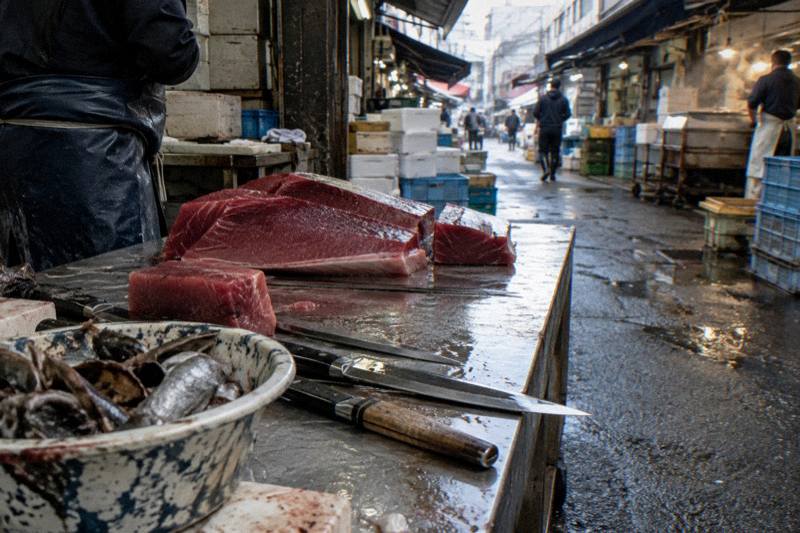
What Is The Best Street Food To Eat In Tokyo?
The best street food to eat in Tokyo, from yakitori counters in Omoide Yokocho to tamagoyaki at Tsukiji Outer Market, with real prices, district guides and etiquette rules.
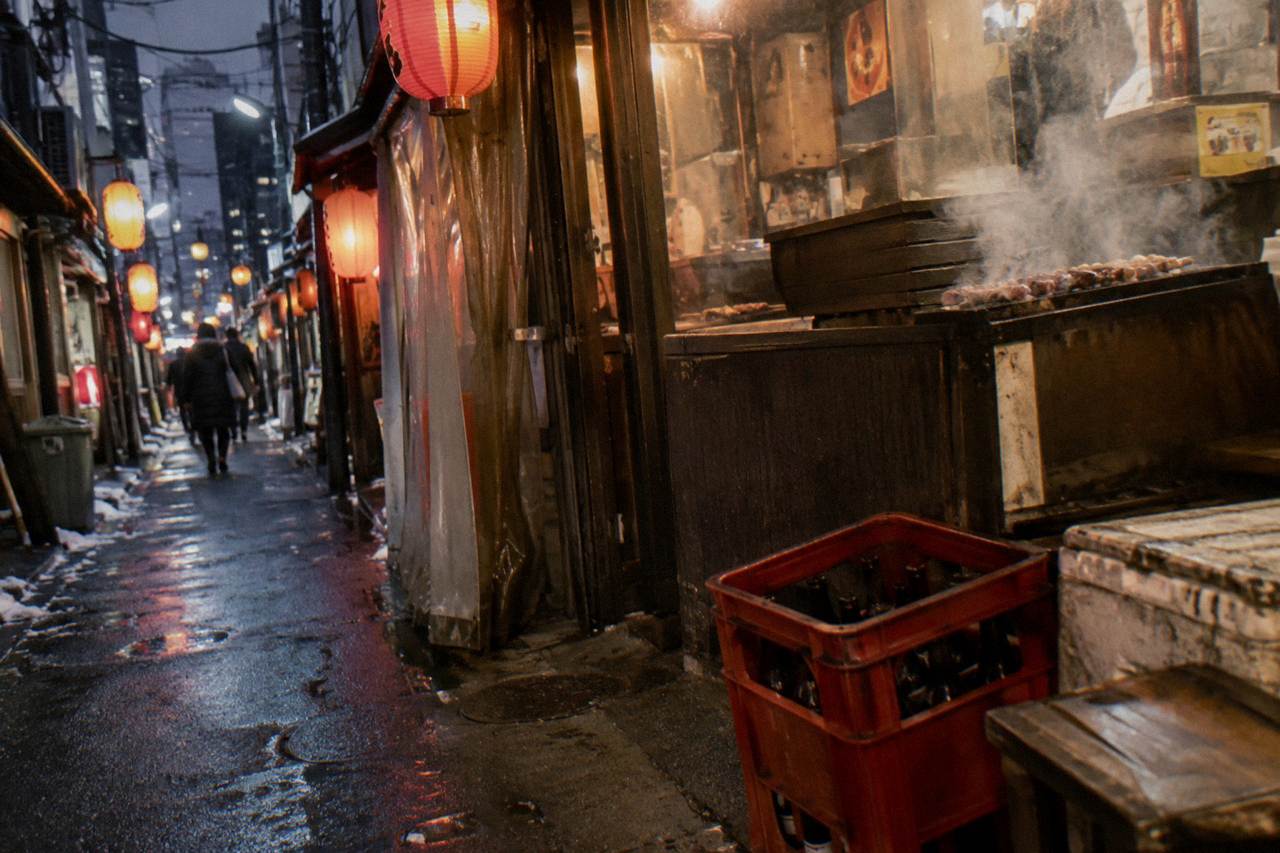
The best street food to eat in Tokyo is yakitori from a charcoal counter in Omoide Yokocho, tamagoyaki on a stick at Tsukiji Outer Market, fresh taiyaki from a shopping-street stall, conveyor-belt or standing sushi, and a bowl of ramen from a small counter shop. Casual skewers commonly run 150 to 400 yen each, conveyor sushi plates start around 110 to 150 yen, and the national average for a bowl of shoyu ramen sits near 750 yen. Once you've grazed your way through these stalls, our guide to Tokyo's must-eat dishes covers the bowls and skewers the city does better than anywhere else.
Tokyo does not really have the hawker-centre culture of Bangkok or Taipei. What it has instead is a network of tiny specialist shops packed into alleys, market lanes and shotengai, the covered shopping streets that run out from most train stations. A single shop often makes one thing, has made it for decades, and expects you to eat it standing at the counter or walking three steps to the side. That specialisation is why the street food here is so good, and why a short walk can cover five completely different dishes.
The practical difference matters for planning. Yakitori, taiyaki and tamagoyaki are genuinely eat-while-walking food, though at Tsukiji the market asks visitors to eat inside the eatery or directly in front of the store. Ramen, sushi and monjayaki are counter food: you sit or stand, you eat fast, the next customer takes your spot. A good street food day in Tokyo mixes both rhythms. If you're planning to build a day around one market, the Toyosu versus Tsukiji market comparison explains which one suits each of those eating styles.
A guided walk can compress the learning curve considerably, since a guide already knows which counter grills the best skewers and which stall has the shortest line at midday. The Shinjuku Local Eateries Walk, about 3 hours and from $84.21 per person, rated 4.9 across 10,498 reviews, does exactly this in the densest eating district on the west side of the city. The 7 Eateries, Shopping Streets Walk covers more than ten tastings across seven shops in about 2 hours 30 minutes from $75 per group, and Tsukiji Market, 5 Tastings anchors the market side of the city at about 3 hours from $97.17 per person.
Where To Eat The Best Yakitori In Shinjuku?
Omoide Yokocho, the post-war lane of grill smoke near Shinjuku Station's West Exit, is the classic yakitori destination in Tokyo. It packs about 80 premises, roughly 60 of them bars and restaurants, into around 2,000 square metres, most of them yakitoriya and motsuyaki shops. Typical spend runs 2,000 to 3,000 yen per person for skewers and drinks, and casual skewers citywide commonly cost 150 to 400 yen each. Once you've had your fill of skewers, the neighborhood guide to Tokyo's best restaurants picks up where the smoke ends, mapping sit-down spots across the city with prices and tips on landing a table.
The lane started as a black-market drinking quarter in the years after the war and never lost its density or its smoke. Counters open from around 5 p.m. and run to midnight or later, though each shop sets its own hours and there is no alley-wide schedule. Most shops seat fewer than ten people, so the wait is part of the experience: you stand behind the current customer, order when a stool frees up, and eat quickly.
Two costs surprise first-time visitors. Some counters add an otoshi, a small unordered appetizer that works as a seating charge, typically 300 to 500 yen and listed on the bill. It is not a tip and it is not a scam; it is standard practice at many izakaya across the country. Many counters are also cash-only, or prefer cash for small tabs, so carry yen notes even if you use a card everywhere else.
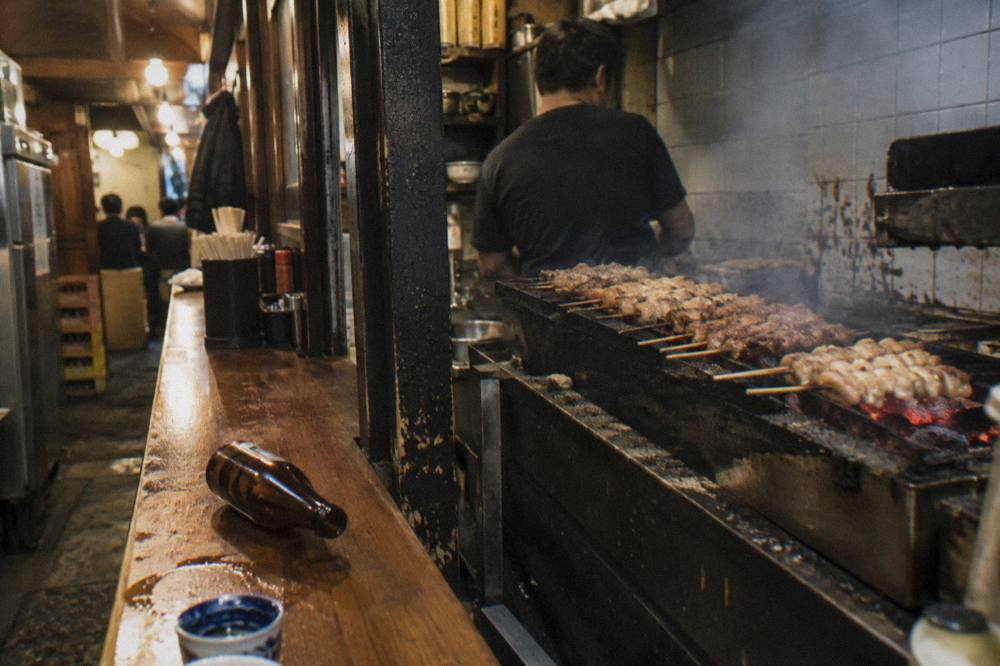
If you would rather have a guide handle the counter selection, the Yakitori lanes pair naturally with the evening walks in the district. Tokyo Food Tours covers the neighbourhood in depth, including how the crawl tours differ; for a deeper comparison see where to eat in Shinjuku. The Shinjuku Local Eateries Walk, mentioned above, is the most reviewed of the options at 4.9 across 10,498 reviews, while the Bar Hop, Free Flow Full Dinner variant from $109.35 per person builds a full dinner and Golden Gai bars into roughly 3 hours, rated 4.9 across 4,086 reviews.
What Should You Eat At Tsukiji Outer Market?
Tamagoyaki, the sweet rolled omelette served on a stick, is the signature street snack at Tsukiji Outer Market, alongside fresh tuna and uni bites, grilled seafood skewers and oysters from the independent stalls. The market asks visitors to eat inside the eatery or in front of the store rather than while walking, professional buyers have priority until 9 a.m., and many shops close on Sundays, holidays and selected Wednesdays. If you're wondering whether a visit still makes sense now that the famous wholesale auction has moved, our guide to visiting Tsukiji's Outer Market today spells out what you actually get there and the best hours to show up.
Tsukiji's Outer Market is the visitor-facing strip of hundreds of independent shops: fresh and processed seafood, dried goods, kitchenware, tamagoyaki specialists and small eateries. It is not a theme park; it is a working market, and the manners reflect that. The official guidance asks visitors to move in small numbers, ask before photographing, keep strollers at the Plat Tsukiji information centre for 500 yen, and skip bargaining entirely, since items are sold at carefully set prices.
Timing matters more here than at any other street food spot in the city. There is no single published opening hour; each shop follows its own schedule around the Tokyo Central Wholesale Market closing calendar, so opening hours and closing days vary shop by shop. Turn up expecting the full market and you may find a lane of shutters. Check the official calendar before you set out, or let a guide who knows the rhythm handle it.
Access is simple: Toei Oedo Line Tsukijishijo Station or Tokyo Metro Hibiya Line Tsukiji Station, each about a minute's walk from the main exits. The Hibiya Line also connects Tsukiji to Ginza, so the market pairs well with a walk through Ginza's back streets afterwards; see what food is Ginza famous for for how to extend the day.
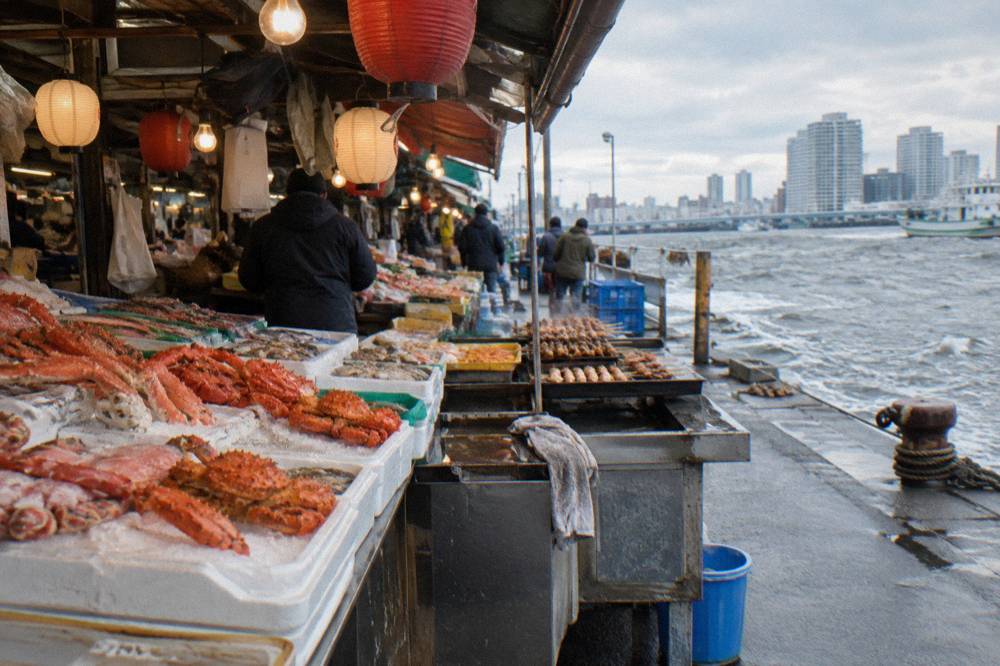
A market walk with a guide solves the two hardest problems, pacing and selection. Tsukiji Market, 5 Tastings runs about 3 hours from $97.17 per person, rated 4.9 across 3,868 reviews, and spreads five tastings across the stalls rather than gambling on one line.
Is Ramen And Sushi Street Food In Tokyo?
Ramen and sushi sit right on the boundary of street food in Tokyo, eaten fast at a counter but served in shops rather than from stalls. The national average price for a bowl of shoyu ramen was 750 yen as of a recent official retail survey, nigiri sushi averaged 1,592 yen per serving, and conveyor-belt chains charge plates from 110 to 150 yen with typical meals totalling 1,500 to 3,000 yen.
Ramen is Tokyo's fastest sit-down meal. You order, often from a ticket machine, you eat, you leave, and the whole cycle can take fifteen minutes. A survey of 81 ramen shops in the Takadanobaba-Waseda area put the average basic bowl at 993 yen, with the cheapest at 600 yen, which frames the realistic band for the city. Standing sushi bars near the market districts offer nigiri pieces from around 90 to 500 yen each, a genuinely street-priced way to eat very fresh fish.
Two facts worth folding into your budget. Consumption tax is 10 percent when you dine in and 8 percent on takeaway food, a distinction set by the National Tax Agency, and the rate on food and drink sales is due to be lowered for the two years from 1 April 2027 to 31 March 2029. And tipping is not customary: the bill is the bill, and staff may chase you down to return money left on the table.
A guide-led walk that mixes counter stops makes sushi approachable for first-timers. The Ueno Walk, 10+ Japanese Classics covers more than ten tastings of Japanese classics in about 3 hours 30 minutes from $107.99 per person, rated 5 across 349 reviews, while the Shibuya Walk, 13 Dishes 3 Eateries, from $84.21 per person and rated 4.9 across 1,437 reviews, pairs thirteen dishes across three eateries with the city's busiest crossing district. The Tokyo ramen tour guide breaks down the styles if you want to go deeper before choosing.
What Are The Best Sweet Street Snacks?
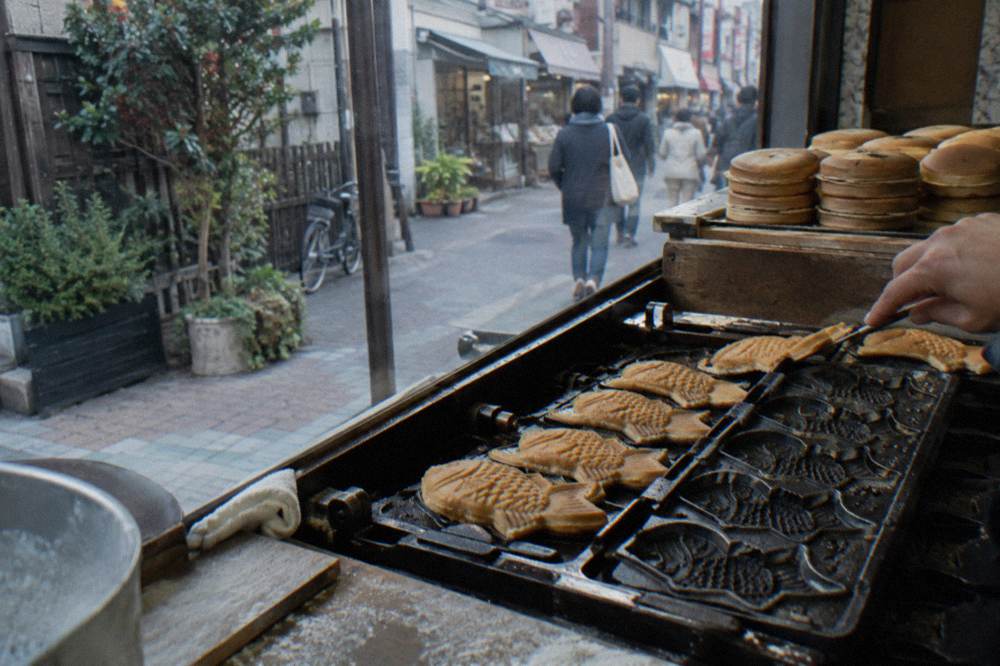
Taiyaki, the fish-shaped cake filled with sweet red bean paste, tops the list of Tokyo's sweet street snacks, alongside imagawayaki, mochi and the refined nerikiri wagashi confections. Convenience-store onigiri make a surprisingly good savoury counterpoint, with salt musubi at 145 to 149 yen and salmon at 211 to 235 yen, so a sweet-and-savoury snack crawl costs very little.
Taiyaki shops live in the shotengai, the shopping streets that run out from stations like a spine. Good ones bake to order, so the shell is crisp and the filling molten; a shop with a short, slow-moving line is usually the right bet. Imagawayaki, the round pancake version with the same filling, is the older style and just as cheap. For something more ceremonial, a wagashi class teaches the craft: the Mochi and Nerikiri class runs about 2 hours 30 minutes from $80.97 per person, rated 5 across 37 reviews. For meals without a tour, we put together The Tokyo Food List, with 980+ restaurants sorted by cuisine, Google ratings and price ranges.
The sweet-snack crawl is also the cheapest way to eat your way through a neighbourhood. Set a loose budget of a few hundred yen per stop and you can try taiyaki, fresh mochi and a melon pan within three blocks. Prices move slowly at this level, but exact figures vary by shop, so treat the numbers above as the going band rather than a promise from any particular stall.
Which Districts Have The Best Street Food?
Shinjuku, Asakusa, Tsukiji, Ueno's Ameyoko market street and Togoshi Ginza are Tokyo's five best street food districts, each with a different signature: grill lanes in Shinjuku, temple-street snacks in Asakusa, seafood at Tsukiji, market-stall grazing in Ueno and local shopping-street prices in Togoshi Ginza. Choosing by district beats choosing by dish, because each area rewards a two-hour walk rather than a single destination stop. If you want to sleep within walking distance of the stalls you care about most, our guide to the best area to stay in Tokyo for food-focused travellers compares each district on transit, eating hours and budget.
Asakusa is the most visitor-friendly of the five. Nakamise, the approach to Senso-ji, has served snacks to pilgrims for well over a century, and the surrounding lanes add ningyo-yaki doll cakes and senbei rice crackers. The Asakusa Walk, 12 Dishes covers twelve dishes at local eateries in about 2 hours 30 minutes from $75.30 per person, rated 4.85 across 73 reviews, and the Old Town Premium Walk, about 3 hours 30 minutes from $231 per person, adds a deeper historical layer for those who want it.
Ueno's Ameyoko started as a post-war black market and is now a covered strip of snack stalls, fruit vendors and standing bars. The Togoshi Ginza strip, one of Tokyo's longest shopping streets, is where locals actually eat: the Togoshi Ginza Small-Group Walk runs about 2.5 hours from $93.85 per person, rated 5 across 34 reviews. For a fuller breakdown by neighbourhood, see the Tokyo street food tour guide.
| District | Signature street food | Realistic spend per person | Guided option |
|---|---|---|---|
| Shinjuku | Yakitori, motsuyaki, izakaya bites | 2,000 to 3,000 yen | Shinjuku Local Eateries Walk, from $84.21 per person |
| Tsukiji Outer Market | Tamagoyaki, tuna, uni, oysters | Varies by stall, no fixed market prices | Tsukiji Market, 5 Tastings, from $97.17 per person |
| Asakusa | Ningyo-yaki, senbei, traditional snacks | A few hundred yen per stop | Asakusa Walk, 12 Dishes, from $75.30 per person |
| Ueno Ameyoko | Kebabs, taiyaki, fruit, standing bars | Roughly 1,000 to 2,000 yen | Ueno Walk, 10+ Japanese Classics, from $107.99 per person |
| Togoshi Ginza | Croquettes, senbei, local sweets | Under 1,500 yen | Togoshi Ginza Small-Group Walk, from $93.85 per person |
The districts also differ by clock. Tsukiji rewards a morning visit; Shinjuku's lanes only come alive after 5 p.m.; Asakusa works from mid-morning onward; Ameyoko peaks in the afternoon and early evening. A two-stop day, Tsukiji in the morning and Shinjuku after dark, is the classic pairing and covers the widest range of dishes in one effort.
How Much Does Street Food Cost In Tokyo?
A realistic street food budget in Tokyo runs roughly 1,000 yen for a snack stop, 1,500 to 3,000 yen for a conveyor-sushi meal, and 2,000 to 3,000 yen for an evening of yakitori and drinks. Individual yakitori skewers commonly cost 150 to 400 yen, onigiri start under 200 yen, and monjayaki lists around 1,500 yen tax included, so a full grazing day costs far less than a sit-down dinner.
The table below pulls together the price bands that hold across casual counters citywide. Treat them as planning ranges, not promises from any single shop; prices move with ingredients and location, and market stalls in particular set their own figures. Where a number matters, check the board or ask before you order.
| Item | Typical price band | Notes |
|---|---|---|
| Yakitori skewer | 150 to 400 yen | Casual counters citywide |
| Shoyu ramen bowl | Around 750 yen national average | One Takadanobaba survey averaged 993 yen |
| Conveyor sushi plate | 110 to 150 yen per plate | Typical meal 1,500 to 3,000 yen |
| Standing sushi piece | 90 to 500 yen | Near market districts |
| Nigiri sushi serving | Around 1,592 yen national average | Counter service |
| Convenience onigiri | 145 to 235 yen | Salt cheapest, salmon dearest |
| Monjayaki | Around 1,500 yen tax included | Tsukishima association shops |
| Omoide Yokocho evening | 2,000 to 3,000 yen | Skewers plus drinks, otoshi extra |
Two small charges to expect rather than resent: the otoshi seating charge at izakaya-style counters, and the Golden Gai cover of 500 to 1,500 yen if you drift from the grill lanes into the bar alleys, which often includes a small snack. Neither is a tip. Tipping is not customary anywhere in the chain, from ramen counter to taxi, and leaving cash can genuinely confuse staff.
What Etiquette Rules Apply To Street Food?
The main street food rules in Tokyo are to eat where you bought it rather than while walking, especially at Tsukiji where the market asks visitors to eat inside the eatery or in front of the store, never stick chopsticks upright in rice, avoid smoking outside designated areas, and carry some cash, since many small counters and bars prefer it. Guides must clear guided tours with the Plat Tsukiji centre, a sign of how seriously the market takes crowding.
The eating-while-walking rule is the one visitors break most often, and the reason is practical: narrow lanes, working buyers and hot food do not mix. Buy your skewer, step to the side, finish it, then move on. The same logic applies to litter; bins are scarce, so many people carry a small bag for wrappers.
Chopstick etiquette has one hard rule and one soft one. Never stand a pair upright in a bowl of rice and never pass food chopstick to chopstick, as both echo funeral rituals. The soft rule is simply to lift bowls rather than hunch over them. At upscale restaurants and hotels a service charge of 10 to 15 percent may appear on the bill; it is part of the stated price, not an optional extra.
Allergies deserve a note of caution. Japan's nine-item mandatory allergen list governs packaged food labelling, not restaurant dishes, so a street stall has no obligation to label anything. If you have a serious allergy, message the tour operator before booking any guided walk, and at independent stalls ask directly or choose visibly simple items like plain grilled skewers.
Common Questions About Street Food In Tokyo
What Is The Best Street Food To Eat In Tokyo?
Yakitori from a charcoal counter, tamagoyaki at Tsukiji Outer Market, fresh taiyaki, standing or conveyor sushi, and a counter bowl of ramen. Those five cover the range of Tokyo street food, from a 150 yen skewer to a 1,592 yen average sushi serving, and none requires a reservation.
Can You Eat While Walking In Tokyo?
Generally you should not, and at Tsukiji Outer Market it is explicitly against the posted manners: eat inside the eatery or in front of the store. Elsewhere it is tolerated but frowned upon in crowded lanes, so the habit of stepping aside to finish your food is the polite default.
Is Tsukiji Open Every Day?
No. Many shops close on Sundays, national holidays and selected Wednesdays that follow the Tokyo Central Wholesale Market closure calendar, and each shop sets its own opening hours as well. Check the market's official calendar before going.
Do You Tip At Tokyo Street Food Stalls?
No. Tipping is not customary in Japan for restaurants, bars, cafes, taxis or hotels, and any cash left behind may be returned to you as a mistake. Pay the exact bill, and expect any otoshi seating charge or bar cover to be listed on it.
How Much Money Do You Need For Street Food In Tokyo?
Plan on roughly 1,000 yen per snack stop and 2,000 to 3,000 yen for an evening of skewers and drinks. Individual yakitori skewers run 150 to 400 yen, onigiri start under 200 yen, and a conveyor-sushi meal typically totals 1,500 to 3,000 yen.