Tokyo Ramen Tour And Ramen Making Classes
Ramen is the one Tokyo dish you can both eat and learn to build. This guide separates the classes that teach noodles from scratch from the walks that feed you, with real prices and review counts for each.
Short answer
Tokyo ramen classes run from $75 to $165.19 per person. The Shibuya Ramen Class (5 across 259 reviews, from $113.36) teaches tonkotsu, shoyu and miso in 90 minutes. The Akihabara from-scratch class runs 3.5 hours from $121.14. Ramen Chef for a Day, from $165.19, puts you in a working restaurant.
Steam, salt, fat and wheat: ramen is the dish Tokyo argues about most, and it is also the dish you can learn to make in a single afternoon. The city's ramen scene has moved so far into the destination category that the Michelin Guide's Tokyo 2026 edition handed Bib Gourmand status to 16 new restaurants, several of them ramen counters. That tells you something about where the bowl sits in the city's food hierarchy right now. It also explains why ramen classes have multiplied: visitors do not just want to queue for a bowl, they want to understand how one is assembled.
This page is about doing ramen in Tokyo rather than just eating it. It covers the ramen making classes you can book, what each format actually teaches, where vegan ramen fits in, and what a bowl costs when you buy one at a counter so you can budget the eating around the learning. If you came for restaurant recommendations instead, the shop-led guide to the best ramen in Tokyo is the page for that job; the two overlap only at the broth.
What Does A Tokyo Ramen Experience Actually Involve?
A Tokyo ramen experience is either a cooking class, where you make broth and noodles yourself, or a guided eating walk with ramen among the stops. The classes on this page run 90 minutes to 3 hours 30 minutes and cost from $75 to $165.19 per person.
The class format dominates, and that is a recent shift. A decade ago a visitor's ramen education was limited to pointing at a ticket machine and slurping. Now instructors teach noodle pulling, broth clarification and tare, the salty seasoning base that defines whether a bowl reads as shoyu, miso or tonkotsu. The distinction matters when you book: a 90-minute class compresses the process and often uses pre-prepared elements for the slow stages, while a 3.5-hour class walks you through making noodles from flour, which is the part that takes time and repetition.
The guided eating walk is the other shape a ramen tour can take, and Tokyo has plenty of these led by locals who structure an evening around several counters. Those walks suit travellers who want context, neighbourhoods and variety. The classes suit travellers who want a skill to take home. If your interest is really in the eating side of the city, the broader what to eat in Tokyo guide maps the full field, from market breakfasts to late izakaya runs, and is a better starting point than a single-dish page.
One practical note before anything else: tell the operator about allergies before you book, not on the day. Japan's mandatory allergen labelling covers packaged processed food, and the list grew to nine items when cashew was added on 1 April 2026, but restaurant and class kitchens do not carry the same labelling duty. The Consumer Affairs Agency allergen page explains what the law does and does not require, and the short version for a traveller is that a message to the operator is the only dependable check.
Which Tokyo Ramen Making Class Should You Book?
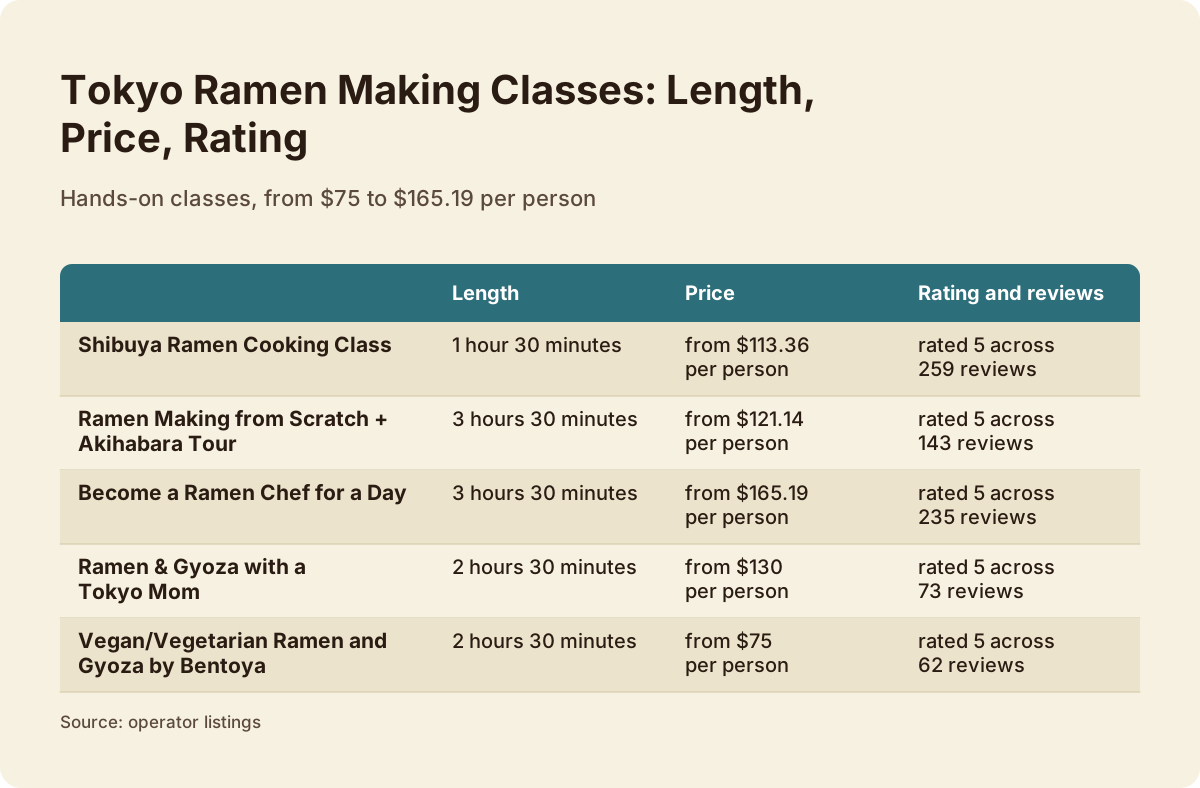
The best value depends on how deep you want to go. The Shibuya Ramen Class teaches tonkotsu, shoyu and miso in 90 minutes from $113.36 per person, rated 5 across 259 reviews. The from-scratch Akihabara class runs 3 hours 30 minutes from $121.14, rated 5 across 143 reviews. Ramen Chef for a Day, from $165.19 per person and rated 5 across 235 reviews, puts you inside a working ramen restaurant.
| Class | Short name | Length | Price basis | Rating and reviews |
|---|---|---|---|---|
| Shibuya Ramen Cooking Class | Ramen Class, Tonkotsu Shoyu Miso | 1 hour 30 minutes | from $113.36 per person | rated 5 across 259 reviews |
| Ramen Making from Scratch + Akihabara Tour | Ramen Class Plus Akihabara Tour | 3 hours 30 minutes | from $121.14 per person | rated 5 across 143 reviews |
| Become a Ramen Chef for a Day | Ramen Chef in a Restaurant | 3 hours 30 minutes | from $165.19 per person | rated 5 across 235 reviews |
| Ramen & Gyoza with a Tokyo Mom | Ramen and Gyoza, Vegan OK | 2 hours 30 minutes | from $130 per person | rated 5 across 73 reviews |
| Vegan/Vegetarian Ramen and Gyoza by Bentoya | Fully Vegan Ramen Class | 2 hours 30 minutes | from $75 per person | rated 5 across 62 reviews |
The Shibuya class is the efficient pick. Ninety minutes, three of the four major broth styles, and a location that drops you into one of Tokyo's most connected neighbourhoods afterwards. Three styles in one session also teaches the thing most visitors miss: the differences between ramen styles are mostly in the tare and the broth base, not the noodles, and tasting your own three side by side makes that obvious in a way no restaurant crawl can. The booking page lists current session times and group size.
The Akihabara class is the thorough pick. Three and a half hours buys you the noodle-making stage, and the session pairs with an Akihabara walking tour, which suits travellers who want a district folded into the booking rather than a kitchen-only afternoon. It is the closest thing on this list to a class and a tour in one purchase.
The Ramen Chef for a Day experience is the immersive pick, and the most expensive at $165.19. You are in a real restaurant, working a real prep line, which is a different proposition from a teaching kitchen. Reviews sit at 235 with a 5 rating, a strong pool for a premium format, and the 3.5-hour length means it eats half a day. Book it on the day you have nothing else planned.
Where Can You Learn Ramen In A Real Tokyo Restaurant?
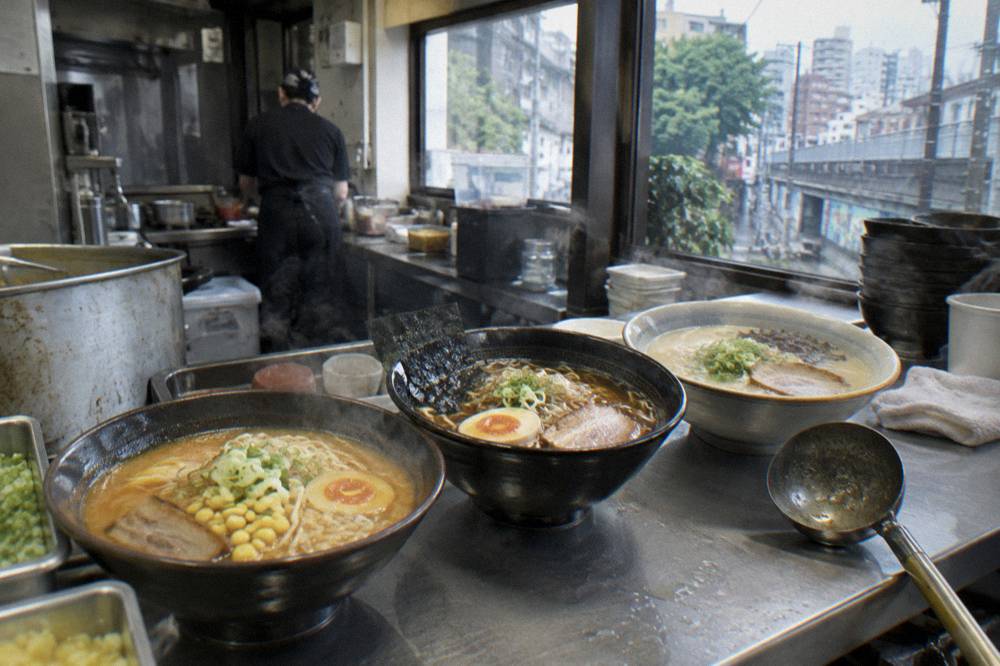
Ramen Chef for a Day is the only format on this list that runs inside a working restaurant rather than a teaching kitchen. It runs about 3 hours 30 minutes, from $165.19 per person, rated 5 across 235 reviews. You work alongside the kitchen crew through prep and service, and the trade-off is price and energy: it costs more and it is a session, not a lesson.
The teaching kitchen versus working restaurant split is the real decision inside the class field. A teaching kitchen gives you a station, an instructor watching your hands, and a guaranteed turn at every stage. A restaurant gives you the pressure of a real line: the pace, the sequencing, the fact that the bowls going out are going to actual customers. Neither is better, but they produce different days. Travellers who want a photogenic, relaxed afternoon should take the teaching kitchen. Travellers who cook seriously, or who fantasise about the trade, should take the restaurant.
There is also a middle category worth naming: home-kitchen classes. These run in an instructor's home and trade polish for warmth, usually capping at small groups. The ramen and gyoza session with a Tokyo host sits here, at 2 hours 30 minutes from $130 per person, rated 5 across 73 reviews. Gyoza pairs naturally with ramen because the filling and the soup share ingredients, and the format leaves room for conversation a commercial kitchen cannot.
Can You Make Vegan Or Vegetarian Ramen In Tokyo?
Yes, and Tokyo has classes built for it rather than classes that merely tolerate it. The Bentoya vegan ramen and gyoza class is fully plant-based, 2 hours 30 minutes, from $75 per person, rated 5 across 62 reviews. The Ramen and Gyoza with a Tokyo Mom class runs vegan on request from $130, rated 5 across 73 reviews. Both cost less than the restaurant-format classes.
Vegan ramen is a genuine technical problem, which is what makes these classes interesting. The body of a tonkotsu broth comes from pork bones simmered for hours, and the savoury depth of a shoyu tare usually leans on dashi built from fish. Removing animal products means rebuilding that body from kombu, shiitake, soy milk, miso or vegetable stock, and a class that has solved this is teaching you a recipe you will actually reuse at home. A class that has not solved it is teaching you a thin soup.
The Bentoya class is the committed option: the menu is vegan and vegetarian by design, so nothing is a substitution. At $75 it is also the least expensive class on this page, which makes it an easy first booking for anyone unsure whether a cooking class is their kind of travel activity. The home-kitchen alternative, the session with a Tokyo host, is vegan-capable rather than vegan-native, so specify your diet when you book and confirm the operator can hold it that day.
For the eating side of plant-based Tokyo, the dedicated vegetarian and vegan food tours in Tokyo guide covers the walks and the restaurants; this page stays on the ramen class question.
How Much Does A Bowl Of Ramen Cost In Tokyo?
The national average for a bowl of shoyu ramen was 750 yen as of September 2026, per the official retail price survey. In Tokyo the average basic bowl in the Takadanobaba to Waseda area ran 993 yen across 81 shops surveyed, with the cheapest at 600 yen. A class at $113.36 therefore costs roughly what a string of counter bowls would add up to.
That framing is the honest one for budgeting. A ramen class is not an economical way to eat ramen; it is a way to learn ramen, priced accordingly. But the counter prices matter for the rest of your trip, and they have been climbing. The 750-yen national average for shoyu ramen is a figure worth knowing because Tokyo counters sit both well under and well over it: chain shops still sell basic bowls in the 600 to 993 yen range, while destination shops with Michelin recognition charge destination prices.
| Item | Typical price in Tokyo | Notes |
|---|---|---|
| Basic shoyu bowl, national average | 750 yen | Official retail survey figure, September 2026 |
| Basic bowl, Takadanobaba to Waseda area | 993 yen average, 600 yen lowest | Survey of 81 shops |
| Yakitori skewer at a casual counter | 150 to 400 yen each | Common counter pricing |
| Conveyor-belt sushi meal | 1,500 to 3,000 yen total | Plates from 110 to 150 yen |
| Convenience store onigiri | 145 to 235 yen | Salt, kombu and salmon varieties |
Tax is the small print. Dine-in food carries 10 percent consumption tax and takeaway food 8 percent, a split the National Tax Agency spells out plainly, and from 1 April 2027 the rate on food and drink sales is due to be lowered for a two-year window. None of this changes a counter bowl much, but it explains why the same item can ring up differently depending on how you eat it.
What Should You Know Before Your First Ramen Class In Tokyo?
Arrive hungry but not starving, tell the operator about allergies at booking, and expect to eat everything you make on the spot. Classes run 90 minutes to 3 hours 30 minutes, group sizes are small, and tipping is not expected anywhere in Tokyo's food economy, so the listed price is the whole price. Sessions often end with a shared meal of the class's output. And when you would rather let someone else lead you to the food, our guide to choosing a private food tour in Tokyo compares backstreet walks, bar crawls and small-group options so you can pick the right fit.
A few customs smooth the day. Slurping is normal and even flattering to the cook, so a class is a low-judgement place to practise. Chopstick rules carry the same weight in a teaching kitchen as in a restaurant: never stand a pair upright in rice, and never pass food chopstick to chopstick, both of which echo funeral rituals. Cash still rules at independent ramen shops, so carry some even for the bowl you eat after the class, though the class bookings themselves are paid when you reserve. For your next bowl, The Tokyo Food List sorts ramen places by Google rating and price range and says what to order.
Allergies deserve one more line because ramen is a hostile dish for several of them. Wheat in the noodles, egg in many broths and toppings, buckwheat in some noodle blends: a ramen class touches at least three of Japan's nine legally labelled allergens. Message the operator before booking, and if the answer is vague, treat that as the answer. The site's Tokyo Food Tours pages keep the same rule across every tour type: ask first, book second.
Booking windows matter less than you might fear. Class sizes are small but sessions run daily across most of the cooking classes, and same-week bookings are realistic outside peak cherry blossom and New Year periods. That said, the restaurant-format experience with 235 reviews and a single venue has less capacity than a teaching kitchen with rolling sessions, so if Ramen Chef for a Day is your pick, lock it in earlier than the rest of the trip.
Which Ramen Class Fits Which Traveller?
Short on time, take the 90-minute Shibuya class from $113.36. Fully plant-based, take the Bentoya class from $75. Travelling with family or wanting a home setting, take the gyoza pairing class from $130. Want the trade experience, pay $165.19 for the restaurant day. Each of the five is rated 5, so the format, not the quality, is the decision.
It is rare for a category to hold a perfect rating across its whole field, and rarer still with review pools of this size: 259, 235, 143, 73 and 62 reviews respectively across the five classes. Every tour on this page is bookable in Tokyo, a 5 from 62 reviews is a strong small pool, not a superlative, and the Shibuya class's 5 across 259 is the most substantial of them. Read that as a category that consistently delivers, then choose on shape.
| If you want... | Book | Why |
|---|---|---|
| Three broths, minimum time | Shibuya 90-minute class | Tonkotsu, shoyu and miso in one session |
| Noodles from flour | Akihabara from-scratch class | 3.5 hours plus a district walk |
| The professional kitchen | Ramen Chef for a Day | Working restaurant, real service |
| Fully vegan menu | Bentoya ramen and gyoza | Plant-based by design, lowest price |
| A home kitchen and a second dish | Ramen and gyoza with a Tokyo host | Small group, vegan on request |
One last pairing thought. Ramen classes sit inside a wider Tokyo cooking scene, and travellers who book one often add a second: the Tokyo cooking class guide maps the full field, including washoku market-to-table formats and sushi sessions, if a single class has whetted something bigger. For the theory behind the bowls, the breakdown of the four types of Japanese ramen is the natural pre-class reading: know the broth families before you build one.
Ramen in Tokyo rewards both appetites, the one that wants to eat the bowl and the one that wants to understand it. A class serves the second appetite and feeds the first at the same time, which is more than most travel activities can claim.
Common Questions About Tokyo Ramen Tours And Classes
What Does A Tokyo Ramen Tour And Ramen Making Class Cost?
Ramen classes in Tokyo run from $75 to $165.19 per person. The Bentoya vegan class is from $75, the Shibuya three-broth class from $113.36, the Akihabara from-scratch class from $121.14, the gyoza pairing home class from $130, and the restaurant-format Ramen Chef for a Day from $165.19.
How Long Does A Ramen Making Class In Tokyo Take?
Between 1 hour 30 minutes and 3 hours 30 minutes. The Shibuya class is the shortest at 90 minutes, both the Akihabara from-scratch class and the restaurant day run about 3.5 hours, and the vegan and home-kitchen classes sit in between at 2.5 hours.
Can I Make Vegan Ramen In A Tokyo Class?
Yes. The Bentoya class is fully vegan and vegetarian by design, from $75 per person, rated 5 across 62 reviews. The ramen and gyoza class with a Tokyo host can run vegan on request; state your diet when booking and confirm the operator can accommodate it that day.
Is A Ramen Class Better Than A Ramen Tour?
They do different jobs. A class teaches you to build broth, tare and noodles and typically costs $75 to $165.19, roughly the price of ten to fifteen counter bowls. A guided eating walk covers variety and neighbourhoods instead. Choose the class for the skill and the walk for the meal count.
Do I Need Cooking Experience For A Ramen Class In Tokyo?
No. The classes are built for beginners, with instructors handling the technical stages, such as long-simmered broth, in advance where needed. The 90-minute formats assume zero experience, and even the restaurant-format day assigns tasks to your comfort level.
Are Tokyo Ramen Classes Suitable For Dietary Allergies?
Only with advance notice. Ramen involves wheat, egg and sometimes buckwheat, three of Japan's nine labelled allergens, and class kitchens carry no legal labelling duty. Message the operator before booking, and treat a vague reply as a reason to pick a different session.