What Is A Must Eat In Tokyo?
The dishes Tokyo does better than anywhere else, from standing sushi and shoyu ramen to Omoide Yokocho skewers, with realistic prices and where tours cover them.
Tokyo has more restaurants than almost any city on earth, and the gap between a good meal and a great one is usually a matter of knowing which dish to chase in which neighbourhood. The short answer is that the must eat list here is short on purpose: sushi eaten at a counter, a bowl of shoyu or tonkotsu ramen, yakitori off a charcoal grill, tamagoyaki at Tsukiji, and at least one proper izakaya evening. A guided option such as the Shinjuku Local Eateries Walk exists precisely because first-time visitors would otherwise end up eating near the station. For a fuller rundown of guided options by neighbourhood, see the site's Shinjuku food tour guide.
The five must eats are counter sushi, ramen, yakitori, tamagoyaki at the Outer Market, and an izakaya spread with drinks, because Tokyo executes each of these at a level and a price few cities can match. A standing sushi bar serves individual nigiri from around 90 to 500 yen a piece, and the national average for a full serving of nigiri is 1,592 yen.
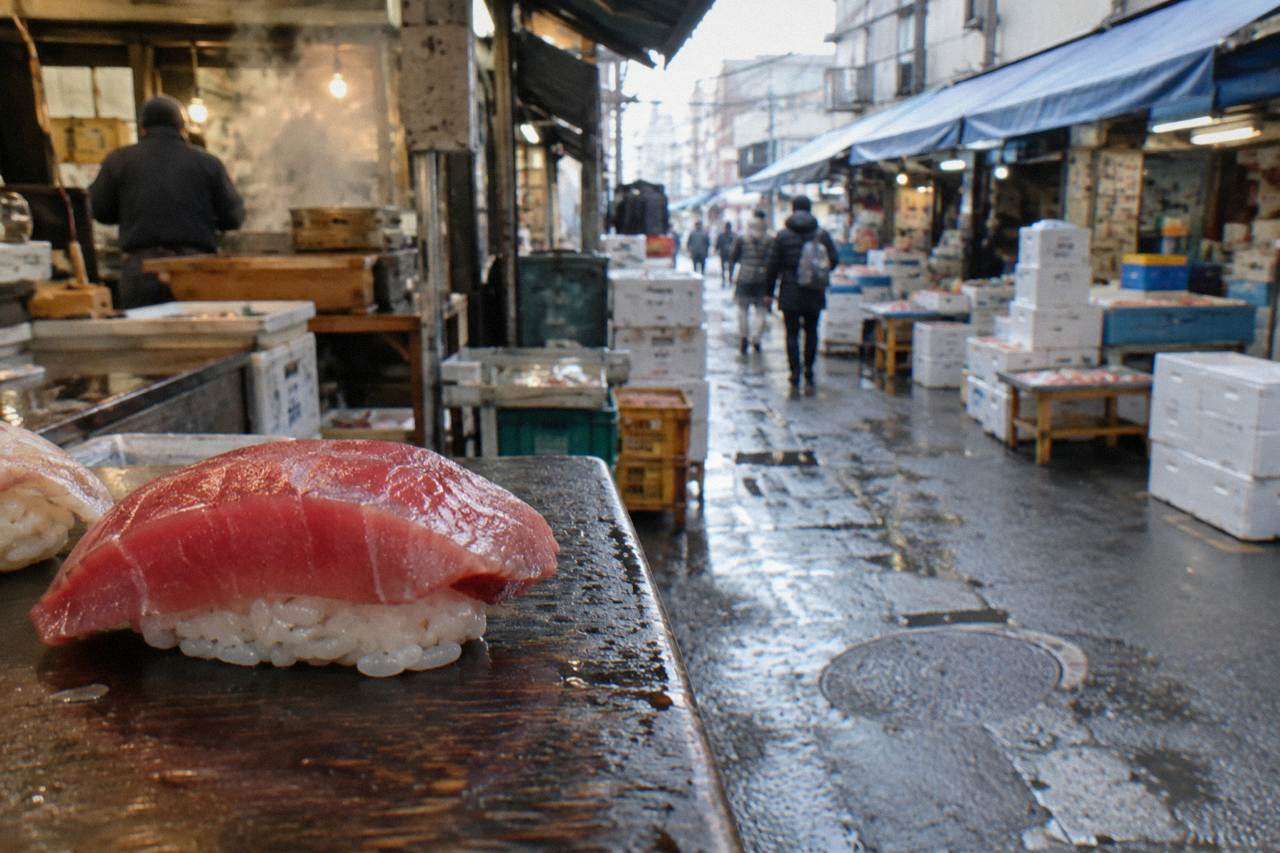
Start with sushi, not because it is exotic here but because it is ordinary here, eaten weekly by locals at every budget level. Conveyor chains in Tokyo start plates at roughly 110 to 150 yen, with a typical meal landing between 1,500 and 3,000 yen, which is why sushi belongs on a must eat list rather than a splurge list. Standing bars around Tsukiji push individual pieces from about 90 to 500 yen each, letting you calibrate the spend piece by piece. The counter experience matters as much as the fish: sitting where you can see the chef work turns dinner into a thirty-minute masterclass.
Ramen earns its slot for the opposite reason. It is a 750 yen national average bowl in its basic shoyu form, a hot, fast, deeply engineered meal that Tokyo treats as everyday fuel rather than a tourist attraction. In a survey of 81 ramen shops in the Takadanobaba-Waseda area, the average price for a basic bowl was 993 yen and the cheapest was 600 yen, so a genuinely excellent bowl costs less than a coffee and pastry at home. The Michelin Guide Tokyo 2026 even handed Bib Gourmand status to 16 new restaurants, several of them ramen shops, which tells you how seriously this city takes noodle soup.
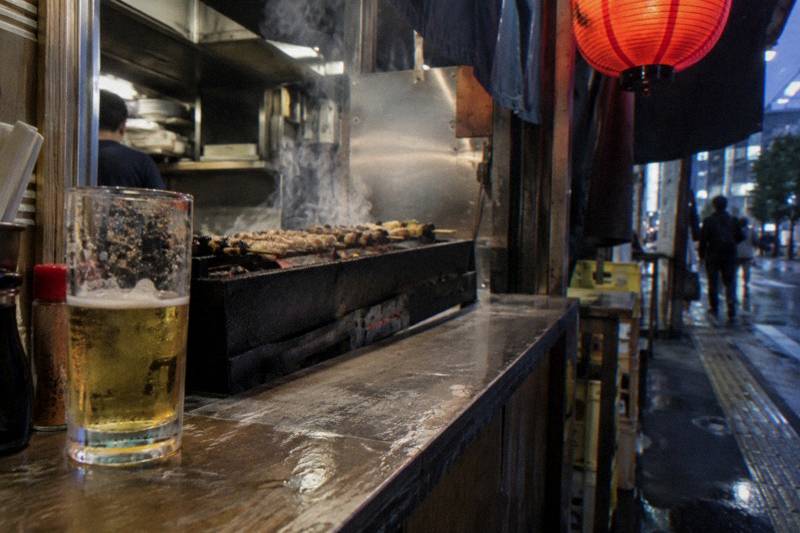
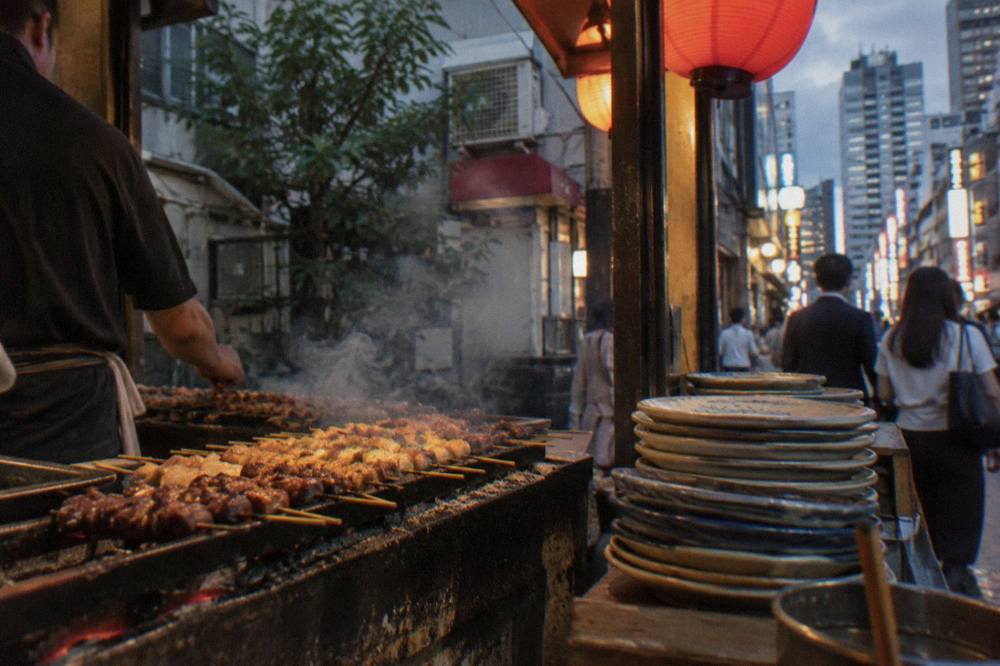
Yakitori, grilled chicken on skewers, is the third pillar. Casual Tokyo counters commonly price skewers at 150 to 400 yen each, so a meal builds itself: order two skewers, a drink, another two, another drink. The post-war lanes of Omoide Yokocho near Shinjuku Station's West Exit pack about 60 bars and restaurants into roughly 2,000 square metres, mostly motsuyakiya and yakitoriya, and a typical evening there runs 2,000 to 3,000 yen per person for skewers and drinks. Tamagoyaki, the sweet rolled omelette sold at the Tsukiji Outer Market, is the snack that surprises people most, and an izakaya evening ties the whole list together over otoshi, grilled fish and whatever the chef suggests. If the counter snacking has you curious about what else the city hands over on the street, our roundup of Tokyo's best street food maps out where to graze next.
Which Sushi Experience Should You Choose In Tokyo?
Choose by budget and time rather than by fame: conveyor chains from 110 to 150 yen a plate, standing bars near Tsukiji from about 90 to 500 yen per piece, or a booked counter for the full omakase splurge. All three exist within walking distance of each other, so the decision is really about how long you want to sit.
The conveyor route is the gentlest introduction. Plates starting at 110 to 150 yen mean a full meal of 1,500 to 3,000 yen, no reservation, no Japanese, and endless variety circling past your booth. It teaches you what you like: fatty tuna versus lean, squid versus scallop, whether you can handle wasabi in quantity. Families with children do well here because the meal is visual and self-paced.
Standing bars are the Tokyo locals' move. Around Tsukiji and other market neighbourhoods, nigiri pieces run from roughly 90 to 500 yen, ordered one or two at a time directly from the chef. You eat fast, you eat standing, and you pay a fraction of the seated counter price for fish from the same wholesalers. The trade is comfort: elbow-to-elbow space, no lingering, and often cash preferred, though card and cashless payment is increasingly common in mid-range and chain venues while independents still favour cash.
The booked counter is the memory-maker, and this is also where a tour earns its keep. The Tsukiji Market, 5 Tastings walk runs about three hours, is rated 4.9 across 3,868 reviews and costs from $97.17 per person, pairing the market's stalls with a guide who explains what you are eating and handles the ordering. If you would rather make the sushi than just eat it, the Sushi Making Class, 3 Hours option is rated 5 across 175 reviews from $71.26 per person, and you leave able to shape nigiri at home, a choice the site's Tokyo sushi making class guide covers in depth. For the all-in evening, the Omakase Sushi and A5 Wagyu tour, rated 4.72 across 329 reviews and from $130.73 per person, bundles two of Japan's premium foods into one sitting.
One planning note on timing: professional buyers have priority at the Outer Market until 9:00 a.m., and general visitors are asked to eat inside the eatery or directly in front of the store rather than while walking. The market's own manners guide asks visitors to move in small numbers and to ask before photographing, which a good guide manages for you.
Is Ramen A Must Eat, And Which Style Should You Try First?
Yes, ramen is a must eat, and you should try tonkotsu, shoyu and miso across separate visits, since a basic bowl averages 993 yen in student-heavy Tokyo districts and the national average for a shoyu bowl is just 750 yen. The styles taste nothing alike, so one bowl does not cover the category.
Tonkotsu is the rich one, a pork-bone broth boiled until it turns milky and coats the lips. Shoyu, the soy sauce broth that started the whole category, is lighter and clearer and lets the noodle itself carry more of the flavour, which is why purists treat it as the reference standard. Miso, born in Hokkaido but perfected across Tokyo, adds fermented depth and usually a heartier topping load. A clever shortcut is the Shibuya Ramen Class, Make Tonkotsu Shoyu Miso, a 90-minute session rated 5 across 259 reviews from $113.36 per person, where you build all three broths yourself and taste the differences side by side.
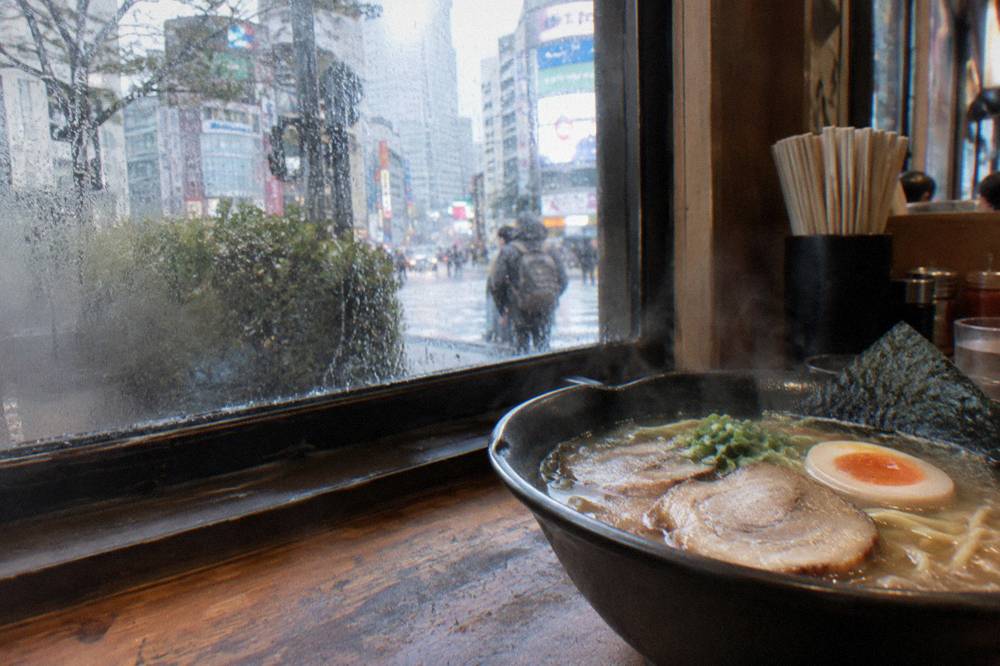
Prices remain one of travel's genuine bargains. The Takadanobaba-Waseda survey of 81 shops put the average basic bowl at 993 yen with a floor of 600 yen, and the national average shoyu bowl at 750 yen as of September 2026 per the official retail price survey. Even the conveyor sushi comparison holds: a full ramen meal with a side of gyoza still stands out as one of the most satisfying, budget-friendly combos in the city. If ramen curiosity runs deeper than eating, the Ramen Chef in a Restaurant experience, rated 5 across 235 reviews from $165.19 per person, puts you behind the counter of a working shop for about three and a half hours.
| Must eat dish | Typical price in Tokyo | Best first stop |
|---|---|---|
| Nigiri sushi, full serving | 1,592 yen national average | Standing bar near Tsukiji |
| Conveyor sushi meal | 1,500 to 3,000 yen total | Any major chain station |
| Basic ramen bowl | 600 to 993 yen | Takadanobaba-Waseda area |
| Yakitori skewer | 150 to 400 yen each | Omoide Yokocho counters |
| Omoide Yokocho evening | 2,000 to 3,000 yen per person | Shinjuku West Exit |
What Street Food Should You Eat First In Tokyo?
Eat tamagoyaki at the Tsukiji Outer Market first, because it is cheap, hot, eaten on the spot, and unique to the market experience, then follow with grilled seafood skewers and fresh uni from the same stalls. Opening hours and closing days vary shop by shop, so check the market calendar before you go; professional buyers get priority until 9:00 a.m., and things open up for visitors after that.
The Outer Market is several hundred independent shops packed into categories the official site lists as fresh and processed seafood, perishables, dried foods, tamagoyaki specialists, kitchenware and eateries. Opening hours vary shop by shop, and closing days differ too, with some shops following the Tokyo Central Wholesale Market closure calendar, so check the official calendar before you commit a morning. The eating rules are simple and worth knowing: eat inside the eatery or in front of the store, never while walking, and no bargaining, because goods are sold at carefully set prices. The site's Tsukiji Outer Market food tour guide walks through the full stall-by-stall strategy.
Getting there is easy. The Toei Oedo Line's Tsukijishijo Station and the Tokyo Metro Hibiya Line's Tsukiji Station are each a one-minute walk from the market, and Higashi-ginza Station, served by the Toei Asakusa and Hibiya lines, is three minutes away. Strollers can be left at the Plat Tsukiji information centre for 500 yen. Each shop keeps its own schedule, so check the official market calendar before you go.
A guide compresses all of this. The Tsukiji Market, 5 Tastings walk handles the navigation, the queue choices and the explanation of what you are eating, and the market's manners guide actually asks tour guides to consult the information centre before conducting tours, which guided tours do. Beyond the market, melon pan from a bakery window, onigiri from a convenience store at 145 to 235 yen depending on filling, and monjayaki in Tsukishima at around 1,500 yen a plate all belong on the street food ladder, each one a small commitment that teaches you something about how Tokyo eats.
Which Dishes Deserve A Whole Evening In Tokyo?
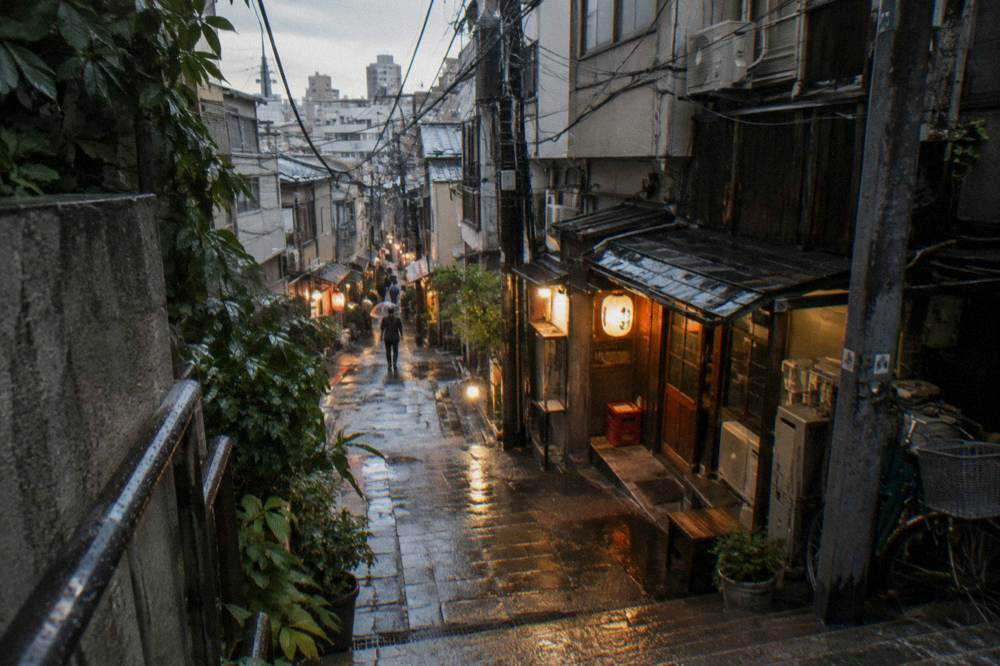
Izakaya food deserves the evening slot: otoshi starters, yakitori, grilled fish, small hot dishes and drinks, ideally in Omoide Yokocho or Golden Gai, Shinjuku's two best-known strips of tiny bars and grill counters, each packed into a few narrow lanes.
Omoide Yokocho is the easiest version. Most yakitori and motsuyaki counters open from around 5 p.m. until midnight or later, though each shop sets its own hours and there is no alley-wide schedule. Some counters are cash-only, and some add an otoshi seat charge of 300 to 500 yen that includes a small starter, which is standard practice rather than a tourist surcharge. Squeeze in, point at what the neighbours are having, and let the evening build itself skewer by skewer.
Golden Gai is the deeper cut, a warren of tiny bars where covers commonly run 500 to 1,500 yen per person, often including a snack, and where bars typically open around 8 p.m. with closing times ranging from 2 a.m. to 5 a.m. Cash remains common there, so do not assume cards work. The alleys are treated as private roads by the shopping-street association, and photography and filming require permission, so keep the camera in your pocket until you are inside and have asked. Many bars welcome visitors with English signs and posted cover charges, while others are regulars-only, and reading the door before entering is the whole etiquette.
Tours decode both districts fast. The Bar Hop, Free Flow Full Dinner option in Shinjuku is rated 4.9 across 4,086 reviews from $109.35 per person, while the Budget Crawl, No Meal Included keeps the entry price to from $36.15 per person and leaves food to your own choosing, rated 4.9 across 2,911 reviews. On the premium end, the Golden Gai Food Tour carries a 5 rating across 261 reviews from $217 per person, and the Private Sangenjaya Backstreets tour, rated 5 across 148 reviews from $289.25 per person, spends four hours in a neighbourhood most visitors never reach. For a broader survey that still lands in an izakaya or two, the Ueno Walk, 10+ Japanese Classics is rated 5 across 349 reviews from $107.99 per person.
What Should You Know Before Eating Out In Tokyo?
Know five things: tipping is not customary, dining in carries 10 percent consumption tax while takeaway food is taxed at 8 percent, the otoshi appetizer is a seat charge rather than a scam, restaurants must post their smoking policy at the entrance, and cash is still preferred at many independents. Each of these changes how a bill looks or a meal flows.
Tipping first, because it trips up the most visitors. The Japan National Tourism Organization states plainly that tipping is not common for services in bars, cafes, restaurants, taxis and hotels, and staff may chase you down to return money left by mistake. Pay the exact bill. At upscale restaurants and hotels a fixed service charge, often 10 to 15 percent, may appear on the bill, but that is part of the stated price rather than an optional extra.
Tax matters when comparing posted prices. The National Tax Agency sets the standard rate at 10 percent, with a reduced 8 percent rate for food and drink excluding alcohol, and eating out is not covered by the reduced rate, so a restaurant meal is 10 percent while the same item taken away is 8. For the two years from 1 April 2027 to 31 March 2029 the rate on food and drink sales is due to be lowered, so treat current rates as a window rather than a constant.
| Situation | What happens | What to do |
|---|---|---|
| Otoshi appetizer arrives unordered | It is a per-person seat charge, often 300 to 500 yen | Accept and eat it |
| Bill arrives with 10 percent tax | Dining in is taxed at the standard rate | Expect it on restaurant meals |
| You want takeaway | Takeout food qualifies for the 8 percent rate | Ask for takeaway if available |
| Smoking sign at the entrance | Restaurants must display their smoking policy | Check the sign before sitting |
| Card declined at a small counter | Cash remains common at independents | Carry yen in small bills |
The otoshi, sometimes called tsukidashi, is the small unordered dish that lands on your izakaya table at the start. It functions as a standard per-person seating charge and appears on the bill, so it is not a mistake and not a tip. Smoking rules have been strict since Tokyo's passive-smoking ordinance and the amended Health Promotion Act took full effect in 2020: indoor smoking is only allowed in designated rooms, restaurants must display their policy at the entrance, and under-20s may not enter smoking rooms. On allergens, Japan now requires labelling of nine specified raw materials on packaged processed food, with cashew nuts added on 1 April 2026, but restaurant dishes generally carry no such labels, so allergy-sensitive visitors should tell the guide or message the operator before booking any tour. Reservations are recommended and sometimes required for popular spots, and no-shows can incur fees, which is one more reason a pre-booked guided walk saves a first-timer the phone-call scramble. The Tokyo Food Tours options include the Shinjuku Local Eateries Walk.
How Do You Fit The Must Eats Into One Trip?
Slot each dish into its natural time of day: tamagoyaki and market snacks in the morning, a standing sushi or conveyor lunch around noon, ramen as a late-afternoon filler, and yakitori plus an izakaya crawl after dark. Two or three guided walks and one cooking class can cover the entire list in a four-day visit.
Morning belongs to the market. Arrive after 9:00 a.m. to respect the professional buyers' window at Tsukiji, eat the tamagoyaki hot where you bought it, and let a guide pick the stalls if the choice feels overwhelming. The afternoon splits neatly between a ramen stop in a student district where basic bowls sit near the 993 yen local average and a sushi class or standing bar session, and the evening belongs to Shinjuku's lanes, where the Shinjuku Local Eateries Walk, rated 4.9 across 10,498 reviews at from $84.21 per person, moves you through several small shops with a local deciding the order.
Cooking classes stretch the list further because you take the skill home. Beyond the sushi class mentioned earlier, the Wagyu and 7 Dishes Class is rated 5 across 202 reviews from $71.26 per person, and the Fully Vegan Ramen Class covers plant-based versions of two classics, rated 5 across 62 reviews from $75 per person. Budget walkers can spend an evening hopping Shibuya's izakaya backstreets on a bar crawl from $38.87, rated 5 across 1,107 reviews from $38.87 per person, and spend the savings on skewers.
The practical spine of all of this is transport. Suica and PASMO IC cards are mutually usable across JR East lines including the Yamanote and Tokyo Metro lines, so a day that hops Tsukiji to Shibuya to Shinjuku costs a few hundred yen in fares and no mental effort. Autumn adds an extra reason to come: September through November is peak season for sanma, mushrooms and new rice, ingredients that appear on izakaya specials boards for a few short weeks.
Common Questions About Must Eat Foods In Tokyo
What Is A Must Eat In Tokyo?
Counter sushi, ramen, yakitori, tamagoyaki at the Tsukiji Outer Market, and a full izakaya evening. Together they cover raw fish, noodle craft, charcoal grilling, market snacking and drinking culture at prices from a 600 yen ramen bowl to a 3,000 yen conveyor sushi meal.
How Much Does A Typical Meal Cost In Tokyo?
A basic ramen bowl averages 993 yen in the Takadanobaba-Waseda area and 750 yen nationally for shoyu style. A full nigiri serving averages 1,592 yen, yakitori skewers run 150 to 400 yen each, and a typical Omoide Yokocho evening costs 2,000 to 3,000 yen per person including drinks.
Is Tsukiji Outer Market Worth Visiting For Food?
Yes, if you respect the no-eating-while-walking rule and plan around each shop's own schedule, since opening hours and closing days vary shop by shop, so check ahead before you go. The market holds hundreds of independent shops including tamagoyaki specialists, and a guided tasting walk handles stall selection and ordering.
Should You Tip In Tokyo Restaurants?
No. The Japan National Tourism Organization states tipping is not common in bars, cafes, restaurants, taxis and hotels, and staff may return money left by mistake. Any service charge at upscale venues is part of the stated bill, not an optional extra.
What Is The Otoshi Charge On The Bill?
Otoshi is a small unordered appetizer that functions as a per-person seating charge at many izakaya, often 300 to 500 yen. It is standard practice, appears on the bill, and is not a tip or a tourist surcharge.
Can A Food Tour Cover The Must Eats In One Day?
Not all of them, but one well-chosen walk covers several. A three-hour market tour handles tamagoyaki and seafood, a Shinjuku evening walk strings together yakitori and izakaya dishes, and a cooking class adds sushi or ramen skills, so two or three bookings span the whole list.