What Food Is Ginza Famous For?
Ginza's food identity explained: standing sushi counters, Bib Gourmand ramen, izakaya alleys and high-end dining, with real prices and how to tour it.
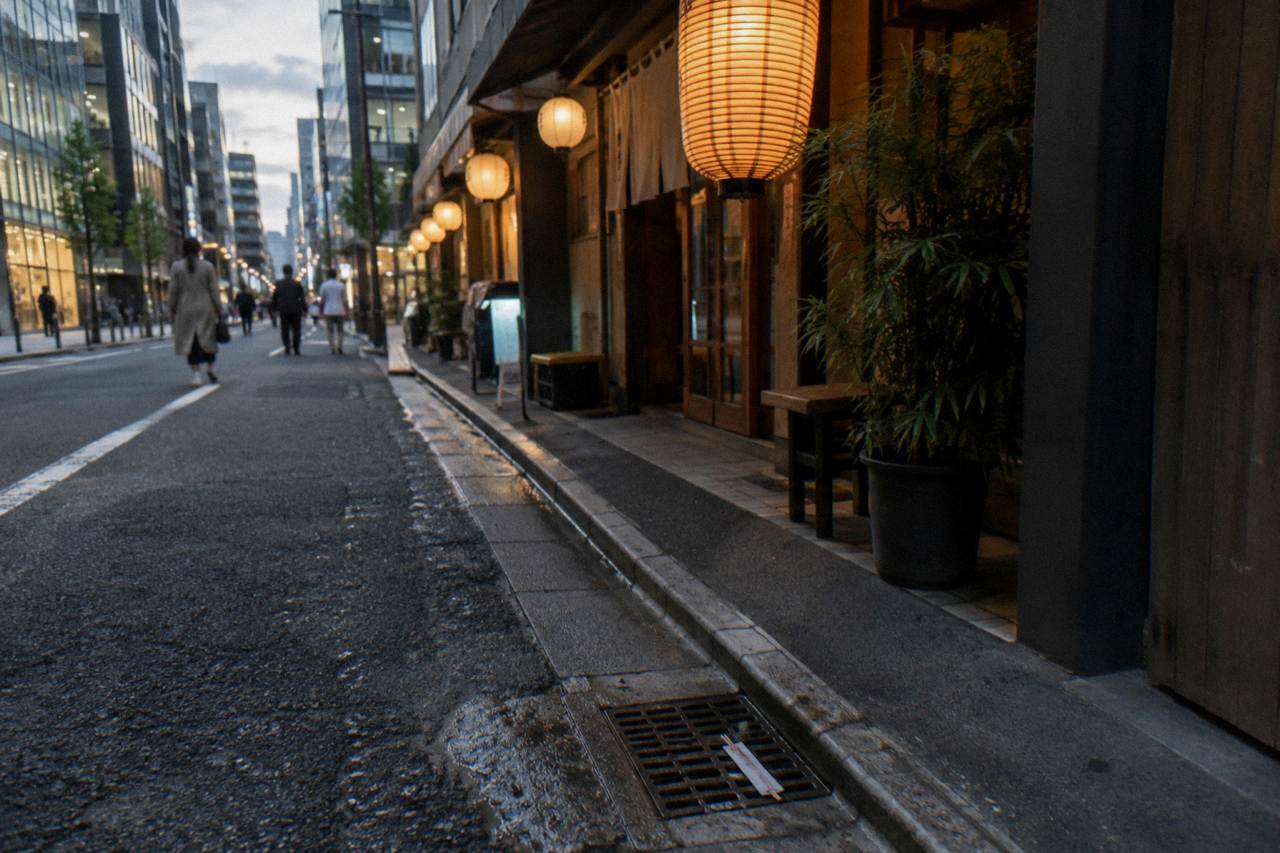
Ginza is famous for three layers of food stacked on top of each other: flagship-level sushi and wagyu dining at the top, department store depachika food halls and specialist shops in the middle, and a surprisingly rough-edged layer of standing sushi bars, izakaya lanes and one Michelin-recognised ramen counter at street level. Visitors who only walk the main Chuo-dori avenue see the first layer and miss the other two, which is where most of the eating actually happens.
The district's food reputation was not built on street snacks. It was built on concentration: more long-established specialist restaurants per block than almost anywhere else in the city, plus Shimbashi and Yurakucho next door, where office workers have eaten and drunk after hours for generations. The Ginza and Shimbashi Walk, roughly 3 hours and rated 4.64 across 40 reviews, from $145.85 per person, exists precisely because those two districts only make sense together. This site's Tokyo Food Tours coverage treats Ginza as an evening neighbourhood, not a shopping one, and this article explains why.
For readers who want the short version before the detail, the quick map looks like this.
Ginza is famous for high-end sushi and wagyu, department store food halls, standing sushi bars, and the izakaya culture spilling over from Shimbashi and Yurakucho's railway arches. One Ginza ramen shop, Ginza HARU CHAN Ramen, holds Bib Gourmand status in the Michelin Guide Tokyo 2026. Prices span from a 110-150 yen conveyor sushi plate to tasting menus that rank among the most expensive meals in Japan. And if Ginza has you curious about the rest of the city, this guide to the foods Tokyo does better than anywhere else tells you which dishes to prioritize and where to try them.
That spread is the real answer. Ginza does not have one signature dish the way some districts have a single famous bowl or skewer. It has a signature density: a few hundred metres in any direction puts you in front of a century-old knife shop, a depachika counter selling wagashi, a standing bar pouring junmai, and a sushi counter with a waiting list measured in weeks rather than days. The practical consequence for a visitor is that Ginza rewards wandering more than planning a single destination, though the very top tier does need booking.
The Michelin recognition matters more here than food writers usually admit. Sixteen new restaurants received Bib Gourmand status in the Michelin Guide Tokyo 2026, and several were ramen shops, including Ginza HARU CHAN Ramen and Teuchi Asama, per the guide's own announcements. A district known for luxury sushi being officially recognised for an affordable noodle counter tells you exactly how layered the food scene is. It also gives budget travellers a legitimate reason to eat in Ginza without feeling they are paying for the address alone.
If you want a guide rather than a self-directed evening, the practical choices look like this.
The Ginza and Shimbashi Walk pairs two neighborhoods in one 3-hour route: about 3 hours, rated 4.64 across 40 reviews, from $145.85 per person. The Ginza Hop, formally titled Tokyo Ginza Authentic Food Tour, compresses izakaya hopping into about 1 hour, rated 5 across 36 reviews, from $195 per person, which suits a schedule crammed with shopping or a theatre booking. The Ueno alternative, the Authentic Japanese Food Walking Tour with 10 Tastings, runs about 3.5 hours for from $107.98 per person and shows the same washoku breadth in a more casual district.
Where Does Ginza's Food Reputation Come From?
Ginza's reputation grew from its long history as Japan's showcase commercial district, which attracted pioneering restaurants, cafés and luxury retailers over generations. Department stores then built food halls, and the specialist suppliers and after-work izakaya of neighbouring Shimbashi and Yurakucho grew around the same railway hub. The food culture is old, deliberate and layered rather than accidental.
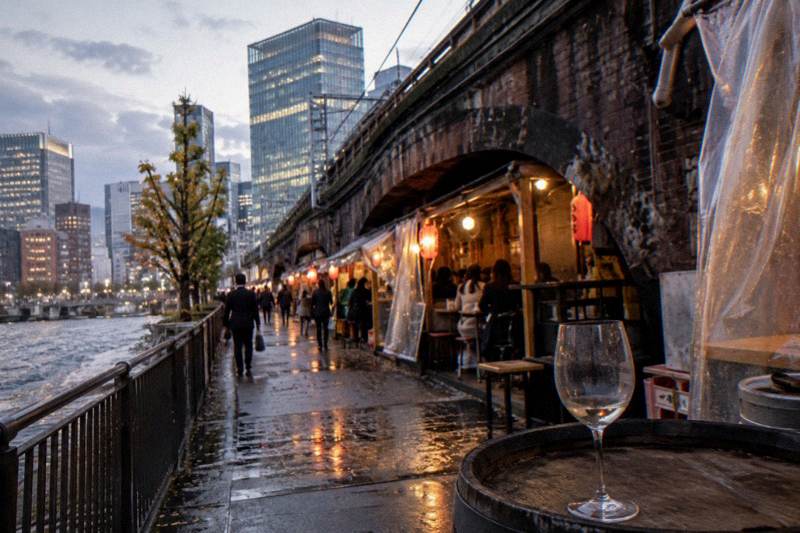
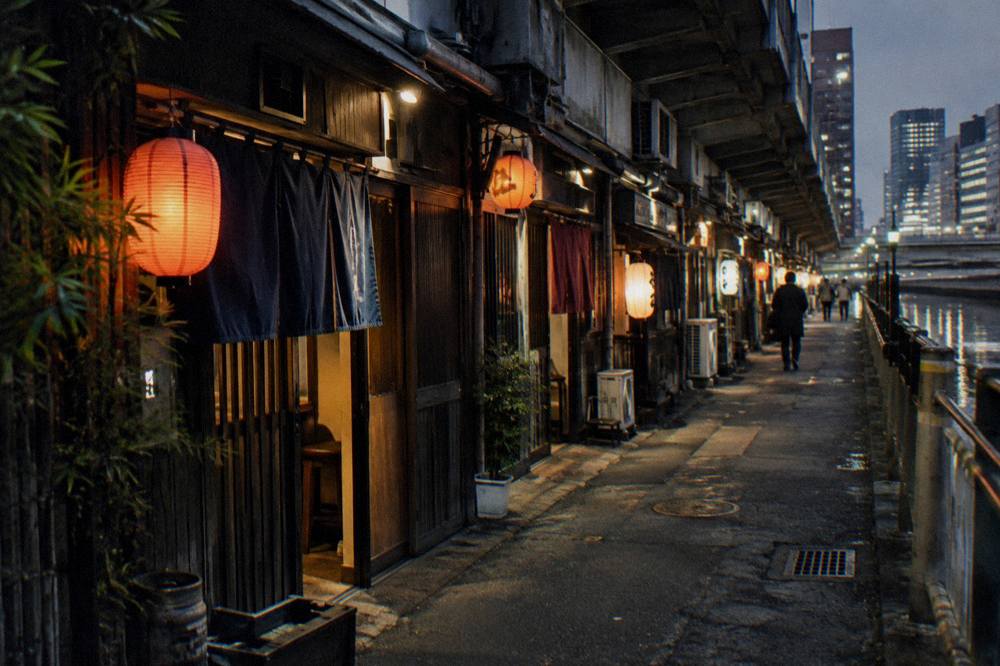
That history explains a pattern visitors notice immediately. Ginza's famous restaurants cluster in basements and upper floors, not at street level, because land values push everything except flagship facades upward and downward. The street-level food economy shifted to the side streets: Namiki-dori's café terraces, the back lanes behind the Ginza Six block, and the yakitori smoke under the Yamanote railway arches at Yurakucho, which is a two-minute walk from Ginza station's exits and functionally part of the same night out.
The railway arches deserve their own sentence. Yurakucho's brick arches, built to carry trains over the district, house rows of small yakitori counters, and casual yakitori skewers at Tokyo counters commonly run 150 to 400 yen each. Ginza's polished surface and Yurakucho's grilled-smoke underside are one continuous eating zone separated by a single road. Most visitors cross that road without realising they have changed food worlds, which is the single easiest upgrade to a Ginza evening.
The depachika deserves more credit than it gets, too. Department store basement food halls concentrate wagashi confectioners, regional bento makers and seasonal specialities from across Japan into one escalator ride, and they function as the district's affordable tasting menu. A walk through a Ginza depachika at closing time, when items are marked down, is one of the cheapest premium food experiences in the city.
For a structured first taste of that zone, the Ginza and Shimbashi Walk keeps the route small and human. It is also worth checking availability early, since Ginza food tours listed here include free cancellation.
What Should You Actually Eat In Ginza?
Eat standing sushi or a counter sushi meal, grilled skewers under the Yurakucho arches, a bowl at the Bib Gourmand ramen counter, wagashi sweets from a depachika, and an izakaya dinner in Shimbashi's back lanes. Those five experiences cover Ginza's full price range, from a few hundred yen for a skewer or a plate of conveyor sushi to tasting menus among the most expensive in Japan.
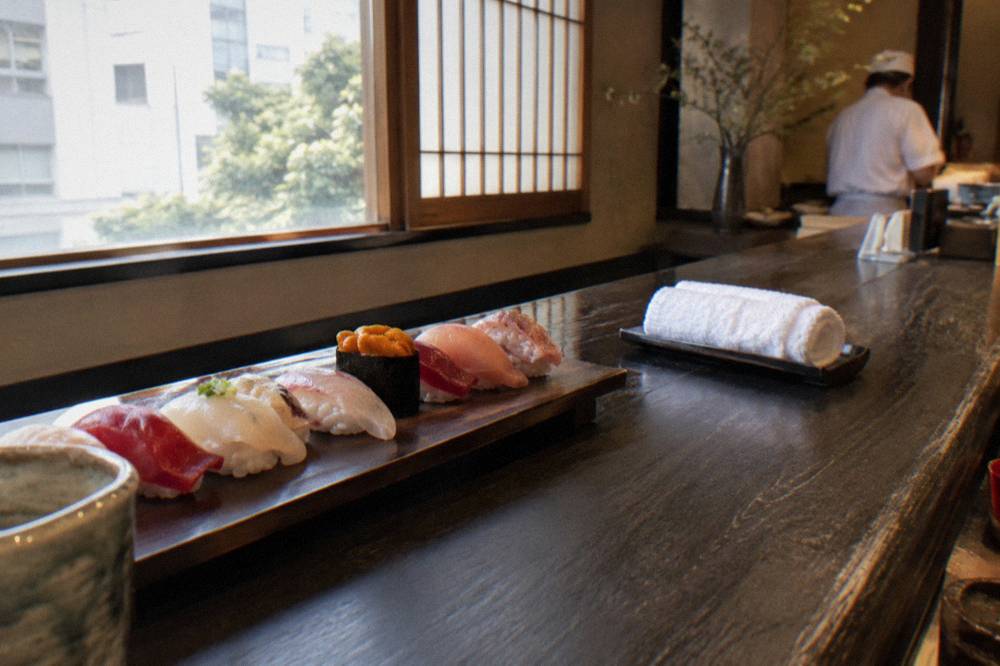
Sushi first, because Ginza is one of the city's serious sushi addresses. The standing-sushi format is the budget route in: standing sushi bars in the wider central Tokyo area sell individual nigiri from around 90 to 500 yen, and conveyor chains start plates at 110 to 150 yen. At the top end, Ginza's seated counters are booked weeks ahead. Reservation culture is not optional here; popular and high-end Tokyo restaurants often require advance booking, and no-shows or late cancellations can incur fees, per the Tokyo gourmet guide's reservations advice. If a counter seat matters, plan it before the trip, not during it.
Ramen is the surprise entry. Ginza is not a ramen district by reputation, but Ginza HARU CHAN Ramen's Bib Gourmand status puts an affordable, guide-recognised bowl inside the neighbourhood, and the national average for a basic bowl sat at 750 yen as of September 2026, so even a premium Ginza bowl stays cheap next to the sushi counters. Readers who want the full noodle picture can pair this with the Tokyo ramen tour guide, which covers the city's ramen districts and styles in depth.
The izakaya layer is where Ginza stops being a museum. Shimbashi, immediately south, is one of Tokyo's densest concentrations of after-work izakaya, and many bars in the wider Ginza-Shinjuku bar economy charge a cover or seating fee of 500 to 1,500 yen per person, often including a small otoshi starter. That per-person charge appears on the bill as a standard practice at many izakaya, and it is not a tip. Cash remains common at small bars, so do not assume cards are accepted.
For a guided route through exactly this layer, the Ginza Hop, the 1-hour izakaya hopping tour rated 5 across 36 reviews, from $195 per person, walks you into bars you would hesitate to enter alone. Check availability for it here: Check availability. Its short length is the point: it slots between dinner and a last train.
How Much Does Eating In Ginza Cost?
Expect roughly 1,500 to 3,000 yen for a conveyor sushi meal, around 750 yen for an average basic ramen bowl, 150 to 400 yen per yakitori skewer, 500 to 1,500 yen per person in izakaya cover charges plus drinks, and a serious counter sushi meal priced in a far higher tier. Guided Ginza food tours run from $72.47 to $195 per person depending on length and operator.
Those numbers come from current price surveys and this site's tour pricing, and they hold together as a planning range rather than a promise. A realistic Ginza food day can be built at almost any budget: a depachika bento eaten in a nearby park, a standing sushi lunch, and a guided izakaya evening would cost less than one mid-range counter dinner. Consumption tax matters at the margin: dine-in food carries 10 percent, takeaway food 8 percent, and the National Tax Agency notes the rate on food and drink sales is due to be lowered for the two years from 1 April 2027 to 31 March 2029.
| Eating style in Ginza | Typical cost | Notes |
|---|---|---|
| Conveyor sushi plate | 110 to 150 yen per plate | Typical full meal 1,500 to 3,000 yen |
| Standing sushi nigiri | Around 90 to 500 yen per piece | Format common near central markets |
| Basic ramen bowl | Around 750 yen national average | Premium Ginza bowls higher |
| Yakitori skewer | 150 to 400 yen each | Yurakucho arches, casual counters |
| Izakaya cover charge | 500 to 1,500 yen per person | Usually includes an otoshi starter |
| Guided food tour | From $72.47 to $195 per person | Tour pricing varies by booking page |
The tour comparison deserves its own row-by-row look, since the three Ginza-area options on this site differ sharply in format.
| Tour | Length | Rating | Price |
|---|---|---|---|
| Ginza and Shimbashi Walk | ~3 hours | 4.64 across 40 reviews | from $145.85 per person |
| Ginza Hop, izakaya hopping | ~1 hour | 5 across 36 reviews | from $195 per person |
| Ueno Walk, Exactly 10 Tastings | ~3.5 hours | 4.76 across 38 reviews | from $107.98 per person |
None of these figures include discretionary spending, and tour inclusions differ: check the booking page for what each price covers before choosing. The price gap between the 1-hour Ginza Hop and the longer walks reflects a small-group format on a compressed route rather than a per-hour rate. Drinks ordered beyond any included tastings, extra skewers at a second stop and the otoshi charges described earlier all add to the final bill, so treat the listed tour price as the floor of an evening rather than its ceiling.
How Do You Eat In Ginza Like A Local?
Eat early or late rather than at peak, pay cash at small counters, accept the otoshi charge as normal, book high-end counters well ahead, and treat Shimbashi's izakaya lanes as the default weeknight dinner zone. Locals use Ginza's food in layers: quick lunches near the department stores, after-work drinking in Shimbashi, and occasional splurges at counters.
Etiquette in Ginza is standard Tokyo etiquette, sharpened by formality at the top end. Tipping is not customary at Tokyo restaurants, bars or taxis, and the Japan National Tourism Organization is explicit that it is not common for services in bars, cafés, restaurants, taxis and hotels. Upscale venues may add a fixed service charge of 10 to 15 percent to the bill, which is part of the stated price, not a gratuity. Chopstick basics still apply everywhere: never stand chopsticks upright in rice and never pass food directly from one pair to another, as both echo funeral rituals.
Allergy handling is worth a paragraph of honesty. Japan's specified allergen list for packaged food grew to nine items when cashew nuts were added on 1 April 2026, joining egg, milk, wheat, shrimp, crab, walnut, peanut, buckwheat and the rest, per the Consumer Affairs Agency. But that labelling duty covers packaged food, not restaurant dishes, so it is not a guarantee a restaurant or tour can accommodate an allergy. Message the operator before booking any food tour if allergies matter. Eating by neighborhood is easier when The Tokyo Food List shows you what is within a 10-minute walk on a map.
Smoking rules shape venue choice more than visitors expect. Indoor smoking in restaurants is prohibited in principle under the amended Health Promotion Act and Tokyo's ordinance, in full effect since 2020, and restaurants must post a sign at the entrance showing their smoking policy, per the Tokyo Metropolitan Government's gazette. Some smoky old izakaya survive in designated-room configurations, but the sign at the door is the reliable signal.
A guided evening removes most of this friction at once. The Ginza and Shimbashi Walk handles venue selection, cover charges and language in a single booking, and its Shimbashi side is exactly the district visitors find hardest to enter alone. For readers weighing a guided night against the do-it-yourself route, the Tokyo night food tour guide breaks down the options across all of Tokyo's evening districts. The blog post on where locals actually eat in Tokyo covers the same instinct citywide.
The Ueno tour's 3.5 hours trade Ginza polish for street-market energy., which some travellers prefer after a day of department stores. Ten set tastings also mean the bill is knowable in advance, a real advantage in a district where a la carte izakaya tabs can drift upward stop by stop.
Is Ginza Worth It For Food, Or Just Shopping?
Ginza is genuinely worth it for food, provided you look past the flagship facades: the standing sushi bars, the Yurakucho arches, the Bib Gourmand ramen counter and the Shimbashi izakaya lanes deliver eating experiences you cannot get in trendier districts. As a pure street-food zone it loses to Asakusa or Ueno, but as a layered dining district it is unmatched in central Tokyo.
The honest comparison is district by district. Asakusa gives you temple-street snacks and old-town atmosphere; Ueno gives you market-street energy; Shinjuku gives you lantern-laced izakaya density. Ginza gives you the full vertical stack, from a 150-yen skewer to a counter meal costing more than a night in a good hotel, often within a five-minute walk of each other. Readers building a full itinerary can start with the best food tours in Tokyo guide and slot Ginza in as the evening anchor.
One practical note on timing: autumn, September through November, is peak season for ingredients like sanma, mushrooms and new rice in Tokyo, which is exactly when Ginza's counters and depachika put their best seasonal stock forward. A visit timed to that window eats noticeably better than the same money spent in the humid summer months.
For drinkers, the district also sits within reach of dedicated tasting experiences. The Sake Tasting Masterclass in Shinjuku, 8+ varieties with a professional, runs about 2 hours, rated 5 across 414 reviews, from $70.61 per person, a short train ride away. The Omakase Sushi and A5 Wagyu Premium Foodie Tour, about 3 hours and rated 4.72 across 329 reviews, from $130.73 per person, pairs omakase sushi with A5 wagyu in a single guided tasting format.
Common Questions About Ginza Food
What Food Is Ginza Famous For?
Ginza is famous for high-end sushi and wagyu counters, department store depachika food halls, standing sushi bars, yakitori under the Yurakucho railway arches, and izakaya culture extending into Shimbashi. One Ginza ramen shop, Ginza HARU CHAN Ramen, holds Bib Gourmand status in the Michelin Guide Tokyo 2026.
Is Ginza Expensive For Food?
It can be, but it does not have to be. Conveyor sushi plates start around 110 to 150 yen, basic ramen bowls sit near the 750 yen national average, and yakitori skewers run 150 to 400 yen, while counter sushi meals sit in a far higher tier. Guided Ginza food tours run from $72.47 to $195 per person.
What Is The Best Food Tour In Ginza?
The fullest option is the Ginza and Shimbashi Walk, about 3 hours, rated 4.64 across 40 reviews, from $145.85 per person. For a short format, the Ginza Hop compresses izakaya hopping into about 1 hour, rated 5 across 36 reviews, from $195 per person.
Is Tipping Expected In Ginza Restaurants?
No. Tipping is not customary at Tokyo restaurants, bars, cafés, taxis or hotels. Upscale venues may add a fixed 10 to 15 percent service charge to the bill, which is part of the stated price rather than a tip.
Why Do Izakaya In Ginza Add A Cover Charge?
The otoshi or tsukidashi is a standard per-person seating charge at many izakaya, typically a few hundred yen in this kind of bar economy, and it usually comes with a small starter dish. It appears on the bill and is not a tip.
Should I Book Ginza Restaurants In Advance?
For popular or high-end venues, yes. Destination spots often require advance booking by phone, website or concierge, and no-shows or late cancellations can incur fees. Casual counters and standing bars generally work first-come, first-served.