Where Do Locals Go To Eat In Tokyo?
Tokyo residents eat a ten minute walk from the station, in shotengai backstreets, izakaya lanes and station-side noodle counters, not the tourist strips. Here is where to find those streets and what a night on them costs.
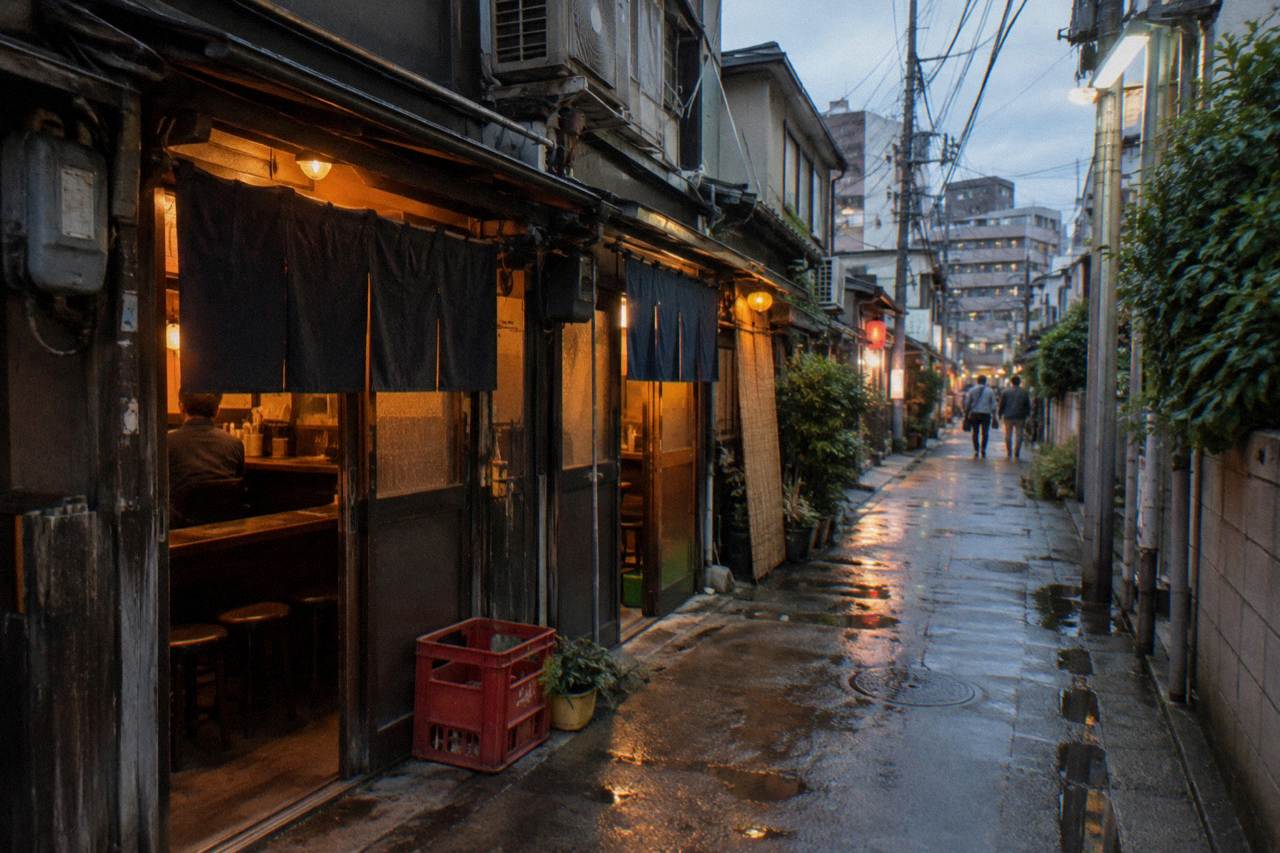
Tokyo locals eat close to their home train station, favoring small backstreet izakaya, shotengai shopping streets, and counter noodle shops over the famous tourist strips. A casual night out typically costs 2,000 to 3,000 yen per person, whether in Omoide Yokocho near Shinjuku Station's west exit or quieter residential areas like Togoshi Ginza and Sangenjaya. To budget for those izakaya nights, this plain-English guide to Tokyo dinner prices explains how tax, cover charges, and tour options change the final bill.
The honest answer starts with geography. Tokyo is a city of several hundred small centres, each strung around a railway station, and most residents eat within a short walk of theirs. Nobody crosses the city for dinner on a Tuesday. They go to the yakitori counter under the railway arches, the standing bar near the office, or the family-run restaurant at the end of their shopping street. Tourists congregate in Asakusa, Shibuya Crossing and the Omotesando boutiques, which is exactly why locals tend to be one neighbourhood over, paying less for the same quality.
That pattern rewards travellers who are willing to move ten minutes away from the guidebook sights. The lanes around Shinjuku's west exit, the crooked Golden Gai alleys, the long stretch of Togoshi Ginza's shotengai in Shinagawa, and the temple-backed backstreets of Sangenjaya all run on the same logic: small rooms, low covers, regulars, and prices set for people who come every week. A first-time visitor can walk these streets alone, but a guided evening removes the language barrier and the door-charge guesswork, which is why backstreet walking tours have become the most direct route into this side of the city.
For travellers who want a local-style night with a guide leading the way, three options cover the range: a low-cost Shinjuku bar crawl that skips the meal, a private four-hour walk through Sangenjaya's hidden backstreets, and a small-group street food tour along Togoshi Ginza.
The rest of this article walks through the specific streets, what a night on them costs, and the small etiquette rules that mark you as someone who has done this before.
Shinjuku Backstreets And Omoide Yokocho
Omoide Yokocho is the classic locals' eating lane nearest Shinjuku Station, a post-war bar district of about 80 premises, mostly motsuyaki and yakitori counters, packed into roughly 2,000 square metres by the west exit. Most counters open around 5 p.m. and run to midnight or later. A typical evening of skewers and drinks runs 2,000 to 3,000 yen per person, and many counters prefer cash.
The lane's own official site describes its history plainly: it grew from the post-war black-market stalls into a permanent cluster of tiny restaurants, and it still trades on that atmosphere, smoke, steam, and a grid of alleys too narrow for two people to pass shoulder to shoulder. Because each shop sets its own hours, there is no alley-wide opening time; some counters start in the afternoon, most fire up their grills toward evening. A seat charge is part of the culture here too: some counters add an otoshi seating charge of 300 to 500 yen, which arrives as a small starter rather than a fee you can decline. It is not a tip, and tipping itself is not customary anywhere in Tokyo dining, as the national tourism organisation notes in its guidance for visitors.
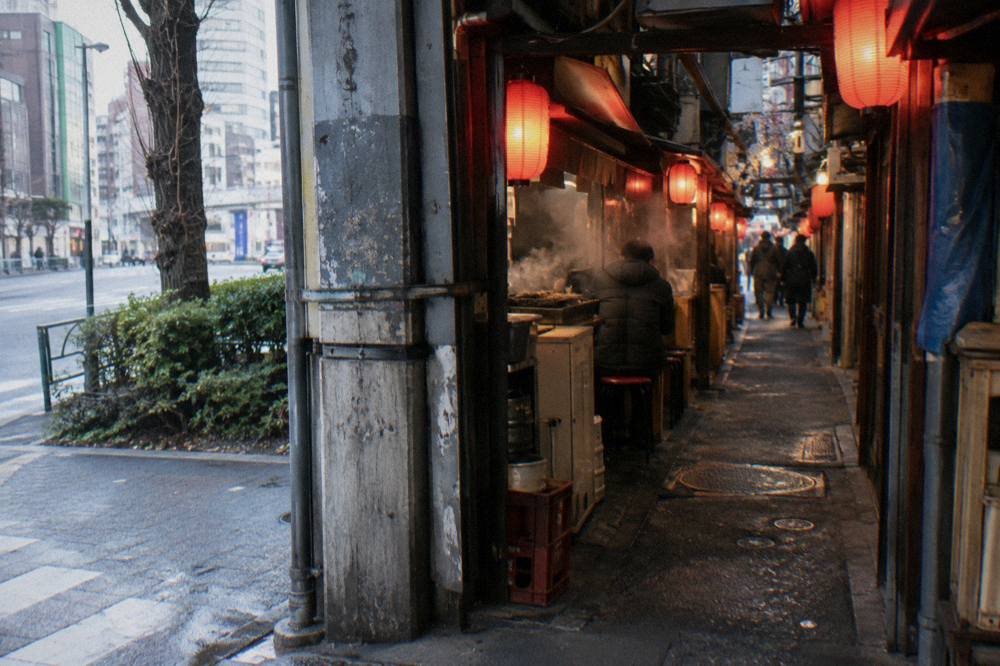
What surprises many first-time visitors is how ordinary the lane is for the people who work around it. Office workers from the surrounding towers fill the counters from six o'clock, and the shops are sized for them: standing room, a few stools, a menu of skewers that changes with what the market had that morning. Yakitori at casual Tokyo counters commonly runs 150 to 400 yen per skewer, so a full evening lands well below the cost of a hotel restaurant meal. If you are finding your own way down the lane, look for posted menus, carry cash, and expect to order in small rounds rather than one big plate. Sharing a counter with strangers is normal, and at a six-seat shop the person beside you is as likely to be a regular as another visitor.
A guided option strips out the friction. The Budget Crawl, No Meal Included is a roughly three-hour Shinjuku bar and izakaya crawl rated 4.9 across 2,911 reviews, from $36.15 per person, designed around local bar streets rather than dinner service, so you eat as you go. At the other end of the scale, the Bar Hop, Free Flow Full Dinner covers a full dinner with free-flow drinks over about three hours from $109.35 per person, rated 4.9 across 4,086 reviews. For a fuller picture of the district, our Shinjuku food tour guide covers the eating streets in depth, and the companion piece on where to eat in Shinjuku lists the neighbourhood's most dependable restaurants street by street.
For travelers who want a guide to handle a full spread of Japanese classics in one booking, this Ueno walk is the decision point.
Golden Gai And The Small-Bar Scene
Golden Gai is a network of six narrow lanes off Kabukicho holding around 200 bars, some seating fewer than a dozen people. Most open around 8 p.m. and close between 2 and 5 a.m., and a per-person cover charge of 500 to 1,500 yen is standard, often including a small snack. Cash remains the safe assumption, and some bars are regulars-only.
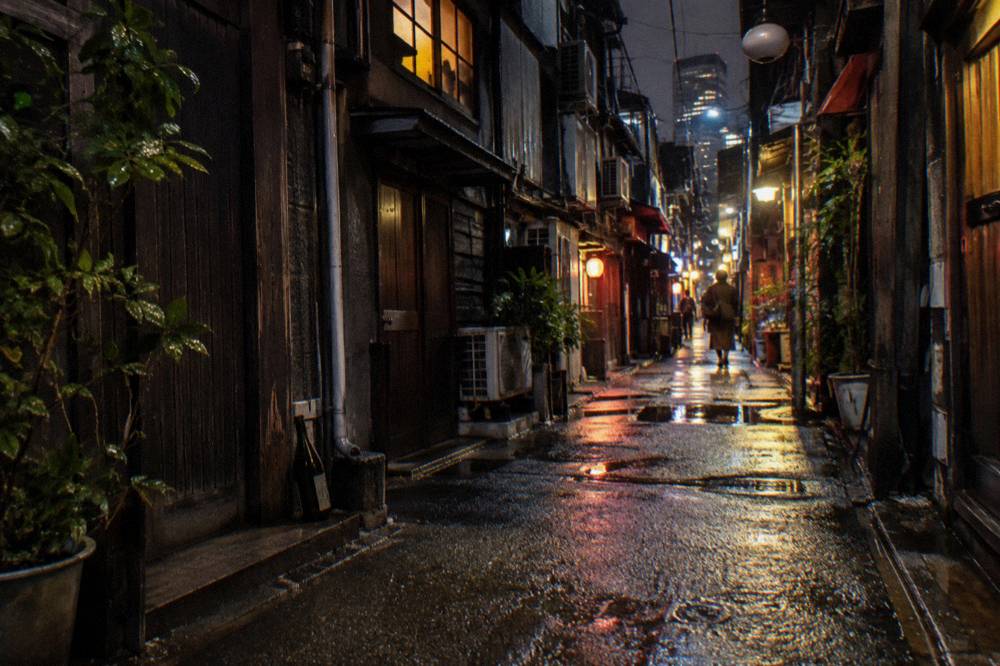
Golden Gai works differently from Omoide Yokocho. It is a drinking district rather than an eating one, built on the idea that each bar is one person's living room, with the owner's taste in music, whisky or film setting the theme. The alleys are private roads maintained by the shopping-street association, and the association asks visitors not to photograph or film there without permission; inside a bar, ask the establishment first. Reading the doors is the real skill: English menus and posted cover charges signal a bar that welcomes travellers, and many do, while a plain curtain and a quiet interior usually mean a regulars' house. Checking the door before entering is ordinary behaviour here, not rudeness.
The cover charge deserves a sentence of explanation because it confuses visitors. It is not a scam and not a tip: it buys your seat for the evening in a room with very few of them, and it usually comes with otoshi, a small dish. At upscale restaurants and hotel bars elsewhere in the city a fixed service charge of 10 to 15 percent can appear on the bill for the same reason, part of the stated price rather than something optional. In Golden Gai, assume 500 to 1,500 yen per person on top of your drinks, confirm at the door, and do not assume cards are accepted.
Guided nights remove the door-reading entirely. The Golden Gai Crawl, 2 Hours is a roughly two-hour introduction rated 4.8 across 180 reviews, from $97.17 per person, while the Golden Gai Food Tour, Premium runs about three hours with food built in, rated 5 across 261 reviews, from $217 per person. The cultural-angle option, the Izakaya Crawl, Cultural Angle, is rated 4.94 across 256 reviews, from $129 per person. Each pairs you with a guide who already knows which doors open to visitors, which matters on a Friday night when the lanes fill.
For most travellers the best-value entry into this whole small-bar world is the local crawl already mentioned above, and a private version of the Golden Gai walk is also among the tours on this site.
Our Golden Gai bar hopping guide goes deeper on the lanes themselves if you want to plan an independent night instead.
Neighbourhood Shotengai: Togoshi Ginza, Sangenjaya And Kichijoji
The true locals' eating streets are the shotengai, covered or open-air shopping streets in residential wards. Togoshi Ginza in Shinagawa is one of the longest in Tokyo, and Sangenjaya and Kichijoji wrap their eating lanes around temples, railway lines and low-rise housing. Prices here are set for weekly regulars: street snacks from around 150 yen and full meals from 1,000 yen.
A shotengai is the opposite of a food theme park. It is where the neighbourhood buys groceries, gets a haircut and eats dinner, all in one 400-metre strip, and the prepared-food shops exist for people walking home. That is why the pricing is flatly local. Convenience-store onigiri recently ran 145 to 149 yen for a basic salt musubi and 211 to 235 yen for salmon across the major chains, and an independent shop in a shotengai sits in the same territory. The national average for a bowl of shoyu ramen was 750 yen as of September 2026, and a survey of 81 shops around Takadanobaba found an average of 993 yen for a basic bowl, with the cheapest at 600 yen. Conveyor-belt sushi in Tokyo starts at 110 to 150 yen a plate, with a full meal commonly totalling 1,500 to 3,000 yen. The Tokyo Food List on Tokyo Food Tours maps local spots and what's a 10-minute walk away.
Sangenjaya deserves the specific mention. A few minutes by train from Shibuya, it stacks izakaya lanes behind a temple and around the shotengai, and it is precisely the kind of district visitors walk past on their way to somewhere famous. The Private Sangenjaya Backstreets tour runs roughly four hours through those lanes, rated 5 across 148 reviews, from $289.25 per person, with the privacy and pace of a walk built around one group. In Kichijoji on the western edge of the city, the Kichijoji Backstreet Crawl, about three hours, rated 5 across 38 reviews, from $104.62 per person, works the same seams around Harmonica Yokocho's grid of matchbox-sized bars.
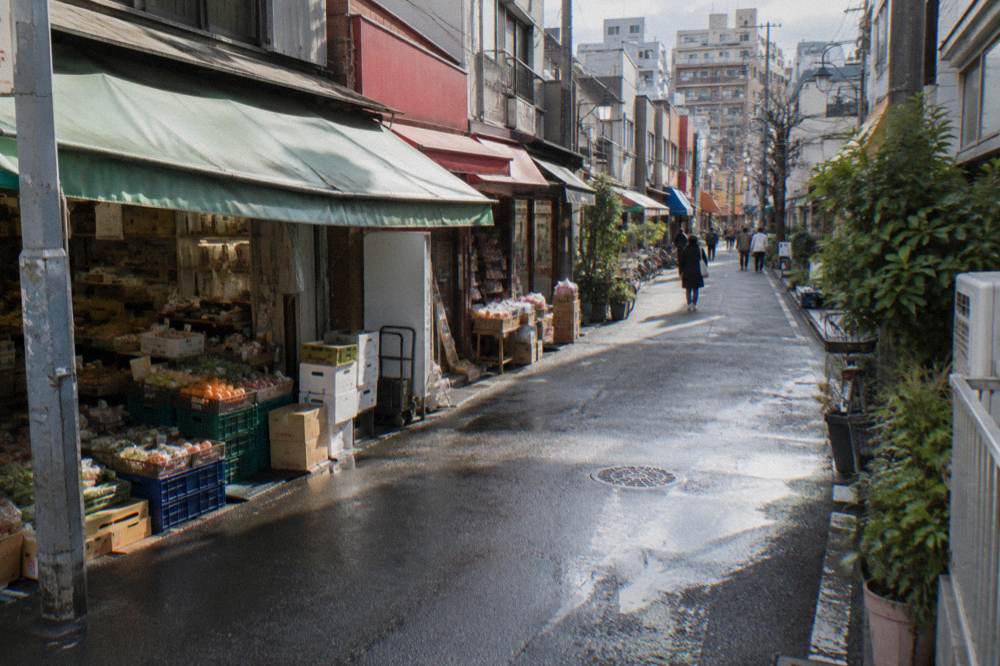
The budget-friendly small-group introduction to this style of street is the Togoshi Ginza walk.
It runs about 2.5 hours, rated 5 across 34 reviews, from $93.85 per person, through a shotengai that locals genuinely shop in daily. If street snacking is your main interest rather than the evening bar scene, the piece on the best street food to eat in Tokyo maps the snacks themselves, dish by dish. For a broader survey of guided formats, our guide to the best food tours in Tokyo lists options across the whole city, from market walks to cooking classes.
What Everyday Tokyo Food Actually Costs
A local-style food day in Tokyo is cheaper than most visitors expect: ramen around 750 to 1,000 yen a bowl, yakitori skewers 150 to 400 yen, conveyor sushi meals 1,500 to 3,000 yen, and a full izakaya evening, with the per-person bill depending on what you order. Consumption tax is 10 percent dine-in and 8 percent takeaway, and it is already in the displayed price.
Two tax details catch visitors out. Japan prices include tax on the shelf and on the menu, so the number you see is the number you pay, and takeaway food carries a lower rate than eating in, which is why the same item can cost differently across a bakery counter. The National Tax Agency also states that for the two years from 1 April 2027 to 31 March 2029 the rate on food and drink sales is due to be lowered, a future change worth knowing if you are reading this after that date.
| What locals order | Typical price in Tokyo | Where the figure sits |
|---|---|---|
| Basic ramen bowl | 600 to 1,000 yen | National average 750 yen; Takadanobaba area average 993 yen |
| Yakitori skewer | 150 to 400 yen | Casual counters, priced per skewer |
| Conveyor sushi plate | 110 to 150 yen per plate | Full meal commonly 1,500 to 3,000 yen |
| Convenience onigiri | 145 to 308 yen | Chain pricing, basic to large fillings |
| Izakaya evening, food and drinks | 2,000 to 3,000 yen per person | Omoide Yokocho typical spend, before any otoshi |
| Standing sushi nigiri | 90 to 500 yen per piece | Standing bars near market districts |
Against those numbers, a guided tour is a convenience purchase rather than a bargain, and it is worth judging on that basis. The Ueno Walk, 10+ Japanese Classics, roughly 3.5 hours, rated 5 across 349 reviews, from $107.99 per person, buys ten or more tastings along Ameyoko, a market street that locals do use. The 7 Eateries, Shopping Streets Walk covers seven shops with ten or more tastings in about 2.5 hours, priced from $75 per group rather than per person, rated 5 across 42 reviews. What a tour adds is the removal of the door-charge, menu and language frictions described above, and a route through streets you would not otherwise find in an evening.
There is also a seasonal layer to local eating that menus only hint at. Autumn in Tokyo is peak season for sanma, the grilled Pacific saury that appears on izakaya counters as a whole fish, alongside mushroom dishes and the year's new rice. A street that was serving chilled summer plates in August turns to hot grills and richer stews by October, and regulars reorder around that calendar without thinking about it. Travellers who visit in September through November land in the richest window of the year.
Etiquette Locals Follow Without Thinking
The rules that matter are few: do not tip, eat at the counter or in front of the shop rather than walking, expect a door sign stating the smoking policy, and never stick chopsticks upright in rice or pass food chopstick to chopstick, both of which echo funeral rituals. Payment is exact and often cash.
None of this is stern. Tokyo's small restaurants are forgiving of visitors, and the etiquette exists to keep tiny rooms working. Eating while walking is discouraged in market streets specifically because lanes are narrow, and at Tsukiji the official guidance asks visitors to eat inside the eatery or directly in front of the store, to give professional buyers priority until 9 a.m., and to check the market calendar because individual shops follow their own schedules against the wholesale closure days. Smoking rules are posted by law: restaurants must display their policy at the entrance, and indoor smoking is only permitted in designated rooms, so the sign at the door tells you what a room allows before you sit down.
Reservations follow a split logic worth knowing before you plan a big night. Casual counters, ramen shops and most izakaya work first-come, first-served, with queues forming on the pavement at peak hours. Destination restaurants, especially popular or high-end ones, often require advance booking, and no-shows or late cancellations can carry fees, so it pays to notify the venue if plans change. For a traveller without Japanese, that asymmetry is another argument for a guided evening on the casual side of the city, where the guide handles the queue, the counter seats and the ordering while you absorb the room. For a model of that kind of evening, our guide to Anthony Bourdain's Tokyo eating spots shows which counters and late-night lanes he favored and how to follow his route now.
Cash deserves the last word because it quietly decides where you can go. Cards and cashless payment are increasingly common in mid-range and chain venues, but many independent restaurants, ramen counters and Golden Gai bars still prefer notes, and some accept nothing else. A wallet with cash opens the exact streets this article describes, which is the practical difference between seeing the local side of Tokyo and reading about it.
Two local street food walks fit the brief, from $75 and $93.85 per person.
Common Questions About Where Locals Eat In Tokyo
Where Do Locals Go To Eat In Tokyo?
They eat near their own train station: backstreet izakaya lanes like Omoide Yokocho, small-bar districts like Golden Gai, and residential shotengai such as Togoshi Ginza, Sangenjaya and Kichijoji. A typical casual evening runs 2,000 to 3,000 yen per person for skewers and drinks.
Is It Expensive To Eat Where Locals Eat?
No. Ramen averages around 750 to 1,000 yen a bowl, yakitori skewers run 150 to 400 yen, and a conveyor sushi meal commonly totals 1,500 to 3,000 yen. Expect a small otoshi seating charge at izakaya, usually 300 to 500 yen.
Do I Need To Speak Japanese To Eat In These Places?
Not always, but English support is uneven. Omoide Yokocho and many Golden Gai bars post English menus or door signs; smaller shotengai shops often do not. A guided crawl or street food walk removes the language problem for one evening.
Should I Tip In Tokyo Restaurants And Bars?
No. Tipping is not customary in Japanese restaurants, bars or taxis, and staff may return money left by mistake. Service charges, where they exist, are part of the stated bill.
Can I Visit These Streets On A Tour?
Yes. Guided options include a roughly three-hour Shinjuku bar crawl from $36.15 per person, rated 4.9 across 2,911 reviews, a private four-hour Sangenjaya backstreets walk from $289.25 per person, and a 2.5-hour Togoshi Ginza street food walk from $93.85 per person.