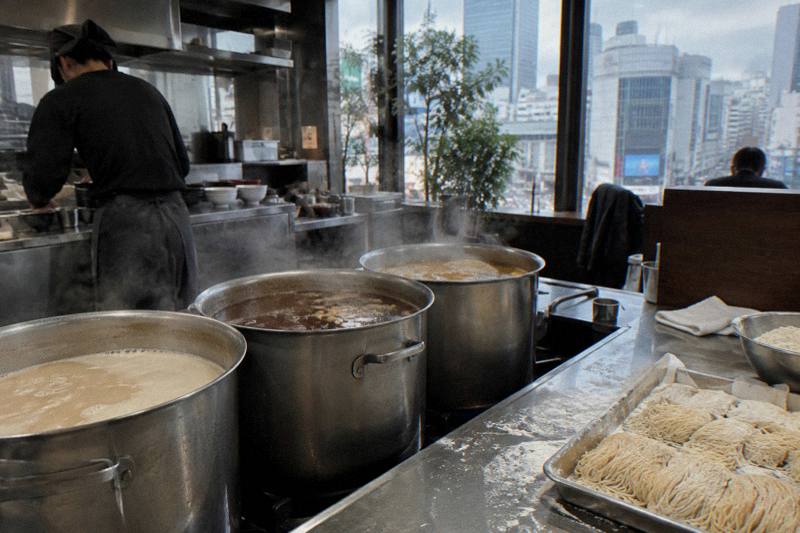
What Are The 4 Types Of Japanese Ramen?
Shoyu, shio, miso and tonkotsu explained clearly, with what sets each broth apart, what each bowl costs in Tokyo, and how to learn to make them yourself.
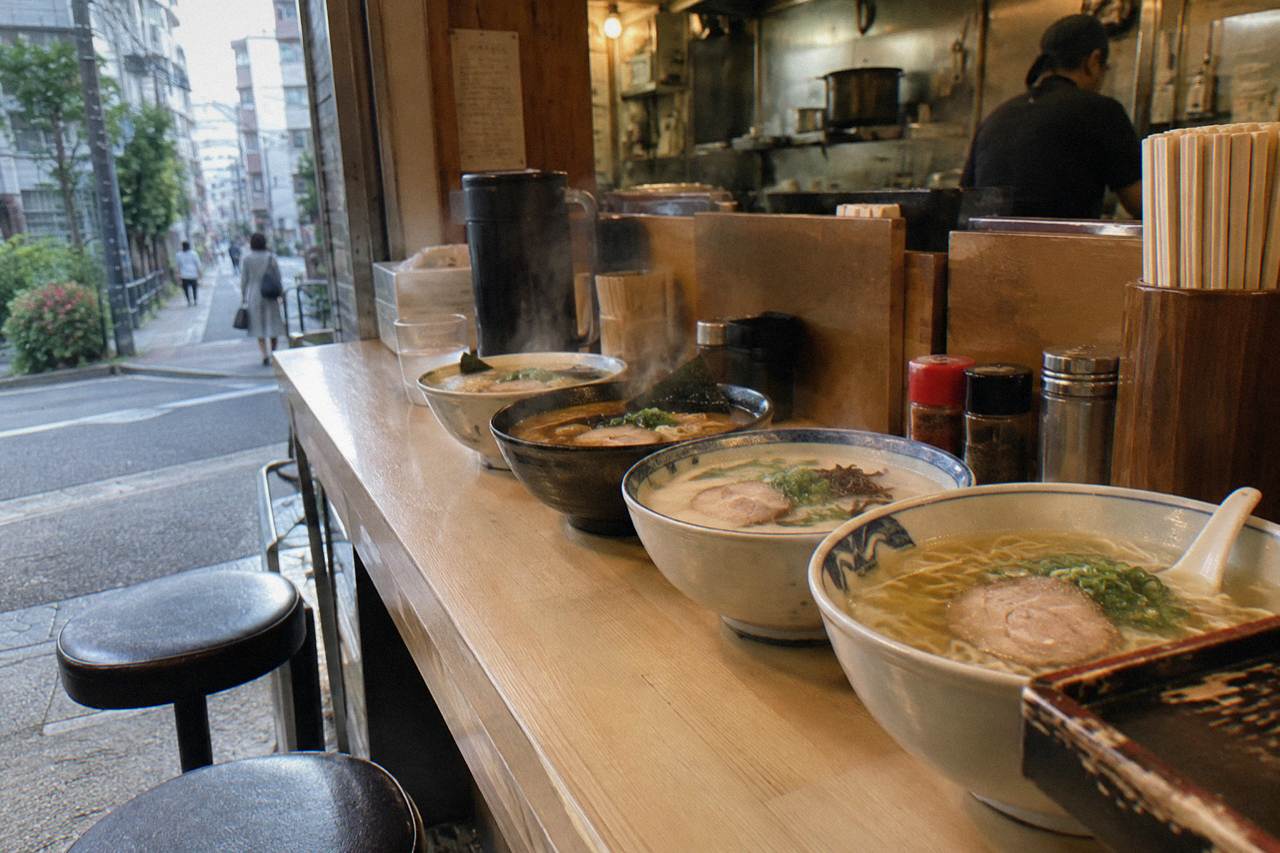
Walk into any ramen counter in Tokyo and the menu almost always boils down to one of four words: shoyu, shio, miso or tonkotsu. These are the four broth families that define Japanese ramen, and every famous shop in the country, from Tokyo's oldest institutions to the Bib Gourmand newcomers, is working a variation on one of them.
The four types are shoyu (soy sauce based, the oldest Tokyo style), shio (salt based, the lightest and clearest broth), miso (fermented soybean paste based, born in Sapporo) and tonkotsu (a creamy, opaque broth boiled from pork bones, which originated in Kyushu). The first three are seasoning categories added to a base stock, while tonkotsu refers to the stock itself, which is why menus sometimes combine them, for example a tonkotsu-shoyu bowl.
That last point trips up a lot of first-time visitors. Shoyu, shio and miso describe the tare, the concentrated seasoning that is dissolved into the bowl at the finish, while tonkotsu describes what the soup itself is made from. A shop can therefore serve a tonkotsu broth seasoned with shoyu tare, and many do. When people count "the four types," they are really counting the four words that carry the most meaning when you read a menu or a vending-machine ticket machine.
Each family also carries a history. Shoyu ramen is tied to the earliest ramen shops of Tokyo. Shio ramen traces its lineage to Hakodate in the far north. Miso ramen was born in Sapporo, partly as a hearty antidote to Hokkaido winters. Tonkotsu came out of Fukuoka on the southern island of Kyushu, where the famous tonkotsu ramen chain culture and the ultra-fine noodles of Hakata style were born. Tokyo shops serve all four, usually within a few streets of each other.
Ramen's standing has climbed well beyond cheap eats. The Michelin Guide Tokyo 2026 added 16 new Bib Gourmand restaurants, and several of them are ramen shops, a sign of how seriously the city treats its noodle bowls. If you want to taste the four styles and then learn to build them, a guided class is the fastest route, and the four styles below break down one by one, starting with shoyu.
Shoyu Ramen: The Original Tokyo Bowl
Shoyu ramen is seasoned with a soy sauce tare and is the style most closely identified with Tokyo, where the first ramen shops in Japan served a clear, brown, chicken or pork based soup flavoured with soy sauce. It is the benchmark against which the other three styles are measured, with a savoury depth and an aroma of toasted wheat and soy that most people picture when they hear the word ramen.
The classic Tokyo shoyu bowl uses a relatively light, clear stock, often chicken with some pork, and thin, wavy noodles that catch the seasoned soup well. Standard toppings are chashu pork slices, menma bamboo shoots, a sheet of nori, and a halved ajitama soft boiled egg if the shop offers it. The best versions taste clean but never thin: the tare does the talking, and the stock carries it.
Shoyu's roots run back to the very beginnings of ramen in Japan. The dish evolved from Chinese noodle soup, and the early Tokyo shops that adapted it for Japanese palates leaned on domestic soy sauce, which was already the backbone of Japanese cooking. That made shoyu the default national style for decades, and it remains the reference point in the ramen world. Many of the country's oldest and most decorated shops still serve some form of it.
Money is one reason the style endures. The national average price for a bowl of shoyu ramen, including tonkotsu shoyu, was 750 yen as of September 2026 in the official retail price survey, which keeps it one of the most affordable full meals in the country. A survey of 81 ramen shops in Tokyo's Takadanobaba and Waseda area found an average price of 993 yen for a basic bowl, with the cheapest at 600 yen, so even in central Tokyo the style stays accessible.
Shio Ramen: The Lightest Bowl On The Menu
Shio ramen is seasoned with salt rather than soy sauce or miso, giving it the palest, clearest broth of the four types. It is generally the most delicate style, built on chicken or seafood stock, and it is the hardest to make well because nothing in the bowl can hide a weak soup.
Where shoyu bowls are amber and miso bowls are cloudy gold, shio bowls are nearly transparent, often with a light yellow or straw tint. The tare is salt based, usually steeped with dashi ingredients, and the stock underneath tends to feature chicken, konbu kelp, or dried seafood. Hakodate, on the southern tip of Hokkaido, is the traditional home of the style, and its version uses straight, thin noodles in a chicken salt broth.
Because the flavour is subtle, shio bowls live or die on the quality of the stock and the tare. Toppings tend to be restrained too: a single slice of chashu, maybe some vegetables or a fish cake, and often a slow cooked egg. In Tokyo, shio is frequently the connoisseur's order at shops that do several styles, precisely because a good one signals real kitchen skill.
For visitors, shio is also the gentlest introduction to ramen. It is the least fatty of the four families, has no fermented punch, and pairs well with lighter appetites or a lunch that will not weigh down an afternoon of walking. If your only previous ramen experience was a heavy, oily bowl, shio is the style most likely to change your mind about the dish.
Miso Ramen: The Sapporo Bowl That Conquered The Country
Miso ramen uses fermented soybean paste as its tare, producing a cloudy, warming, savoury soup that was invented in Sapporo. It is the heartiest of the three tare based styles, often topped with stir fried vegetables, corn and butter, and it is strongly associated with Hokkaido's cold winters.
The Sapporo origin matters because it explains the bowl. The style is said to have emerged when a shop owner added miso to a Chinese noodle soup to make something hearty enough for the northern climate, and the city embraced it. Classic Sapporo miso ramen uses thick, curly noodles that hold the heavier soup, and the toppings run hearty: stir fried bean sprouts and onion, ground pork, sweetcorn, and sometimes a knob of butter that melts into the broth.
Miso tare brings umami in a different way than shoyu does. Soy sauce is fermented and liquid, giving sharp savoury notes, while miso paste is thick, deeper and rounder on the palate. A miso bowl therefore tastes fuller and more rustic, closer to a stew in spirit than a consommé. Blended misos, combining white and red varieties, are common in shop kitchens, and each house mix is a closely guarded formula.
In Tokyo, miso ramen appears on most multi-style menus and is the usual recommendation for anyone who wants a filling bowl. It is also a natural style to learn in a class, because the tare can be mixed and tasted raw before it goes into the soup, which makes the lesson unusually hands-on. The Shibuya Ramen Cooking Class, about an hour and a half long, teaches tonkotsu, shoyu and miso side by side, so you can taste exactly what changes when the tare changes; it is rated 5 across 259 reviews and costs from $113.36 per person. To see how a hands-on lesson stacks up against simply eating out, our guide on what one bowl of ramen costs in Tokyo breaks down survey averages, neighbourhood prices, tax and tipping rules.
Tonkotsu Ramen: The Pork Bone Bowl From Kyushu
Tonkotsu ramen is defined by its stock, not its tare: pork bones boiled hard for many hours until the soup turns creamy, opaque and pale. It originated in Fukuoka in Kyushu as Hakata ramen and is the richest of the four types, usually served with very thin, straight noodles and a strong chashu topping.
The transformation in the pot is what makes tonkotsu distinctive. Rolling boil agitates the collagen and fat out of the bones and emulsifies them into the liquid, which is why the broth is white or pale beige rather than clear. Done properly it is silky and coats the lips. Done cheaply it can be heavy, which is why shops guard their boiling times and bone ratios carefully. The classic Hakata version is seasoned with a shio or shoyu tare on top, which is a good reminder that the four categories overlap in real kitchens.
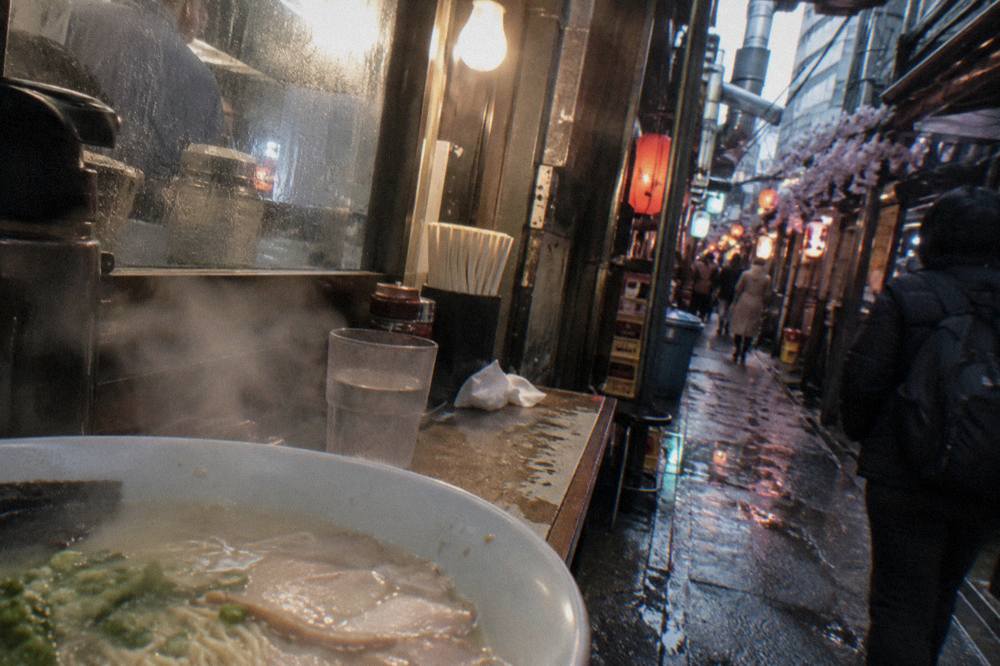
Hakata shops serve tonkotsu with the thinnest noodles in the ramen world, and they cook them firm, on the principle that the rich soup needs a noodle with bite. Another Kyushu custom is the kaedama system: you order noodles alone as a refill and drop them into your remaining broth, since the soup outlasts the first portion of noodles. Toppings are typically sliced pork, pickled ginger, sesame and garlic, often from a condiment set on the counter. Beyond this bowl, The Tokyo Food List lists 980+ restaurants sorted by cuisine and Google rating, with what to order at the ramen counters.
In Tokyo, tonkotsu has gone from a regional import to a mainstream style, and plenty of shops blend it with other tare families. A tonkotsu miso bowl gives you the fermented depth of miso with the creamy body of the pork stock, while a tonkotsu shoyu leans sharper. If you are ordering for a group with mixed tastes, a shop that does a good tonkotsu base with a choice of tare is usually the safest pick, since the base satisfies the richness seekers and the tare options cover everyone else.
How The Four Types Compare At The Counter
The fastest way to order well is to match the style to what you want from the bowl: shoyu for the classic balanced experience, shio for lightness, miso for hearty warmth, and tonkotsu for maximum richness. Noodle thickness, broth colour and toppings all shift predictably across the four families, which is why a one-line table can carry most of the decision.
The table below pulls the four types into one view. Broth colour is the first thing you see at a counter, so it works as a reliable identifier even before you taste anything.
| Type | Tare or stock | Broth appearance | Typical stock | Noodles | Signature toppings | Origin |
|---|---|---|---|---|---|---|
| Shoyu | Soy sauce tare | Clear amber | Chicken or chicken and pork | Thin, wavy | Chashu, menma, nori | Tokyo |
| Shio | Salt tare | Nearly clear, pale | Chicken, konbu, seafood | Thin, straight | Light chashu, vegetables | Hakodate |
| Miso | Miso paste tare | Cloudy gold | Chicken or pork | Thick, curly | Stir fried vegetables, corn, butter | Sapporo |
| Tonkotsu | Stock (usually shio or shoyu tare) | Opaque creamy white | Pork bones | Very thin, straight, firm | Chashu, pickled ginger, garlic | Fukuoka |
A couple of practical notes follow from the table. If you are eating late at night after drinking, the heavier miso and tonkotsu bowls are the traditional choice in izakaya districts like Shinjuku. If you are eating before a full day of sightseeing, shio and shoyu bowls sit lighter. And if a shop offers only one style, that single style is usually its pride, so ordering it is rarely a mistake.
Making Ramen Yourself: Where Tokyo Classes Fit
Tokyo has a small cluster of hands-on ramen classes where you build a bowl, or all the tare families, from scratch, and they suit travellers who want to understand the four types by cooking rather than only tasting. Sessions run from about ninety minutes to three and a half hours, and ramen classes on this site run from $75 to $165.19 per person.
A class teaches the part of ramen that a restaurant meal cannot: the tare. When you mix a shoyu tare, season a miso blend and see how the same stock changes character with each one, the four-type framework stops being trivia and becomes something you can reproduce at home. Classes also typically cover noodle handling and the assembly order, tare first, then hot stock, then noodles, which is the step most home cooks get wrong.
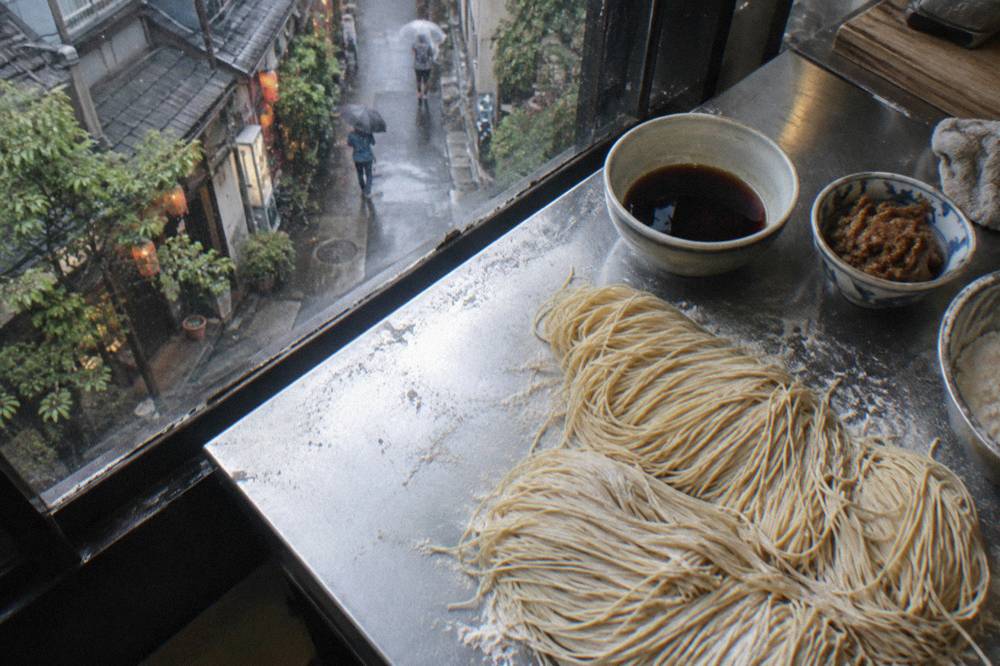
Beyond the Shibuya class above, two other options on this site are worth weighing. The Ramen Making from Scratch class paired with an Akihabara tour runs about three and a half hours and covers the full from-scratch process, noodles included; it is rated 5 across 143 reviews and costs from $121.14 per person. For a deeper step up, Become a Ramen Chef for a Day is a restaurant experience of about three and a half hours, rated 5 across 235 reviews, from $165.19 per person. Group sizes, schedules and what each session includes shift with the season, so check the booking page for the date you have in mind.
Whichever you pick, book the class early in your trip rather than at the end. You will come out tasting broth everywhere you eat for the rest of the week, which is exactly the point.
The Akihabara pairing is a nice bonus for first-time visitors, since it combines the lesson with a walk through one of Tokyo's most distinctive districts. For travellers focused purely on the cooking, the Shibuya and restaurant experiences go deeper on technique.
What A Bowl Costs In Tokyo Right Now
Ramen remains one of Tokyo's best value meals, with national averages around 750 yen for a shoyu bowl and area surveys in central Tokyo showing basic bowls averaging 993 yen, with the cheapest found at 600 yen. Add toppings and an egg, and the bill at most ramen counters still stays small, far below the average restaurant dinner in the city.
For context, the national average price for a serving of nigiri sushi eaten out was 1,592 yen as of September 2026, and conveyor-belt sushi meals in Tokyo typically total 1,500 to 3,000 yen. Against that, a full ramen dinner with extras is still the cheapest hot restaurant meal most visitors will find. Yakitori skewers at casual counters, a useful comparison for izakaya nights, commonly run 150 to 400 yen each, so a few skewers add up faster than a bowl of noodles.
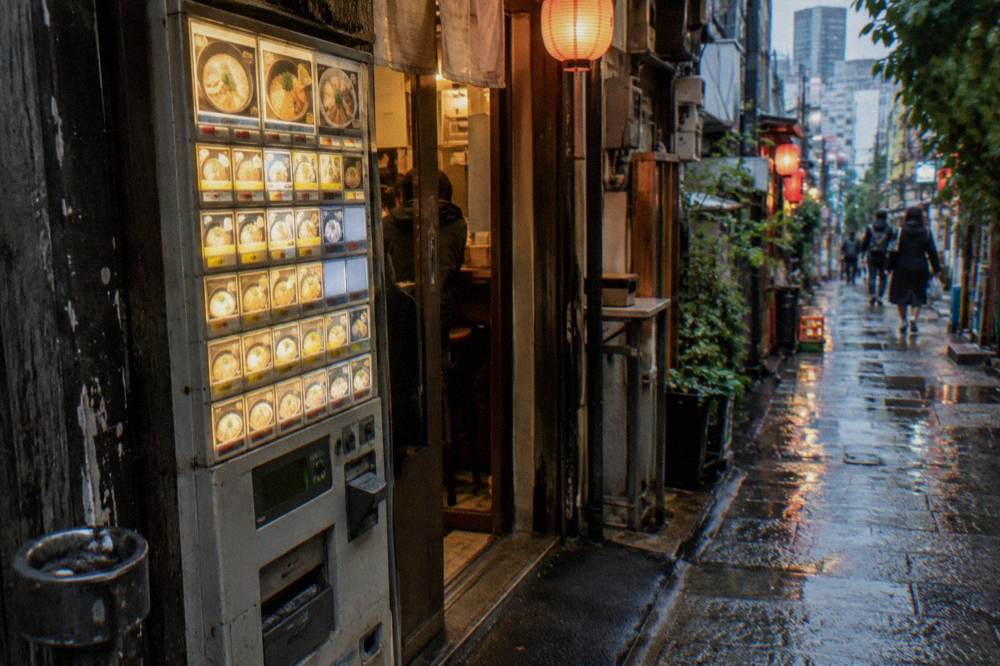
Payment is worth knowing before you sit down. Cash remains widely preferred at many independent ramen shops, so carry some yen even in a city that feels cashless everywhere else. At shops that use ticket machines, you pay the machine first, hand the ticket to the counter, and take a seat. If the machine has no English, the four type words are usually written in katakana, and staff will often tap the button for you if you say the style you want.
How To Order Without Speaking Japanese
Ordering ramen with no Japanese works well if you learn four words, shoyu, shio, miso and tonkotsu, and watch for the ticket machine at the entrance. Say the style, hold up fingers for the number of bowls, and the rest of the process mostly runs itself, since ramen counters are built for speed rather than conversation.
A few habits make it smoother. Sit at the counter if seats are offered, since booths are rare and tables are often shared during rushes. Slurping is completely normal and is not rude; it is how the dish is eaten. Chopstick etiquette still applies: never stand chopsticks upright in a bowl of rice and never pass food from one pair of chopsticks to another, since both gestures carry funeral associations. And when you finish, place your chopsticks across or beside the bowl rather than inside it, then settle up at the register if you did not prepay.
For travellers building a full food itinerary around the four types, the practical split is simple: taste all four styles across a few nights, then book one class to learn the mechanics. Tokyo Food Tours covers the neighbourhood walk side as well, with guides to the Shinjuku food tour scene and a deeper look at the best ramen in Tokyo.
If a full evening interests you more than a single bowl, ramen sits comfortably inside a wider night of eating; a well run izakaya crawl covers grilled skewers, small dishes and drinks in one go, and the ramen stop can come at the end of it.
The Four Types, One Trip
Tokyo is one of the few cities where you can eat all four ramen families from serious practitioners inside a single week, then spend a morning learning to make three of them with a professional instructor. Few other food destinations let you move so quickly from tasting a Michelin-recognised bowl to cooking your own, which makes ramen the single best value learning curve in the city.
The framework travels too: once you can read shoyu, shio, miso and tonkotsu on a menu, every ramen shop in Japan becomes approachable, from Sapporo snow country to a Hakata counter at midnight. That is the quiet payoff of learning four words instead of memorising shop names, and it costs nothing but attention at the counter.
If a class is on your list, the three below are the strongest options on this site, covering a quick Asakusa sushi class, a from-scratch Akihabara class and a full restaurant day.
Common Questions About Japanese Ramen Types
What Are The 4 Types Of Japanese Ramen?
The four types are shoyu (soy sauce based, Tokyo's original style), shio (salt based and the lightest), miso (fermented soybean paste based, from Sapporo) and tonkotsu (a creamy stock boiled from pork bones, from Fukuoka). Shoyu, shio and miso are seasonings added to a stock, while tonkotsu is a type of stock, so shops sometimes combine them.
Which Of The Four Ramen Types Is The Most Popular?
Shoyu is the oldest and most widely served style nationally, and tonkotsu is the most popular among visitors who want a rich, hearty bowl. Popularity depends on the region: Sapporo is miso country, Fukuoka is tonkotsu country, and Tokyo serves all four side by side.
Is Tonkotsu A Flavour Or A Broth?
Tonkotsu is a broth. The word refers to pork bones boiled for hours until the soup turns creamy and opaque. The saltiness in a tonkotsu bowl still usually comes from a shio or shoyu tare, which is why menus sometimes list tonkotsu shoyu as a single style.
Which Ramen Type Is Lightest?
Shio ramen is the lightest of the four, with a nearly clear, pale broth built on chicken or seafood stock. It contains no fermented seasonings and typically less fat than tonkotsu or miso bowls, making it a common choice for a light lunch.
How Much Does A Bowl Of Ramen Cost In Tokyo?
The national average for a shoyu bowl was 750 yen as of September 2026, and a survey of Tokyo's Takadanobaba and Waseda area found basic bowls averaging 993 yen, with the cheapest at 600 yen. Most bowls with toppings stay under 1,500 yen.
Can I Learn To Make All Four Types In Tokyo?
Partly. The Shibuya Ramen Cooking Class, about an hour and a half and rated 5 across 259 reviews, teaches tonkotsu, shoyu and miso in one session from $113.36 per person. Shio tare is simpler and is often covered as part of the seasoning discussion; check the booking page for the current session content.