What Is The 80 Eating Rule In Japan?
Hara hachi bu, the Japanese habit of stopping at 80 percent full, explained with fresh Tokyo dining facts, portion planning for food tours, and what to expect at izakaya and market counters.
The 80 eating rule is hara hachi bu, a Confucian-inspired teaching from Okinawa that instructs you to eat until you feel 80 percent full, then stop. The phrase appears in the Japanese dining vernacular as a habit rather than a strict law, and it pairs naturally with Japan's smaller portion sizes, multi-dish meal structure and slower pacing. For a visitor on a Tokyo food tour, it is also a practical planning tool, because a tour with 12 or 13 tastings only works if each stop lands under a full plate.
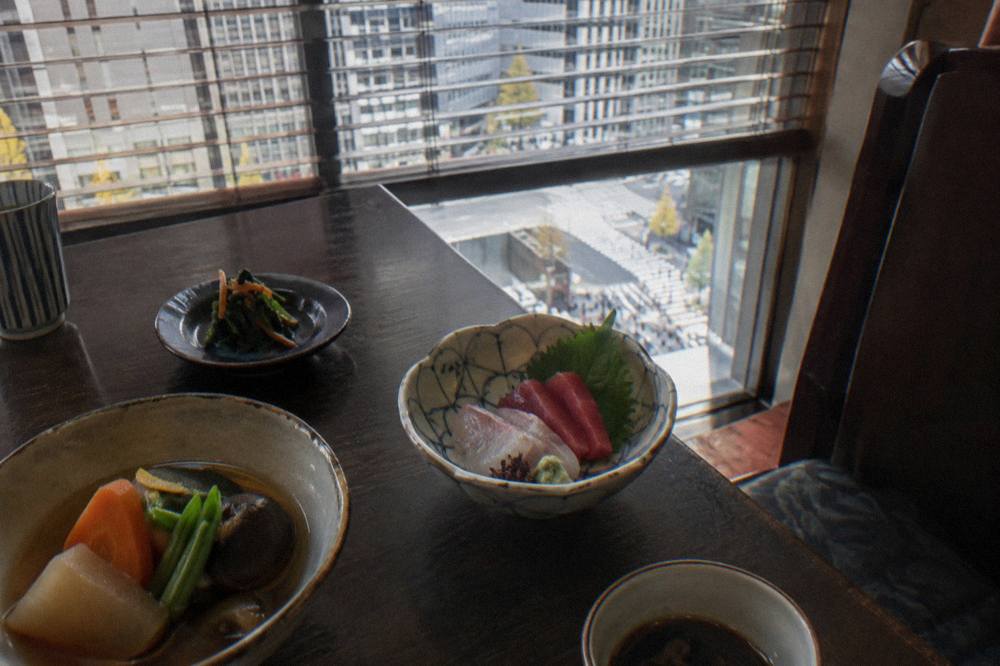
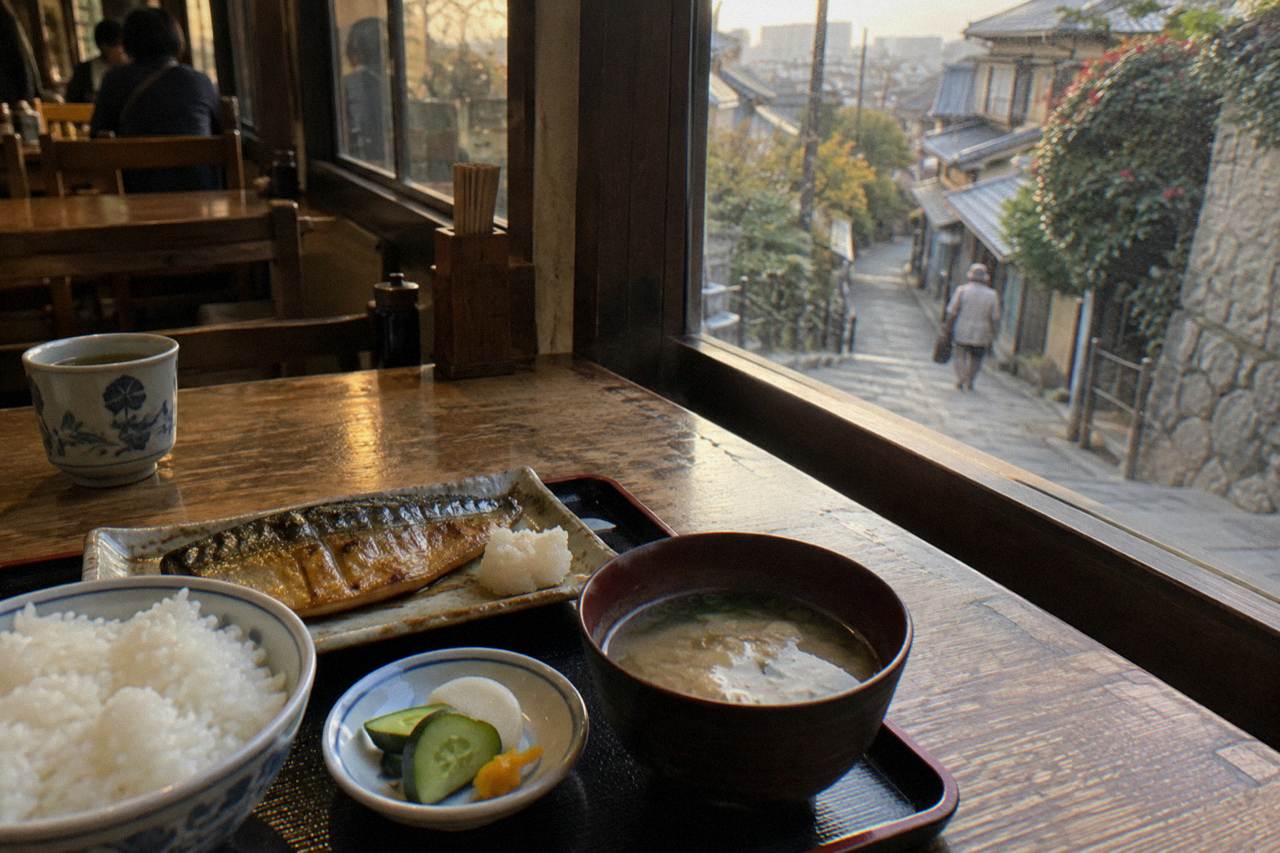
The rule's most famous home is Okinawa, one of the world's recognized longevity hotspots, where the phrase is repeated before or after meals the way other cultures might say a grace. But the idea travels well beyond the southern islands. Traditional washoku is built on many small dishes rather than one large plate: rice, soup, pickles, a grilled fish, a simmered vegetable. Each item is modest, and the meal ends when the rice bowl empties, not when the diner physically cannot continue.
That structure is the quiet engine behind the rule. Eating to 80 percent is much easier when the serving vessel is a small bowl rather than an oversized platter, and when the meal arrives in sequenced courses instead of all at once. Tokyo's food tours inherit this logic. The Shibuya Walk, 13 Dishes 3 Eateries spreads its 13 tastings across three separate venues over roughly 3 hours, which is portion control by design: you leave each stop before you are full, and you arrive at the next one ready for two or three more bites.
Tokyo's everyday prices reinforce the habit too. A bowl of shoyu ramen averaged 750 yen nationally as of September 2026 in the official retail price survey, and nigiri sushi per serving averaged 1,592 yen. These are single-meal figures for one person, not banquet figures, and they set the mental benchmark locals carry: a meal is one bowl, one set, one tray. Ginza puts that one-tray logic to the test, and this guide to eating in Ginza maps both the cheap standing counters and the splurge spots.
If you are matching a tour to the 80 percent mindset, the tours picked out below fit the pacing especially well.
Where Does Hara Hachi Bu Come From?
Hara hachi bu comes from a Confucian teaching, hara hachi bunme, meaning "eat until your belly is eight parts full out of ten," and it was popularized as a daily habit in Okinawa, where elders still say it aloud around meals. The saying is old in Chinese philosophical tradition, but Okinawa's communities turned it into a spoken mealtime ritual that stuck across generations. It is a cultural norm, not a dietary regulation, and nobody in Tokyo will police your plate if you ignore it.
The reason it endures is structural. Japanese home cooking and restaurant culture both favor ichiju sansai, the one-soup-three-dishes pattern: a bowl of rice, a bowl of miso soup, one main and two small sides. That framework naturally caps total intake. You can see the same thinking in a bento box, where the compartments physically limit how much fits, or in a kaiseki progression, where a dozen tiny courses add up to a moderate meal rather than an overwhelming one.
There is also a temporal element. Meals in Japan are traditionally eaten more slowly than the Western norm, with rice as an anchor and dishes arriving in sequence. Satiety signals take roughly 20 minutes to register, so a slower meal reaches the brain's "enough" signal before the plate forces a decision. Hara hachi bu is, in this sense, a low-technology satiety hack encoded as etiquette.
For travelers, the rule has a second, less discussed benefit: it leaves room. A visitor eating to 100 percent at lunch has no capacity for the street snack, the convenience store onigiri, or the evening izakaya round that often turns out to be the trip's best food memory. Eating to 80 percent is how you keep six Tokyo eating opportunities a day instead of two.
If reading about the philosophy makes you want to cook the pattern yourself rather than just taste it, the Market to Table, 4 Hours class is the natural next step. It is rated 5 across 405 reviews and priced from $84.21 per person, and it walks you from shopping for ingredients to plating a full washoku meal, the exact meal structure hara hachi bu was built around. You can check availability alongside the details in our Tokyo cooking class guide.
How Do Tokyo Portions Support Eating To 80 Percent?
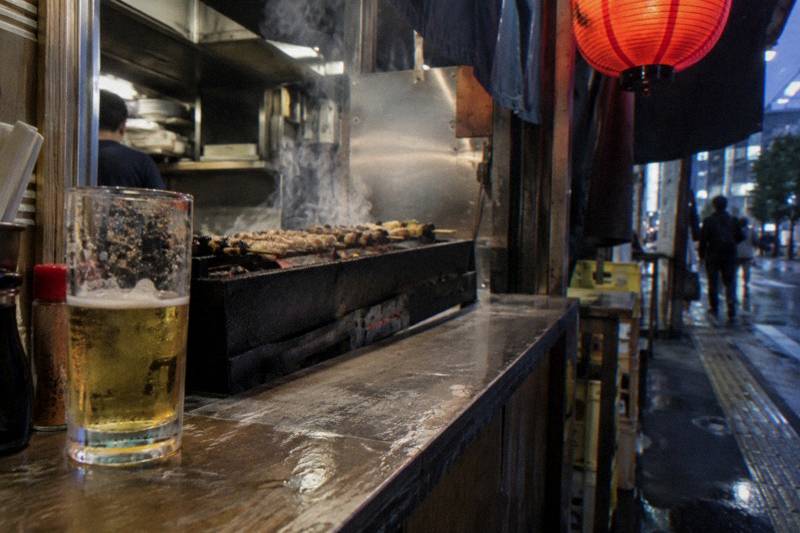
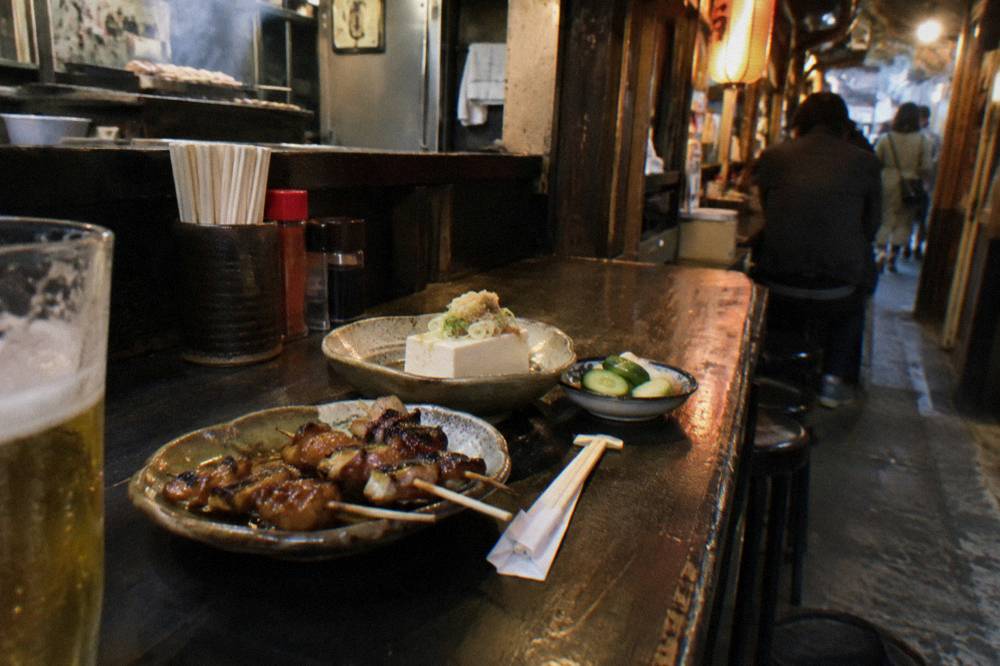
Tokyo portions are, on the whole, smaller than Western restaurant portions, and the multi-stop format of a Japanese night out, small dishes ordered gradually and shared, makes 80 percent fullness the default outcome rather than a discipline you have to enforce on yourself. Ordering in a Tokyo izakaya happens in waves: a few skewers, a small plate, a drink, then a decision about whether to continue. Nothing arrives as a single oversized entree. Yakitori skewers at casual Tokyo counters commonly run 150 to 400 yen each, so a diner assembles a meal from two or three skewers at a time rather than committing to one large plate.
The same math governs street food and market eating. Conveyor-belt sushi chains in Tokyo charge plates starting from 110 to 150 yen, with typical meals totaling 1,500 to 3,000 yen, so the diner decides piece by piece when to stop. Standing sushi bars near Tsukiji offer individual nigiri from around 90 to 500 yen each. Convenience store onigiri in October 2026 ran from 145 to 149 yen for a basic salt musubi up to 376 yen for larger multi-filling varieties. Every one of these formats gives you a natural stopping point every few hundred yen.
Guided tours follow the same portion logic, and the tasting count on the booking page is the best proxy for how the meal will pace. Here is how several Tokyo options distribute their food.
| Tour | Duration | Tasting Structure | Price Basis |
|---|---|---|---|
| Asakusa Walk, 12 Dishes | ~2h 30m | 12 dishes at local eateries | from $75.30 per person |
| Shibuya Walk, 13 Dishes 3 Eateries | ~3 hours | 13 dishes across 3 eateries | from $84.21 per person |
| Ueno Walk, 10+ Japanese Classics | ~3h 30m | 10+ tastings of classics | from $107.99 per person |
| Tsukiji Market, 5 Tastings | ~3 hours | 5 tastings in the Outer Market | from $97.17 per person |
| 7 Eateries, Shopping Streets Walk | ~2h 30m | 10+ tastings at 7 eateries | from $75 per group |
Notice the pattern. Tours with the highest tasting counts spread them across the most venues and the longest runtimes, so each individual portion stays small. A 12-dish tour sounds enormous until you realize it is 12 modest tastings over two and a half hours, which is closer to hara hachi bu than to a buffet.
The Shinjuku Local Eateries Walk is a good example of the format. It runs about 3 hours, is rated 4.9 across 10,498 reviews, the deepest review pool of any tour on this site, and costs from $84.21 per person. It moves through several small Shinjuku establishments, which is exactly the paced, multi-venue structure that makes the 80 percent rule automatic. Our Shinjuku food tour guide covers the neighbourhood's other options, including the evening crawls, in more depth.
How Do Izakaya Charges Fit The 80 Percent Mindset?
At many izakaya, a small unordered appetizer called otoshi or tsukidashi arrives automatically and functions as a per-person seating charge, typically a few hundred yen, so your first portion of the evening arrives before you have ordered a single thing. At Omoide Yokocho, the post-war lane of roughly 60 bars and restaurants near Shinjuku Station's West Exit, some counters add an otoshi of 300 to 500 yen that includes a small starter. It is not a tip and it is not optional, it is a cover charge in edible form, and it is listed on the bill.
This matters for portion planning because otoshi eats into your 80 percent budget before the meal proper begins. A typical spend at Omoide Yokocho for skewers and drinks is 2,000 to 3,000 yen per person, and that figure sits on top of the cover charge at the shops that apply one. Golden Gai bars, a short walk away, commonly charge a cover of 500 to 1,500 yen per person, often including a snack, so a two-bar Golden Gai evening can begin with 2,000 yen of charges and two small plates before you have ordered a single deliberate dish. See more on Tokyo Food Tours.
The 80 percent rule is therefore a budget rule as much as a health rule in these districts. Every cover charge comes with food, every food item moves you toward fullness, and the disciplined move is fewer stops with more attention rather than more stops with a sprint through each. Cash is still common at Golden Gai bars and at many Omoide Yokocho counters, so plan notes accordingly, and never assume a card will be accepted.
Tipping, by contrast, has no role here at all. The Japan National Tourism Organization states plainly that it is not common to tip for services in bars, cafes, restaurants, taxis and hotels, and staff may chase you down to return money left by mistake (JNTO guidance). At upscale restaurants a fixed service charge, often 10 to 15 percent, may appear on the bill, but that is part of the stated price. The otoshi and the service charge are the only additions you should expect, and both arrive with food or transparent pricing rather than an expectation of anything extra.
What Do Japanese Dining Manners Say About Finishing Food?
Finishing your rice is traditionally polite in Japan, and while leaving a little is more forgivable than it once was, the clean-plate habit and the 80 percent rule work together through smaller portions rather than pulling in opposite directions. The tension sounds real but rarely is: a Japanese meal is sized so that a normally hungry person can finish it comfortably. If you habitually stop at 80 percent, the dish left unfinished is usually a fraction of a fraction, or you simply order one fewer round at the izakaya. If a portion ever does beat you, our quick guide on leaving food uneaten in Japan covers how to handle the moment gracefully.
The manners that actually matter are smaller and more specific. Never stick chopsticks upright in a bowl of rice and never pass food directly from one pair of chopsticks to another, as both practices are associated with funeral rituals. Eating while walking is discouraged in many places, and at Tsukiji Outer Market the official guidance is explicit: eat inside the eatery or in front of the store, not while wandering (Tsukiji Outer Market manners guide). Professional buyers have priority at the market until 9:00 a.m., and visitors are asked not to obstruct them.
Allergy planning connects to the same communication habit. Japan's Consumer Affairs Agency requires allergen labelling on packaged processed food for a list that became nine items when cashew nuts were added on 1 April 2026, joining egg, milk, wheat, shrimp, crab, walnut, peanut and buckwheat (Consumer Affairs Agency). That duty covers packaged food, not restaurant dishes, so the practical advice for a tour is to message the operator before booking with any allergy rather than assuming a label will save you.
Tax is the last piece of the mental math. Restaurant meals in Japan carry 10 percent consumption tax while takeaway food carries the reduced 8 percent rate, per the National Tax Agency, and for the two years from 1 April 2027 the rate on food and drink sales is due to be lowered (NTA). None of this changes how much you eat, but it changes what the bill looks like, and knowing it in advance keeps the end of the meal calm.
Can A Food Tour Fit The 80 Percent Rule?
Yes, a food tour can fit the 80 percent rule, and the tasting-count format is arguably the best structure for it. A tour deliberately spaces small portions across hours and multiple venues, so you eat slowly and stop well before feeling stuffed, which is precisely the pacing hara hachi bu asks for at home. The one risk runs in the opposite direction from under-eating: a 13-dish tour eaten enthusiastically at every stop can push you past 100 percent. The remedy is simple, treat each tasting as a tasting, eat the two or three bites the guide serves, and treat the tour as a survey rather than a dinner replacement.
Timing matters too. A tour that starts at 5 or 6 p.m. replaces dinner outright, while a morning market tour replaces breakfast and leaves the whole day open. The After 5 Food and Drink Walk, about 3 and a half hours from $72.47 per person and rated 4.5 across 775 reviews, is a dinner-replacement evening. The Tsukiji Market, 5 Tastings tour, about 3 hours from $97.17 per person and rated 4.9 across 3,868 reviews, is a morning survey of the Outer Market with only five stops, the lightest portion load of the major options. Choosing between the two is really choosing which meal you want the tour to be.
Alcohol changes the equation as well. A Sake Masterclass, 8+ Varieties pours eight or more tastings with a professional over about 2 hours from $70.61 per person, and it is rated 5 across 414 reviews. Eight small pours alongside snacks is a full evening by itself under the 80 percent framework, so it pairs better with a light dinner beforehand than with another food tour the same night.
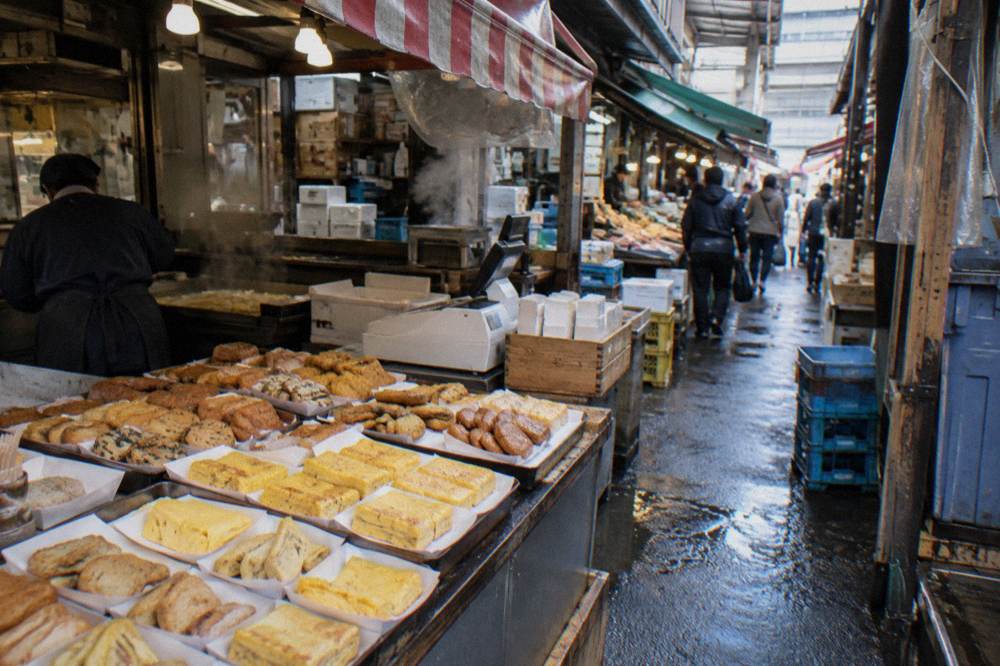
For first-time visitors the deeper comparison of formats, neighborhoods and price tiers lives in our guide to the best food tours in Tokyo, and the booking basics are covered in what to expect on a Tokyo food tour.
The Asakusa Walk, 12 Dishes is the strongest single example of the rule in action on this site. It is rated 4.85 across 73 reviews, costs from $75.30 per person, and distributes its 12 dishes across local eateries over about 2 and a half hours in Tokyo's historic east side. Twelve dishes sounds indulgent until you see the format, which is the entire point: portion size and pacing, not restraint at a single table, is how Japanese eating culture arrives at 80 percent without anyone counting.
How Do You Practice The Rule Without Missing Out?
You practice hara hachi bu in Tokyo without missing out by choosing multi-stop formats that let you taste more places, ordering in waves instead of all at once, leaving gaps between eating occasions, and treating each tasting as two or three deliberate bites rather than a plate to clear, so you still sample widely while stopping short of full. The rule was never about deprivation; Okinawan elders who say it aloud also eat well and eat often. It is about ending each meal with capacity left, which in a city with this much to eat is a strategic advantage rather than a limitation.
A practical day might look like this: a light breakfast, a market morning with a handful of small tastings, a gap in the afternoon, and either a paced tour or an izakaya evening ordered in waves. Notice what is absent, the giant single meal. Notice what is present, six or seven small eating moments, each one ending before fullness. That is the 80 percent rule translated into an itinerary.
Common Questions About The 80 Eating Rule In Japan
What Is The 80 Eating Rule In Japan?
It is hara hachi bu, the practice of eating until you feel 80 percent full and then stopping. The phrase comes from Okinawa and a Confucian teaching about eating to eight parts of ten, and it fits naturally with Japan's small-portion, multi-dish meal structure.
Is Hara Hachi Bu A Law Or A Custom?
It is a custom, not a law. Nobody enforces it and visitors are not expected to say it. It survives because Japanese meal formats, small bowls, sequenced courses and wave-based izakaya ordering, make stopping at 80 percent the natural outcome.
Is It Rude To Leave Food On Your Plate In Japan?
Finishing rice is traditionally polite, but portions are sized so a normal appetite can finish them. If you follow the 80 percent approach, the practical move is ordering one fewer round rather than abandoning a served dish.
How Does The Rule Work On A Food Tour With 12 Or 13 Tastings?
Tours spread tastings across multiple venues over 2 to 3 and a half hours, so each portion stays small. Treating every tasting as a tasting, two or three bites rather than a cleared plate, keeps a high-count tour inside the 80 percent framework.
Does The Izakaya Seating Charge Count As Food?
Often yes. The otoshi or tsukidashi cover charge, commonly 300 to 500 yen at Omoide Yokocho counters and 500 to 1,500 yen at Golden Gai bars, usually includes a small starter, so it occupies part of your appetite before you order.
Do I Need To Tip In Tokyo If I Stop Eating Early?
No. Tipping is not common in Japanese restaurants, bars or taxis, and staff may return money left by mistake. Any service charge or otoshi on the bill is part of the stated price, not something you add.