Where Should Americans Eat In Tokyo?
A practical eating plan for American visitors to Tokyo: which neighborhoods to start in, what dishes travel well from US tastes, what things cost, and how tipping, tax and etiquette differ.
Most Americans arrive in Tokyo hungry and slightly nervous: the food is famously good, but the city is enormous, many counters have no English menu, and the customs around paying and tipping are different from anything back home. The good news is that the city rewards exactly the instincts a US visitor already has, an appetite for variety, comfort with big flavors, and a willingness to try something new, provided you start in the right neighborhoods and let small dishes do the work.
The short version: base yourself near Shinjuku, Shibuya or Asakusa, eat at counters rather than sit-down dining rooms on your first nights, lean on ramen, yakitori, sushi and izakaya small plates, and expect to spend less per meal than in a comparable US city. A bowl of ramen averages 993 yen in central Tokyo neighborhoods like Takadanobaba, and conveyor-belt sushi meals commonly total 1,500 to 3,000 yen. Tipping is not done. A guided walk on night one, such as the Shinjuku Local Eateries Walk, about 3 hours, rated 4.9 across 10,498 reviews, from $84.21 per person, can decode the rest of the trip in a single evening.
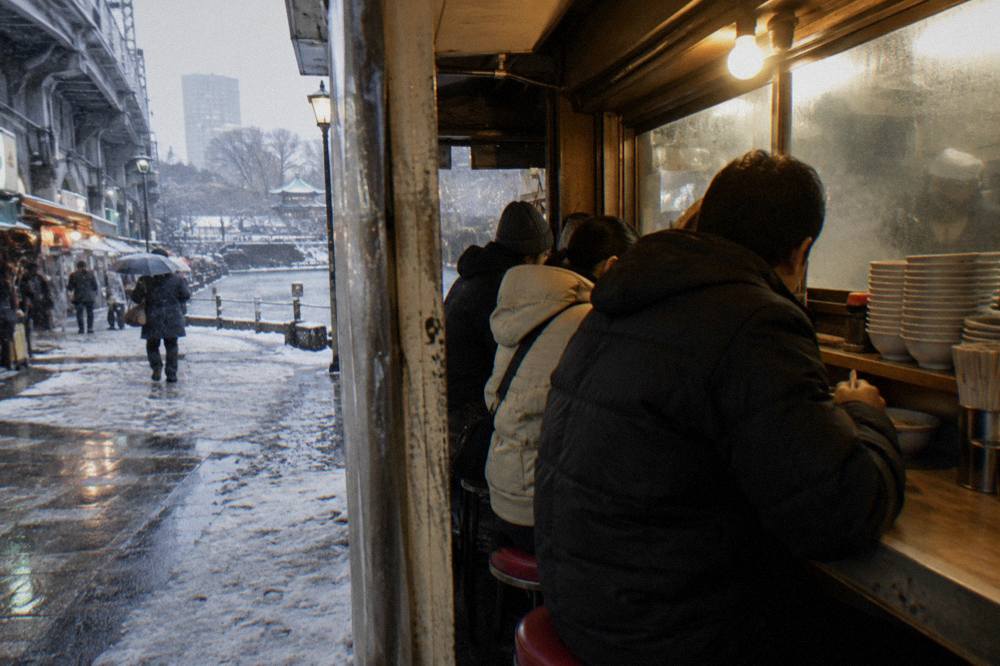
Americans eat best in Tokyo in walkable eating districts rather than single destination restaurants: Shinjuku for izakaya and yakitori alleys, Shibuya for variety and energy, Asakusa for traditional snacks near the temple, and Tsukiji Outer Market for morning seafood. Each pairs a handful of famous dishes with hundreds of small independent shops packed into a few blocks, so a bad first choice is easily corrected by walking to the next counter.
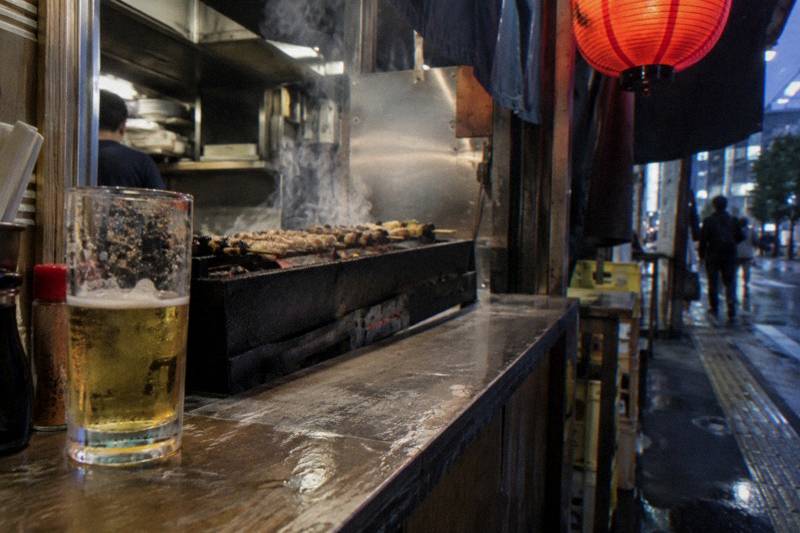
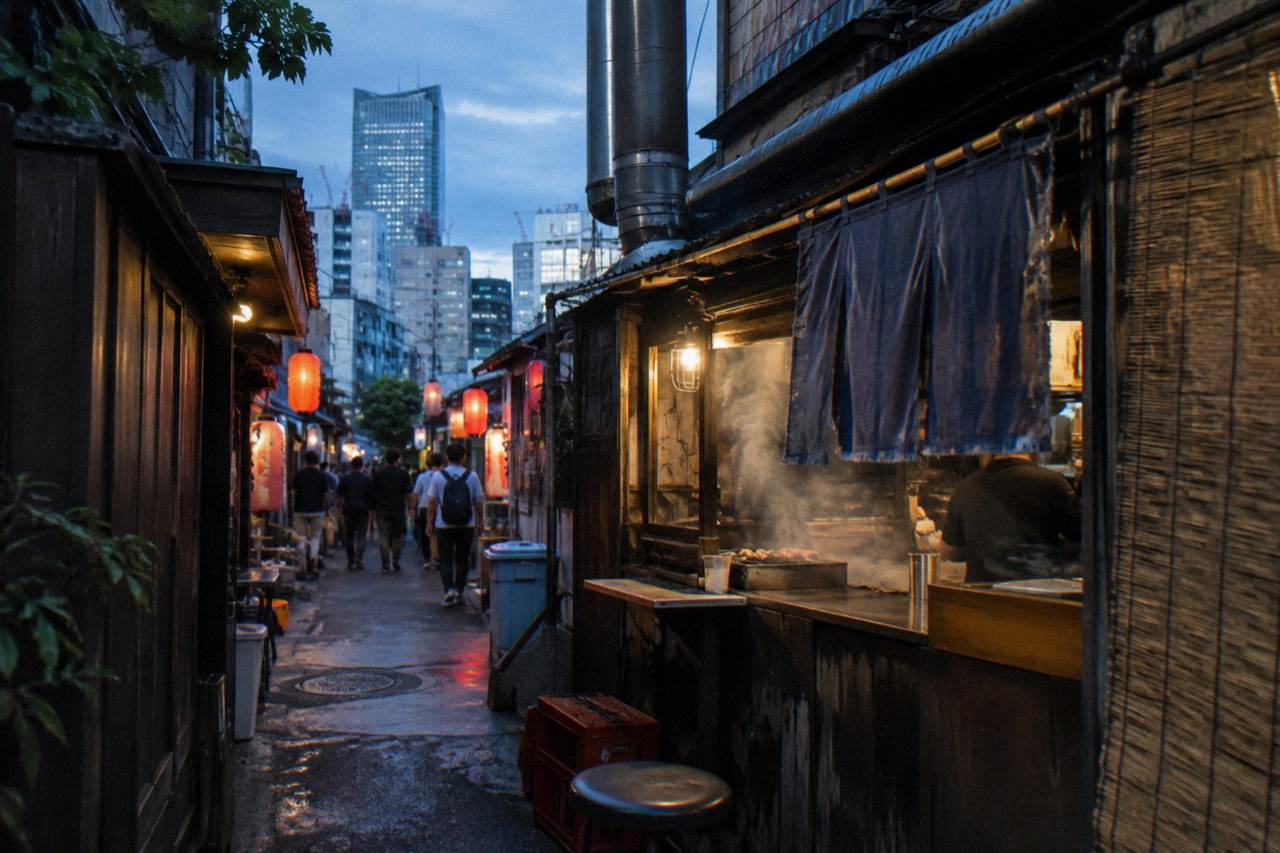
Start with Shinjuku, because it is almost certainly where your train lands. The JR Yamanote Line serves Shinjuku Station directly, and within a ten minute walk of the West Exit sits Omoide Yokocho, a post-war bar district of roughly 80 premises, about 60 of them bars and restaurants, most of them yakitori and motsuyaki counters, all squeezed into about 2,000 square metres. Skewers at casual Tokyo counters commonly run 150 to 400 yen each, and a typical evening of skewers and drinks in the alley runs about 2,000 to 3,000 yen per person. For an American used to a $25 bar tab before tip, that lands very well indeed.
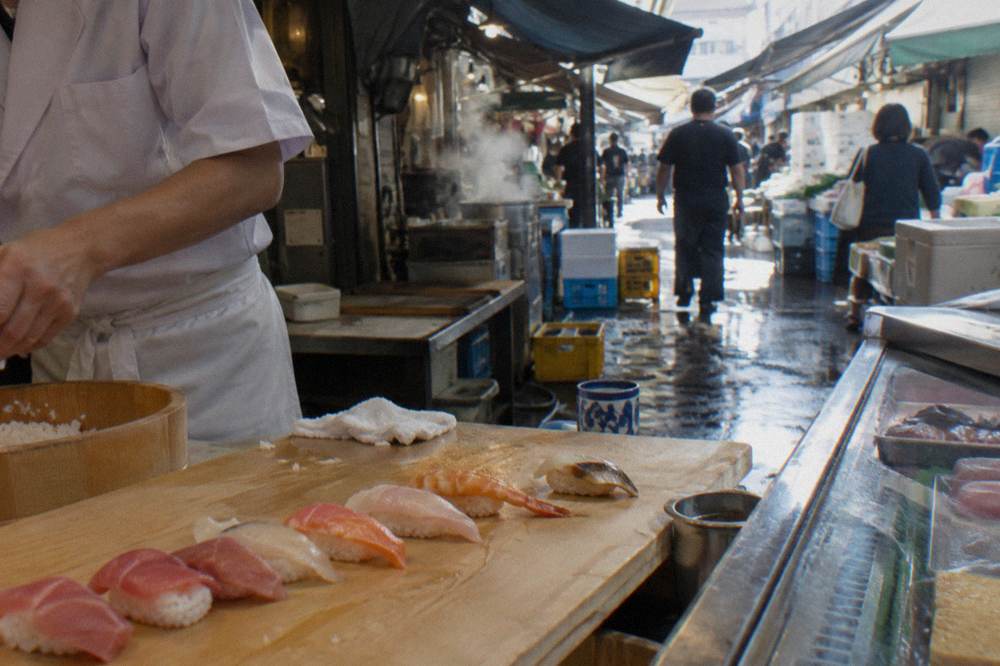
Shibuya is the second stop. It offers the widest spread of eating styles in the smallest area: standing sushi bars, conveyor chains, izakaya floors stacked above the scramble crossing, and late-night ramen. Asakusa, reached on the Tokyo Metro Ginza Line, is the traditional counterweight, with temple-street snacks and old-school restaurants. And Tsukiji Outer Market, one minute on foot from either Tsukijishijo Station on the Toei Oedo Line or Tsukiji Station on the Hibiya Line, is the morning option: hundreds of independent shops selling seafood, dried foods, tamagoyaki and kitchenware.
One structural point that surprises US visitors: the department store changes the game. Every major station anchors a department store, and the basement of nearly every department store is a food hall, depachika, with display cases of bento, fried food, sweets and sashimi graded by price. It is the single most reliable fallback in the city for a tired traveler: point, pay, eat at the hotel or a nearby park bench. Between the alleys, the markets and the basements, Tokyo feeds visitors who speak no Japanese roughly a hundred times a day without incident.
A first evening with a guide accelerates all of this. The Shinjuku Local Eateries Walk spends about three hours moving through exactly the kind of small counters Americans hesitate to enter alone, rated 4.9 across 10,498 reviews, from $84.21 per person. Two other formats suit a US visitor's first days well:
Which Dishes Travel Best From American Tastes?
The easiest bridge foods for US visitors are ramen, yakitori, tonkatsu, gyoza and conveyor-belt sushi, because they map onto flavors Americans already know, grilled meat, noodles, fried cutlets and dumplings, while staying distinctly Japanese. From there, izakaya small plates and standing sushi bars widen the range without a big leap, and adventurous eaters can push into motsuyaki, monjayaki and uni.
Ramen is the natural first dinner. The national average price for a bowl of shoyu ramen was 750 yen as of September 2026, and in a survey of 81 ramen shops in Tokyo's Takadanobaba-Waseda area the average basic bowl cost 993 yen, with the cheapest at 600 yen. Ordering is often done at a vending machine beside the door: insert cash, press the picture, hand the ticket to the cook. Americans sometimes find this intimidating for about ninety seconds, then universally prefer it to explaining a substitution.
Sushi spans an enormous price range, and none of it requires ceremony. Conveyor-belt chains in Tokyo start plates at 110 to 150 yen, with typical meals totaling 1,500 to 3,000 yen, and standing sushi bars near Tsukiji sell individual nigiri from around 90 to 500 yen a piece. The national average for a restaurant serving of nigiri sushi was 1,592 yen as of September 2026. Even the Michelin Guide's 2026 Tokyo edition gave Bib Gourmand status to 16 new restaurants, several of them ramen shops, so cheap and celebrated are not opposites here.
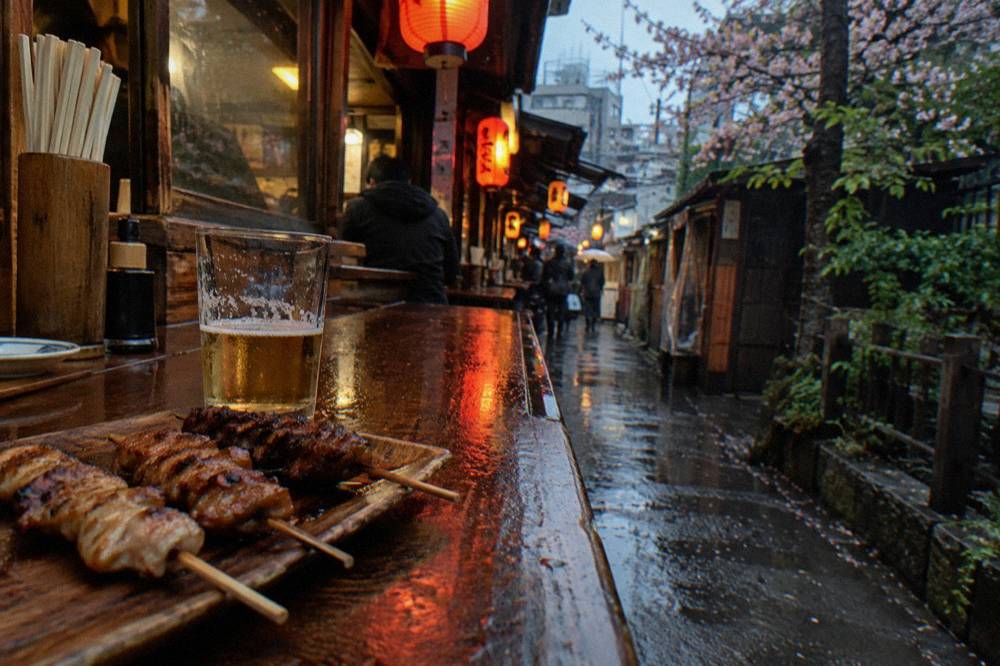
The middle ground, and honestly the sweet spot for a group with mixed appetites, is the izakaya. Think of it as a Japanese tapas bar: small plates, cold beer, highballs, and a seat among locals after work. Just know that many izakaya add an otoshi, a small unordered appetizer that functions as a per-person seating charge, commonly 300 to 500 yen and sometimes up to 1,500 yen in Golden Gai's tiny bars. It is not a scam and it is not a tip; it is on the bill, and it comes with food.
Autumn visitors get a seasonal bonus worth planning around. September through November is peak season for sanma, Pacific saury, mushrooms and new rice, so menus shift toward grilled fish and rice dishes that need no translation to appreciate. If your trip falls in these months, order whatever the counter has grilled that day.
Here is a rough map from safest to most adventurous:
| Comfort level | Dishes | Typical spend | Where it shines |
|---|---|---|---|
| Instantly familiar | Ramen, gyoza, tonkatsu, karaage | 750 to 993 yen for an average ramen bowl | Anywhere; Shinjuku and Shibuya late |
| One small step | Yakitori, conveyor sushi, udon, tempura | Skewers 150 to 400 yen; sushi meals 1,500 to 3,000 yen | Omoide Yokocho, standing bars near Tsukiji |
| Worth the leap | Izakaya small plates, omakase basics, monjayaki | Monjayaki around 1,500 yen a dish in Tsukishima | Any izakaya floor; Tsukishima for monja |
| For the bold | Motsuyaki, uni, natto, horse sashimi | Varies by shop; ask or point | Omoide Yokocho counters |
A guided walk can shortcut the guessing. The After 5 Food and Drink Walk, about 3 hours 30 minutes, rated 4.5 across 775 reviews, from $72.47 per person, is a three and a half hour mix of food, drink and culture, and the Shibuya Walk with 13 dishes across 3 eateries, about 3 hours, rated 4.9 across 1,437 reviews, from $84.21 per person, samples widely enough that a cautious eater and a bold one both go home happy.
How Much Should Americans Budget For Food In Tokyo?
Budget roughly 1,000 yen for an average ramen lunch, 2,000 to 3,000 yen for a yakitori-alley evening with drinks, and more only if you choose premium formats; convenience-store breakfast items run 145 to 376 yen. Tax is already included in displayed prices, tipping is not expected, and nobody multiplies anything by 1.2 plus 20 percent at the table.
The mechanics differ from home in ways that work in your favor. Japan's consumption tax is 10 percent for eating in and 8 percent for takeaway food, per the National Tax Agency, and displayed prices already include it, so the number on the menu is the number on the bill. A fixed service charge of 10 to 15 percent appears only at upscale restaurants and hotels, and it is part of the stated price, not something added voluntarily. Tipping is not common in Japan for bars, cafes, restaurants, taxis and hotels, as the Japan National Tourism Organization puts it plainly; staff may even chase you down to return money left on the table.
Daily anchor points help. Convenience store onigiri, which Americans consistently underestimate, cost 145 to 149 yen for a plain salt musubi and 211 to 235 yen for salmon across the big chains, with larger multi-filling versions at 246 to 376 yen. Put a 993 yen ramen lunch next to a 2,000 to 3,000 yen skewer-and-beer evening, top it with a conbini breakfast, and a full day of excellent eating costs less than a single dinner at a mid-range US restaurant. Check the live exchange rate before you travel rather than trusting any conversion you remember.
Two payment notes matter more than any budget line. First, cash is still widely accepted and often preferred at independent restaurants, ramen shops and the small counters Americans most want to visit, so carry yen even in a card-friendly city. Second, an IC card such as Suica or PASMO, mutually usable across JR East and Tokyo Metro lines, covers trains and convenience stores alike, which removes most small-payment friction. You can read more on planning costs in how much a Tokyo food tour costs and our cheap eats in Tokyo guide.
| Meal | Format | Realistic per-person spend |
|---|---|---|
| Breakfast | Convenience store onigiri and coffee | 145 to 376 yen for onigiri |
| Lunch | Ramen, udon or conveyor sushi | 750 to 3,000 yen |
| Snack | Street food, tamagoyaki, skewers | 150 to 500 yen per item |
| Dinner | Yakitori counters and izakaya with drinks | 2,000 to 3,000 yen |
| Splurge | Guided tour or premium omakase-style walk | From $72.47 to $231, tour dependent |
What Etiquette Rules Actually Matter For US Visitors?
Only a handful of Japanese dining customs genuinely matter: do not tip, do not eat while walking in markets, do not stick chopsticks upright in rice or pass food chopstick to chopstick, and follow the lead of the counter staff and regulars on everything else. Restaurants must post a sign at the entrance showing their smoking policy, so you can see the room's rules before you sit down, and slurping noodles is not merely tolerated but normal.
The chopstick rules are the ones worth learning before the flight. Sticking chopsticks upright in a bowl of rice and passing food directly from one pair of chopsticks to another are both associated with funeral rituals, so avoid both. Beyond that, most feared faux pas are self-correcting: watch the person next to you, and if you are unsure whether to eat at the counter or order first, a simple gesture toward the menu solves it.
Reservations deserve a sentence too. Many casual Tokyo eateries operate first-come, first-served with no booking at all, which suits walk-in American rhythms perfectly, while popular and high-end spots recommend or require advance booking, and no-shows or late cancellations can carry fees. If plans change, notify the venue; a quick call through hotel staff works fine.
At markets, the rules are explicit. Tsukiji Outer Market's official visitor guide asks that eating happen inside the eatery or in front of the store, not while walking, that visitors avoid obstructing professional buyers who have priority until 9:00 a.m., and that you ask before photographing and refrain from touching food. No bargaining is customary there, since items are sold at carefully set prices. Smoking is only allowed in designated areas, and the same entrance-sign rule for restaurant smoking policies comes from Tokyo's passive-smoking ordinance in full effect since April 2020.
Allergy-sensitive travelers should take one extra step. Japan requires allergen labelling on packaged processed food, and the specified list grew to nine items when cashew nuts were added on 1 April 2026, joining egg, milk, wheat, shrimp, crab, walnut, peanut and buckwheat. But that duty covers packaged goods, not restaurant dishes, so a tour or counter cannot be assumed to accommodate an allergy; message the operator before booking, and read packaged labels yourself. For a wider look at customs, see what to know before eating at a Japanese restaurant and our notes on the 80 percent eating rule in Japan.
Should Americans Book A Food Tour On Night One?
For most American first-timers, yes: a small-group food walk on the first or second evening teaches the mechanics, where to sit, how to order, what the otoshi charge is, which alleys welcome foreigners, faster than days of solo trial and error. Options run from $36.15 for a no-meal crawl to $231 for a premium old-town experience, and most small-group formats cost about the same as a decent dinner.
The economics are straightforward. The Shinjuku Local Eateries Walk costs from $84.21 per person for roughly three hours and multiple tastings, rated 4.9 across 10,498 reviews, which is less than many visitors spend on a hesitant first night of hotel-adjacent dining. The Budget Crawl format, from $36.15 per person, rated 4.9 across 2,911 reviews, skips the meal and shows you the bars; the premium Golden Gai food tour, from $217 per person, rated 5 across 261 reviews, buys small-group depth in the alley district where cover charges and regulars-only doors confuse newcomers.
Morning people get the same value in reverse. The Tsukiji Market walk with 5 tastings, about 3 hours, rated 4.9 across 3,868 reviews, from $97.17 per person, handles the market's etiquette for you: the market asks that guides check in at the Plat Tsukiji information centre before a guided walk, and you learn which shops close on Sundays, national holidays and market closure days.
Asakusa's guided walk with 12 dishes, about 2 hours 30 minutes, rated 4.85 across 73 reviews, from $75.30 per person, does the same for the old town, pairing temple-street snacks with sit-down stops so the history and the food arrive together. Whichever you pick, district deep-dive pages, like our Asakusa food tour guide, break down each area before you commit. One caution applies to every operator: message them about allergies and dietary limits before booking, because accommodation varies tour by tour.
If a tour is not your style, the honest alternative is a two-evening warm-up: night one in Omoide Yokocho, where counters open from around 5 p.m. and cash is king, night two in a department-store basement food hall, where picture-perfect bento remove all language friction. Both work. The tour simply compresses the learning curve into three hours.
Common Questions About Americans Eating In Tokyo
Where Should Americans Eat In Tokyo?
Start in Shinjuku for izakaya and yakitori alleys, Shibuya for variety, Asakusa for traditional snacks, and Tsukiji Outer Market in the morning. Each district packs hundreds of small shops into walkable blocks, so you can correct a bad choice by walking to the next counter, and a first-night guided walk from $72.47 upward teaches the mechanics quickly.
Is Tipping Expected In Tokyo Restaurants?
No. Tipping is not common in Japan for bars, cafes, restaurants, taxis and hotels, and staff may return money left behind. Some izakaya add an otoshi seating charge of roughly 300 to 500 yen, and upscale venues may include a 10 to 15 percent service charge, but none of that is a tip.
How Much Does A Meal Cost For An American Visitor In Tokyo?
A ramen bowl averages 993 yen in central Tokyo areas, conveyor-sushi meals commonly total 1,500 to 3,000 yen, and an evening of skewers and drinks at a yakitori counter runs about 2,000 to 3,000 yen. Convenience-store onigiri cost 145 to 376 yen, so a full day of excellent eating often costs less than one US dinner out.
Do Tokyo Restaurants Take Credit Cards?
Increasingly yes in chains and mid-to-high-end venues, but cash remains widely accepted and often preferred at independent restaurants, ramen shops and small counters. Carry yen, and use a Suica or PASMO IC card, which works on trains and at convenience stores, for small payments.
What Food Mistakes Should Americans Avoid In Tokyo?
Do not eat while walking in Tsukiji Outer Market, do not stick chopsticks upright in rice or pass food chopstick to chopstick, do not tip, and do not assume a counter can handle allergies, since allergen labelling rules cover packaged food, not restaurant dishes, so message tour operators before booking.
Is Tokyo Good For Picky American Eaters?
Yes. Ramen, gyoza, tonkatsu, karaage and conveyor-belt sushi map closely onto US comfort food, ordering machines use pictures, and department-store food halls sell display-case bento with zero language friction. Guided walks like the Shibuya tour with 13 dishes let a cautious eater sample widely without committing to any single menu.