What Should I Know Before Eating At A Japanese Restaurant?
A practical etiquette primer for eating out in Tokyo: tipping, table charges, chopstick manners, tax rates, allergies and reservations, with what a guided food tour takes off your plate.
The short list: no tipping, a small per-person table charge called otoshi at many izakaya, chopsticks never stood upright in rice, dine-in tax of 10 percent versus 8 percent for takeaway, and a nine-item allergen labelling system that only covers packaged food, not restaurant dishes. Learn those five things and roughly ninety percent of the etiquette traps disappear before your first meal in Tokyo. For everything beyond etiquette, our Tokyo eating guide for American visitors covers which neighborhoods to start in, which dishes feel closest to home, and what a typical meal costs.
The rest of this page walks through each of them properly, because each rule has a context that a single sentence flattens out. Tipping, for instance, is not merely optional, it can actively confuse staff, who may chase you down the street to return money they think you forgot. The table charge that appears on your izakaya bill is not a scam, it is a seated appetizer course you did eat. And the tax difference between eating in and taking out is real, current, and printed on receipts you will actually receive.
Before the details, a quick orientation. A good primer from Tokyo Food Tours tends to argue that most first-visit worry concentrates on the same handful of moments: entering the restaurant, ordering, the mysterious extra line on the bill, and leaving. Travelers on Tokyo food walks often wonder about two things before their first izakaya stop: whether to tip, and what the otoshi charge covers., which is why those two topics open this article.
Do You Tip In Japan, And What Happens If You Try?
No. Tipping is not customary or expected at Japanese restaurants, bars, cafes, taxis or hotels, and the Japan National Tourism Organization says plainly that it is not common for these services. Leaving cash on the table can prompt staff to run after you to return it, because unexplained money reads as a mistake rather than gratitude. Pay the exact bill shown and thank the staff verbally; that is the complete and correct transaction.
The Japan National Tourism Organization's own guidance on the subject states it is "not common to tip for services such as those provided in bars, cafes, restaurants, taxis, and hotels" (JNTO tipping page). There is a rare custom called kokorozuke, a gratuity given from the heart in particular situations, but it involves wrapping money in a way that signals intent and it belongs to a world of high-end ryokan and special favors. A tourist at a ramen counter will never need it.
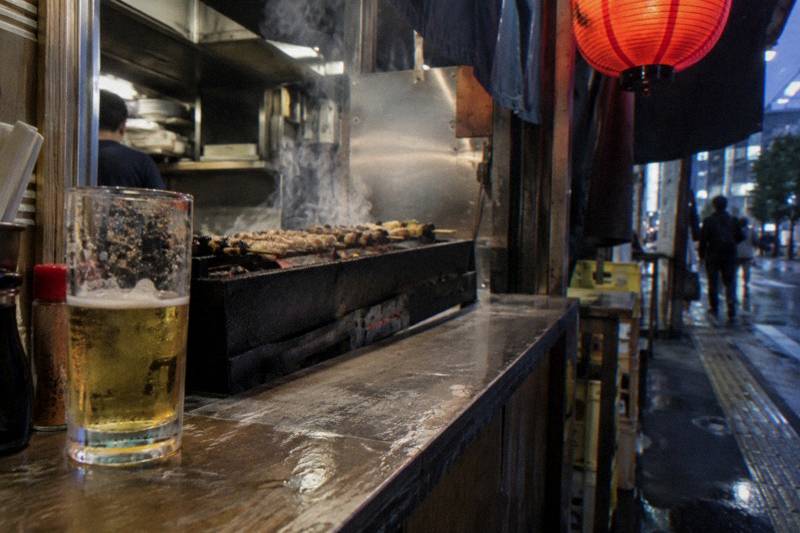
What confuses visitors is the money that does appear on the bill. Two items look like service charges and are not tips. First, many izakaya add an otoshi, a small unordered appetizer that functions as a seating charge, typically a few hundred yen per person and listed on the bill as its own line. You eat it; it is part of the deal. Second, upscale restaurants and hotels may add a fixed service charge of 10 to 15 percent, which is part of the stated price structure, not something you choose to add. Budget travelers on the Shinjuku crawl circuit sometimes mistake the otoshi for a scam; it is not, it is the standard cost of a stool in a small bar, and the Budget Crawl at from $36.15 per person is priced with that local reality in mind.
A guided food tour can remove that worry entirely, with a local guide handling the ordering for you.
How Does The Bill Actually Work?
Expect three separate things on a Tokyo restaurant bill: the price of what you ordered, sometimes an otoshi seating charge, and consumption tax, which is 10 percent for dining in and 8 percent for takeaway food. Payment often happens at a register near the door rather than at the table, and cash remains widely accepted and often preferred at independent restaurants and ramen shops, even as cards spread through chains and mid-range venues.
The tax split is worth understanding because it is exact. The National Tax Agency sets the standard rate at 10 percent and a reduced rate of 8 percent for food and drink excluding alcohol, but eating out and catering are not covered by the reduced rate, so a restaurant meal is taxed at 10 percent while the same item wrapped to go is taxed at 8 percent (NTA consumption tax outline). One forward-looking note: the NTA states that for the two years from 1 April 2027 to 31 March 2029 the rate on food and drink sales is due to be lowered, so treat the current split as accurate now and expect change in spring 2027.
Payment etiquette is mechanical rather than social. In casual places you often receive a slip or a table number token and pay at the till by the exit. Trays are used for handing over cash; placing money directly into a hand is avoided. Do not expect the bill to arrive unrequested at the table, because it will not. Asking for it is normal and expected, and there is a polite phrase for it that locals use constantly.
| Bill item | What it is | What to do |
|---|---|---|
| Otoshi / tsukidashi | A small unordered appetizer acting as a per-person seating charge, typically a few hundred yen | Eat it and expect the line on the bill |
| Service charge | A fixed 10 to 15 percent line at upscale restaurants and hotels | Part of the price, not optional, not a tip |
| Consumption tax | 10 percent dine-in, 8 percent takeaway on food | Already reflected in displayed prices at most venues |
| Coin lockers and stroller storage | Strollers and large bags can be stored, for example 500 yen at the Plat Tsukiji market centre | Use it; large luggage is discouraged in busy eateries |
None of this arithmetic needs to run through your head while ordering, of course. A guided evening bundles it away: on the After 5 Food and Drink Walk, from $72.47 per person and rated 4.5 across 775 reviews, the guide settles each venue and the mechanics of otoshi and tax simply stop being your problem for three and a half hours. And if you'd rather plan your own eating route through the neighbourhood, the guide to eating in Shibuya lays out which streets to walk, what a meal usually costs, and how the same rules on tipping and cover charges apply when you're on your own.
What Are The Chopstick Rules That Actually Matter?
Two hard rules: never stand chopsticks upright in a bowl of rice, and never pass food directly from one pair of chopsticks to another, because both practices are associated with funeral rituals. Beyond those, the remaining chopstick habits that locals notice are sticking your pair vertically into shared dishes, wandering over the menu with them hovering, and using your own pair to serve from a communal plate instead of the serving utensils provided.
The funeral associations explain why these two matter so much more than the rest. Standing chopsticks in rice resembles incense offered at a grave; passing food chopstick to chopstick recreates a funeral rite involving bones. Neither is a minor faux pas in the way elbows on a table might be elsewhere. They are the equivalent of a gesture that carries death imagery into a meal, and avoiding them takes no effort once you know. For meals without a tour, we put together The Tokyo Food List, with 980+ restaurants sorted by cuisine, Google ratings and price ranges.
The softer rules are about shared dishes. Take from a communal plate with the serving chopsticks or the clean reverse ends of your own if none are provided. Do not spear food. Do not point with them. Rest your pair across the chopstick rest when pausing, and if there is no rest, lay them together on the edge of your dish or the provided paper holder, folded into a small rest if you want to look practiced. Rubbing disposable waribashi chopsticks together to remove splinters is noticed too, and it implies you think the restaurant hands out cheap wood.
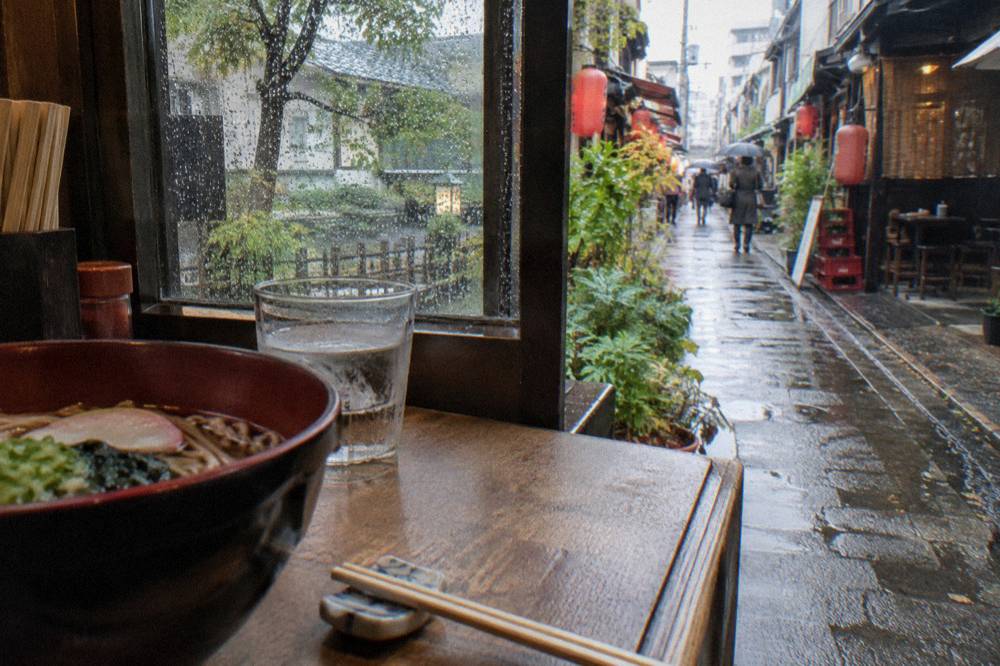
One habit that surprises visitors in the other direction: slurping noodles, ramen above all, is completely acceptable and often read as appreciation of the dish. The average price of a basic bowl in the Takadanobaba-Waseda area of Tokyo runs about 993 yen across 81 shops surveyed, and nobody slurps politely. Hold the bowl close, drink from it, make noise. It is one of the few places Japanese table manners run opposite to Western instincts, and leaning into it feels strange for exactly one meal.
How Do Allergies And Dietary Needs Work In Tokyo?
Japan's mandatory allergen labelling covers packaged processed food only, listing nine specified raw materials: egg, milk, wheat, shrimp, crab, walnut, peanut, buckwheat and cashew, with cashew added on 1 April 2026. Restaurant dishes are generally not required to carry such labels, so a menu gives you no legal guarantee, and the practical answer for allergy-sensitive visitors is to tell the guide or message the operator before booking anything. If you're unsure how to reach a restaurant or mention allergies when booking, the guide to booking Tokyo restaurants as a visitor walks you through messaging operators and reserving without Japanese.
The Consumer Affairs Agency's allergen page is the source for the nine-item list and the 2026 cashew addition (CAA food labelling section). The agency's own survey material from September 2026 shows restaurant allergy information is still being studied rather than regulated, which means the duty of disclosure stops at the packaged-goods aisle. A bag of senbei crackers carries a legally accurate allergen label; the dashi in the pot in front of you does not.
For tours rather than independent dinners, the pre-booking message is where accommodation happens. Some listings spell out vegan and vegetarian options, so it pays to note dietary needs when booking. One cooking class is built around it: Small-Group Ramen & Gyoza Cooking with Tokyo Mom, vegan-friendly, from $130 per person and rated 5 across 73 reviews. The general pattern holds: same-day walk-ins get what the kitchen makes that day, booked guests with a stated restriction get a kitchen that planned for them.
Dietary framing also matters linguistically. The line between vegetarian and vegan does not map cleanly onto many traditional menus, where dashi from bonito and cooking sake are treated as seasoning rather than animal products. Stating the restriction precisely, and in writing where possible, gets better results than a category label. A guide translates this in real time, which is why the fully vegan ramen class exists as a product at all: from $75 per person, rated 5 across 62 reviews. For a fuller treatment of eating plant-based in this city, the guide to vegetarian and vegan food tours covers which kitchens genuinely accommodate it.
Do You Need A Reservation, And What Happens If You Are Late?
Casual Tokyo eateries mostly run first-come, first-served with no reservation system at all, while popular and high-end restaurants often require advance booking, and no-shows or late cancellations can trigger fees. If plans change, notify the venue; silent no-shows are the part that genuinely offends, not the cancellation itself. Queueing at peak dinner hour is the normal path into the best small counters.
This is where independent travel in Tokyo gets logistically sharp. The destination spots, particularly ones with a handful of seats, take bookings by phone, website or concierge, and some use ticket machines or smartphone queues for walk-ins. As a visitor without Japanese, the phone route is effectively closed, which pushes you toward hotel concierges, booking services, or tours that carry their own relationships with specific counters. A walk like the Kichijoji Backstreet Crawl, from $104.62 per person and rated 5 across 38 reviews, exists to make an unfamiliar drinking alley straightforward, with a guide leading from counter to counter.
The etiquette around lateness is strict on the no-show side and forgiving on the five-minute side. What venues punish is silence. A message saying you cannot make it preserves the relationship and usually the deposit conversation stays polite. Smoke, seats and small print all interact here too: since April 2020 restaurants must display at the entrance whether smoking is allowed, and indoor smoking is only permitted in designated rooms under Tokyo's ordinance (Tokyo Metropolitan Government notice), so the sign at the door tells you what kind of room you are booking before you commit to an evening in it.
How Does A Guided Tour Change All Of This?
A guide absorbs the three hardest parts of eating out in Japan: ordering without Japanese, decoding the bill with its otoshi and tax lines, and threading the unwritten rules of small counters where regulars are the norm. Everything else on this page still applies, because you are still in a Japanese restaurant, but the penalty for getting it wrong drops to zero, since the guide frames each rule as it becomes relevant rather than leaving you to guess.
Concretely, the Shinjuku Local Eateries Walk runs about 3 hours, is rated 4.9 across 10,498 reviews, and starts from $84.21 per person. That review pool is the largest on this site's Shinjuku options, and it reflects a format where the guide leads a small group through local eateries, orders, explains what arrives, and settles each venue. For an etiquette-worried traveler, that structure converts an anxiety-heavy evening into a guided one, with the rules delivered as commentary instead of traps.
The same logic scales up and down the budget range. The After 5 Food and Drink Walk covers the same ground in a small group with a culture emphasis. At the spartan end, the Budget Crawl at from $36.15 per person, rated 4.9 across 2,911 reviews, skips the meal and concentrates on the bar-hopping mechanics, which is precisely where otoshi, cash preferences and cover charges do the most damage to unprepared visitors. Reading this page first makes even that bare-bones format navigable.
A primer on manners pairs naturally with a primer on neighborhoods, since etiquette varies a little by setting: market lanes, izakaya alleys and department-store food halls each have their own norms. For where each style of eating actually happens, the guide to the best food walks in Tokyo lays out the districts, and the deep dive into Shinjuku's eating landscape covers the specific alleys where most of these rules get tested on a first visit.
What Should You Do In The First Sixty Seconds After Sitting Down?
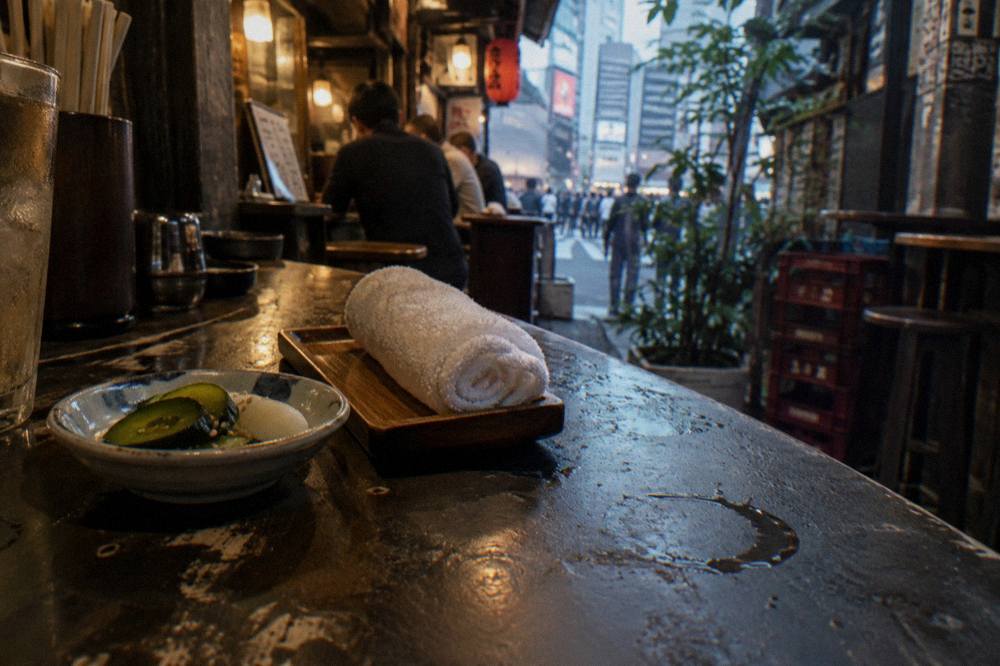
Check three things before the first dish: whether an otoshi arrived, in which case it will appear on the bill and is meant to be eaten; whether a wet towel, the oshibori, was handed over, which is for hands only, never the face; and whether the menu you were given is the seasonal one, because ordering off it gets you the kitchen at its best. Then settle on a drink, order, and stop rehearsing manners in your head.
The oshibori deserves its own sentence because it generates real confusion. It arrives rolled, hot or chilled depending on season, and it is for cleaning your hands before the meal. Wiping your face or neck with it is the classic visible-tourist move. When in doubt, use it once for your fingers, fold it loosely, and set it aside.
Ordering follows one of three mechanics: pointing at the menu with a verbal confirmation, using a tablet or touchscreen with photos, or in some ramen shops buying a ticket from a vending machine by the door before you sit. None requires Japanese. The phrase "kore o kudasai", this one please, plus a pointing finger, has carried millions of visitors through millions of dinners. For the bill, "o-kanjō o onegaishimasu" asks for the check politely; if that feels heavy, catch the staff's eye and make a small writing gesture with your hand, which works universally.
| Situation | What locals do | What to avoid |
|---|---|---|
| Wet oshibori towel | Wipe hands once, fold, set aside | Wiping face or neck |
| Otoshi appetizer that arrives unordered | Eat it, expect the bill line | Sending it back or refusing it |
| Ramen or noodle soup | Slurp freely, drink broth from the bowl | Quietly cutting noodles or leaving broth untouched out of politeness |
| Paying | Cash on the tray, or card at chains and mid-range venues | Leaving extra cash as a tip |
| Finishing your plate | Eating what you take is the norm | Over-ordering food you will leave |
The anxiety about finishing food is real enough that it gets its own discussion in Japanese dining culture, and the short version is that taking only what you will eat is the politest strategy rather than heroic clearing. Pair that with the phrase guide for asking for the bill in Japan and the mechanics of a Tokyo dinner are covered end to end, from the oshibori to the register. And when a portion does beat you, the breakdown of unfinished ramen and the otoshi you did not order lays out what Japanese etiquette actually expects and how to leave the table gracefully.
Common Questions About Eating At A Japanese Restaurant
What Should I Know Before Eating At A Japanese Restaurant?
No tipping, expect an otoshi seating charge at izakaya, never stand chopsticks upright in rice or pass food chopstick to chopstick, dine-in tax is 10 percent versus 8 percent for takeaway, and allergen labels cover packaged food only, so flag dietary needs before booking. A guide handles ordering and bill mechanics if that appeals.
Is It Rude To Leave Food On Your Plate In Japan?
Taking only what you will eat is the norm, and leaving a large amount of uneaten food is generally seen as wasteful rather than polite. A small remainder is not an incident. The cleanest strategy is ordering in smaller rounds, which most izakaya make easy since dishes come as you go.
What Is The Extra Charge On My Izakaya Bill?
It is almost certainly the otoshi, a small unordered appetizer that works as a per-person seating charge, commonly a few hundred yen. It is standard practice at many izakaya, listed on the bill, and meant to be eaten. It is not a tip and not a tourist-targeted fee.
Can I Pay By Card At Tokyo Restaurants?
Increasingly yes at chains and mid-to-high-end venues, but cash remains widely accepted and often preferred at many independent restaurants and ramen shops, and it is still common at small bars in alleys like Golden Gai. Carrying some yen avoids the handful of places where a card will not work.
Do I Need To Speak Japanese To Order?
No. Photo menus, touchscreens, ticket machines in some ramen shops and simple pointing carry most transactions. A single phrase like "kore o kudasai", this one please, plus a thank you covers an enormous share of casual dining situations in Tokyo.
Will Restaurants Accommodate Allergies Or A Vegan Diet?
Often, but only when told clearly in advance, because restaurant dishes carry no mandatory allergen labelling under the nine-item packaged-food rules. Message the operator before booking a tour, or ask a hotel concierge to call a restaurant. Same-day walk-in requests get much weaker results.