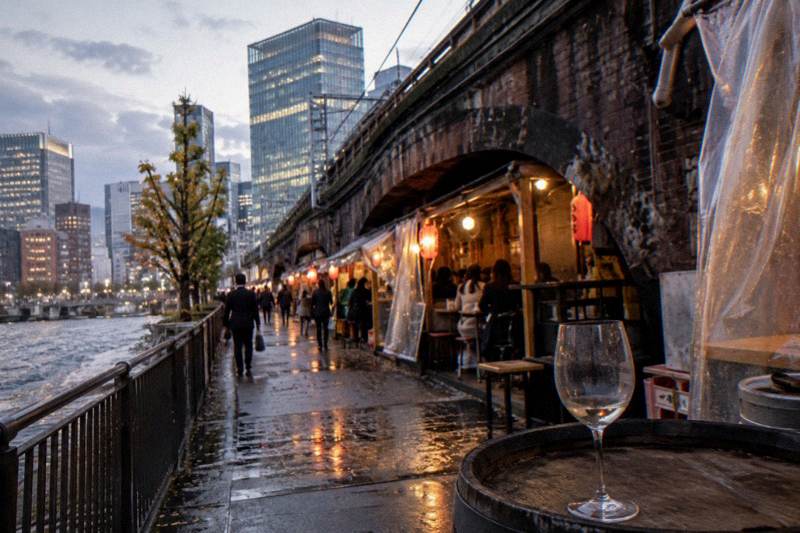
Ginza Food Tour: Izakaya And Street Food
Ginza looks expensive from the boulevard, but the side streets behind Chuo-dori hold izakaya counters, standing bars and depachika food halls that a guided walk opens up better than any map. Here is what a Ginza food tour costs, what it includes, and which one fits your plans.
Short answer
Ginza food tours run from $145.85 per person for the Ginza and Shimbashi Walk (about 3 hours, rated 4.64 across 40 reviews) to $195 per person for the Ginza Izakaya Hop, a 1 hour guided crawl rated 5 across 36 reviews. Most meet near a Ginza station exit and include several tastings plus drinks stops.
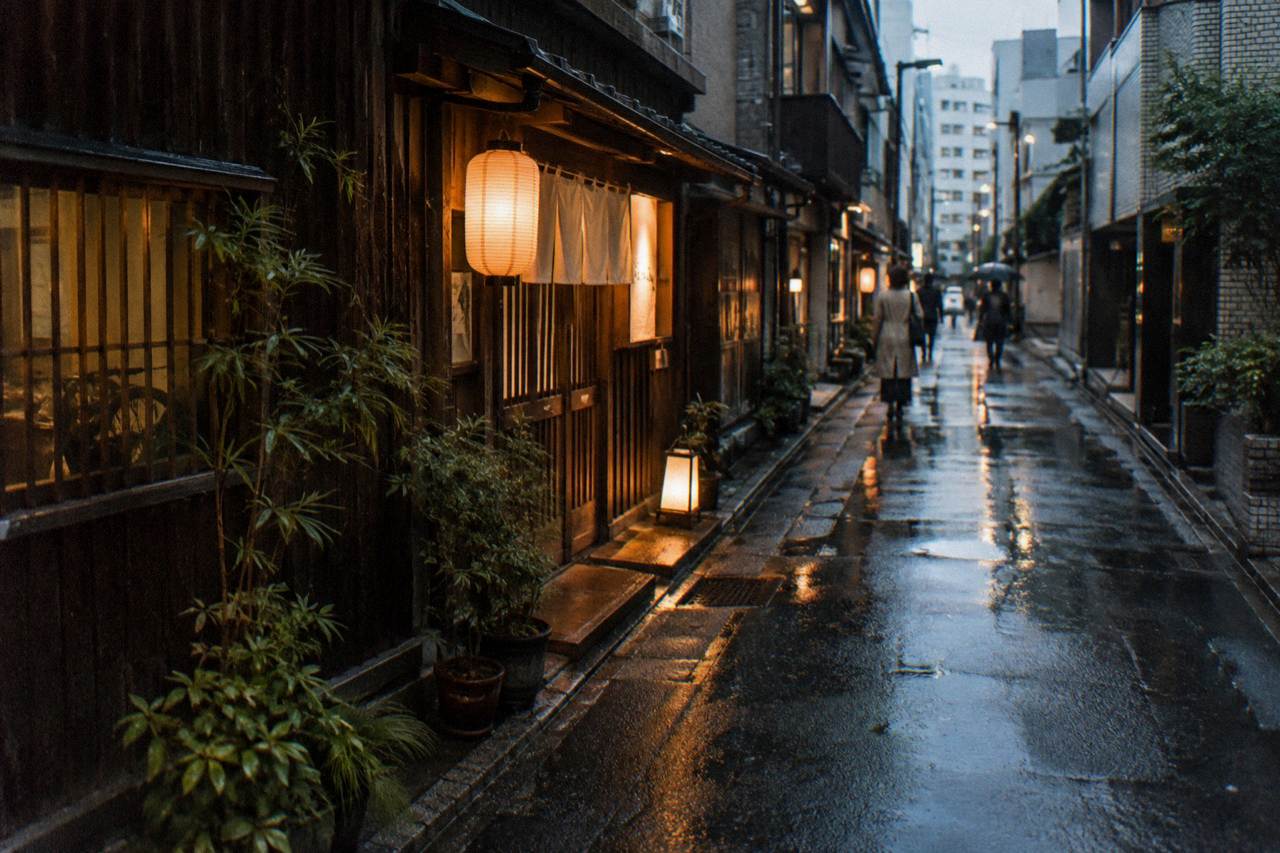
Ginza is the district travelers assume they cannot afford, and then discover they can, provided they turn the corner. One block off Chuo-dori, the department stores give way to lantern-lit alleys, standing bars the size of a parking space, and izakaya where the counter seats eight and the otoshi arrives before you have taken off your coat. The Ginza and Shimbashi Walk, about 3 hours and rated 4.64 across 40 reviews, from $145.85 per person, exists precisely because that second Ginza is invisible without someone who knows which doorway to choose.
Ginza's guided options run from a food tour through Ginza and Shimbashi to izakaya hopping with a local guide. They differ in length, price and what your money buys, and the eating customs, tax quirks and charges here often catch first-time visitors out. Each Ginza tour here links to a live booking page with its rating, from-price and full details.
What Does A Ginza Food Tour Actually Include?
A Ginza food tour is a guided, small-group walking experience that visits several independent eateries in roughly 3 hours, includes a series of tastings and usually drinks, and costs from $145.85 per person for the Ginza and Shimbashi Walk, with the shorter 1 hour Ginza Izakaya Hop from $195 per person as the premium alternative. Guides lead you through backstreet venues you would be unlikely to enter alone.
The core product is access. Ginza's best-value eating happens in places with no English sign, a cash preference and a cover charge, and a guide removes the friction of all three. On the Ginza and Shimbashi Walk the route crosses from upscale Ginza into Shimbashi, the salaryman drinking district immediately south, so you see both ends of the spectrum in one evening. The operator describes multiple tasting stops with a local guide leading the way.
The Ginza Izakaya Hop, by contrast, compresses the experience into about 1 hour. It is rated 5 across 36 reviews and priced from $195 per person, and it is best understood as izakaya hopping with a local guide rather than a full evening. Travelers with a packed itinerary use it as a controlled introduction before exploring on their own.
What almost every guided walk in the district includes: several food stops, a guide who orders and translates, and the confidence to walk into a bar with six seats. What they generally exclude: hotel pickup, extra drinks beyond what is stated, and dietary substitutions made on the spot, which is why the allergen advice later in this guide matters.
Which Ginza Food Tour Should You Book?
Book the Ginza and Shimbashi Walk, from $145.85 per person, about 3 hours, rated 4.64 across 40 reviews, if you want the full district contrast in one evening. Book the 1 hour Ginza Izakaya Hop, from $195 per person and rated 5 across 36 reviews, if you are short on time. The Ueno Walk with 10 tastings, from $107.98 per person, is the value alternative in a different district.
Three options cover most Ginza-bound eaters, and the differences come down to length, depth and how much of the evening you want to hand over to a guide.
| Tour | Length | Price basis | Rating and reviews | Best for |
|---|---|---|---|---|
| Ginza and Shimbashi Walk | ~3 hours | from $145.85 per person | 4.64 across 40 reviews | A full evening spanning two districts |
| Kanpai Ginza Izakaya Hop | ~1 hour | from $195 per person | 5 across 36 reviews | A short, dense introduction |
| Ueno Walk, Exactly 10 Tastings | ~3.5 hours | from $107.98 per person | 4.76 across 38 reviews | Maximum tastings per dollar, in Ueno |
The Ginza and Shimbashi Walk earns its place as the default choice because Shimbashi is the honest counterweight to Ginza: an office district where the izakaya are cheaper, louder and fuller of Tokyo residents, and where a guide is genuinely useful for the alley navigation. The listing describes a walk that moves between the two, so the price premium over a single-district tour buys the contrast.
The Ginza Hop suits a different reader entirely. If your evening already has a reservation or a show, one guided hour of izakaya hopping still gets you inside venues you would otherwise photograph from the street. From $195 per person it has the steepest hourly rate among these options, and the 5 rating across 36 reviews signals genuine satisfaction, though from a far smaller pool than the tours backed by thousands of reviews.
The third option steps outside Ginza on purpose. The Ueno Walk with exactly 10 tastings, from $107.98 per person and rated 4.76 across 38 reviews, runs about 3.5 hours in a market-street district with a completely different, more casual character. If your real question is value rather than the Ginza name, it belongs on your shortlist.
How Much Does A Ginza Food Tour Cost?
Expect to pay from $145.85 per person for the standard 3 hour Ginza and Shimbashi Walk, or from $195 per person for the 1 hour Ginza Izakaya Hop. Small-group Tokyo food walks generally run roughly $50 to $100 per person, so Ginza sits at the upper end, reflecting district prices and guide-led multi-stop itineraries rather than a premium brand markup.
The tour price is not the whole evening's cost, and budgeting as if it were is the most common mistake. Tipping is not part of the culture: the Japan National Tourism Organization states plainly that tipping is not common for services in bars, cafes, restaurants, taxis and hotels, so the bill is the bill. What can add to it are drinks beyond the included ones, and any otoshi, the small unordered appetizer that many izakaya serve as a per-person seating charge, typically a few hundred yen and listed on the receipt rather than hidden.
| Cost item | Typical range in Tokyo | Notes |
|---|---|---|
| Guided Ginza walk, per person | from $145.85 (3 hours) to $195 (1 hour) | Prices from the tour listings |
| Yakitori skewers at casual counters | 150 to 400 yen each | Current counter survey |
| Nigiri sushi, per serving average | 1,592 yen | National average, official retail survey |
| Conveyor-belt sushi meal | 1,500 to 3,000 yen | Plate prices from 110 to 150 yen |
| Otoshi seating charge at izakaya | a few hundred yen per person | Appears on the bill, not a tip |
| Dine-in tax vs takeaway | 10% vs 8% | Reduced rate excludes eating out |
The tax line deserves a sentence of explanation because it surprises people twice. Restaurant meals in Japan carry the standard 10 percent consumption tax, while takeaway food qualifies for the reduced 8 percent rate, a distinction the National Tax Agency sets out clearly. If you buy a bento from a depachika basement food hall in Ginza, you pay 8 percent; sit down at a counter and it is 10. The agency also notes a scheduled reduction to the food and drink rate for the two years from April 2027, a future change worth knowing about rather than planning around yet.
For context on the surrounding eating economy: the national average for a bowl of shoyu ramen sat at 750 yen in the September 2026 official retail survey, and a survey of 81 ramen shops around Takadanobaba put the average basic bowl at 993 yen. Those numbers are not Ginza numbers, but they anchor what food costs a train ride away, and they explain why a guided walk that bundles several stops into one price can feel steep until you add up what the same stops would cost, and cost you in hesitation, alone.
What Food Is Ginza Famous For?
Ginza is famous for three layers of eating: the depachika, department store basement food halls selling meticulously prepared takeaway; high-end sushi and wagyo counters; and the backstreet izakaya and standing bars of the blocks behind the boulevard, where the Ginza Izakaya Hop and the Ginza and Shimbashi Walk spend most of their time. A food tour concentrates on the third layer. If your Tokyo eating plans also include the temple district, the Asakusa food guide covers Nakamise street snacks, Hoppy Street izakaya, and standing sushi a few stops up the Ginza line.
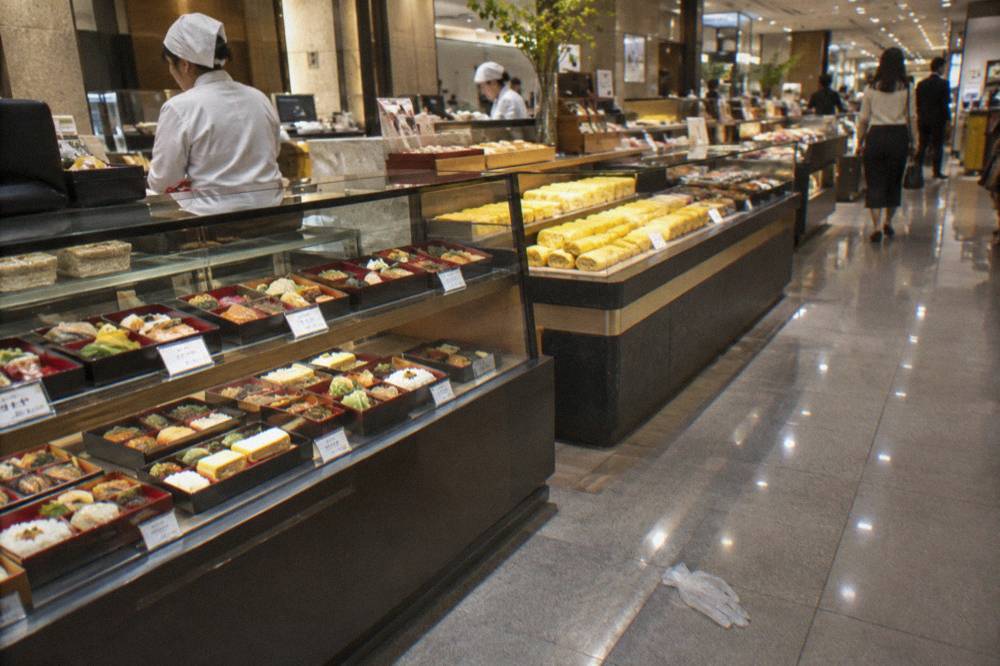
The depachika is the part you can do unguided and should, once, simply to see it. Trays of tempura, grilled fish, wagashi sweets and bento line counters under precise lighting, and the takeaway tax rate applies. It is a lunch-and-early-afternoon experience, because displays wind down toward evening. Tempura, wagyu, and kaiseki span a wide price spread, and The Tokyo Food List sorts them by cuisine and price range so you can plan the splurge.
The backstreets are the part worth a guide. West and south of the main drag, the alleys hold yakitori counters and tiny bars, and the etiquette of entering, ordering and paying is exactly where independent travelers hesitate. Yakitori skewers at casual Tokyo counters commonly run 150 to 400 yen each, which makes an unguided crawl genuinely cheap once you have the confidence to start one.
Ginza also anchors the top of the market: this is the district of famous sushi counters and the places that need reservations made weeks out. Popular and high-end Tokyo restaurants often require advance booking, and no-shows can incur fees, so if a guided walk is your evening plan, keep any separate reservation well clear of it. Travelers chasing that end of the market may prefer a dedicated premium experience like the Omakase Sushi and A5 Wagyu tour, from $130.73 per person and rated 4.72 across 329 reviews, which focuses on top-tier ingredients rather than neighborhood crawling. For a deeper look at the district's food identity, read our piece on what food Ginza is famous for.
Where Do Ginza Food Tours Actually Go?
Most Ginza food tours concentrate on the blocks immediately behind Chuo-dori and then cross into Shimbashi, the office-and-izakaya district one station south, walking distance in under 15 minutes. The Ginza and Shimbashi Walk is built around exactly that crossing, pairing Ginza's polished counters with Shimbashi's after-work drinking alleys in about 3 hours.
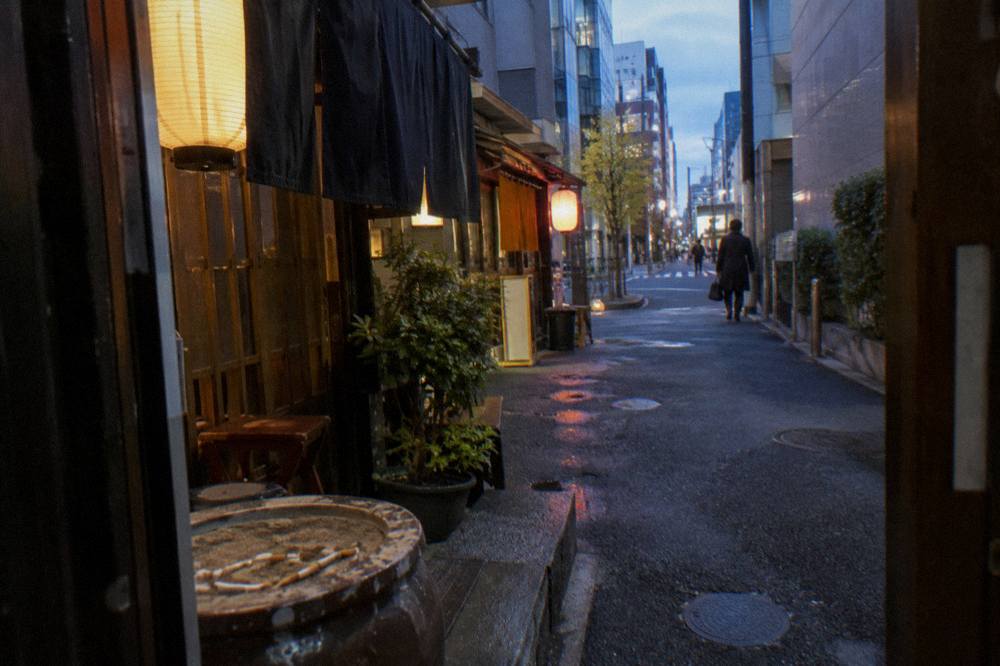
Shimbashi is the secret ingredient in the district's best tour routing. Where Ginza eats are curated and quiet, Shimbashi's izakaya are loud, full and priced for people who eat there nightly, and a guide moving you between the two gives you both Tokyos in a single evening. The meeting details for each tour are on the booking page; as a rule, plan on a Ginza or Shimbashi station exit and comfortable shoes for a few kilometers of walking.
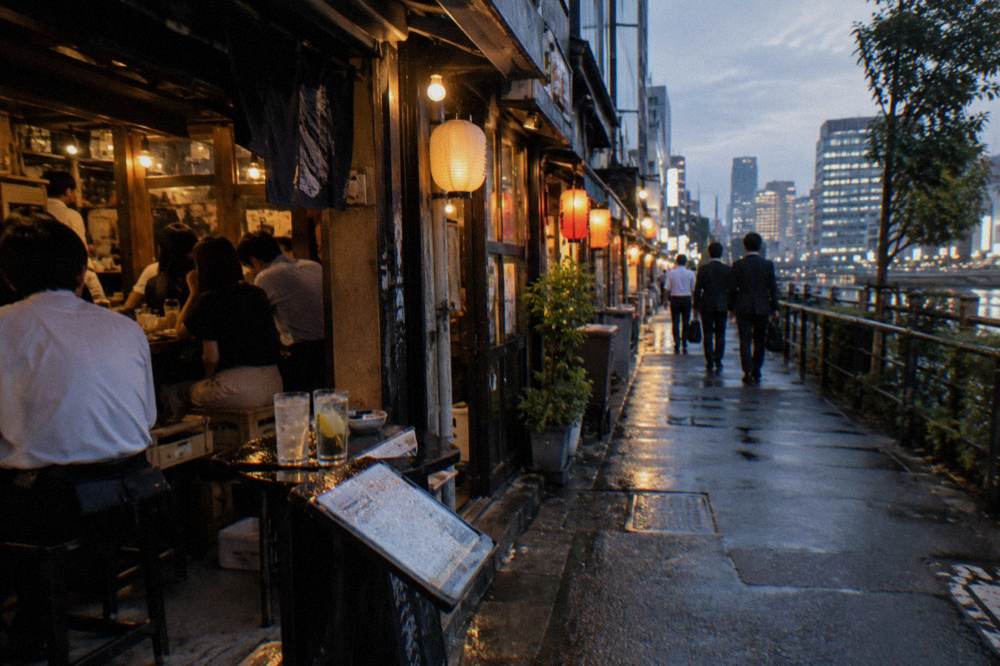
The layout favors a tour in other ways too. Ginza sits on multiple subway lines and the JR Yamanote loop is a short walk away at Yurakucho, so finishing in Shimbashi still leaves you two or three stops from most central hotels. Cash matters here: cash remains widely accepted and often preferred at many independent Tokyo restaurants, and while Ginza's chains take cards, the smallest bars may not, so carry yen on any guided crawl.
If evening drinking culture is what pulled you to this page, our Tokyo izakaya tour guide covers the crawl format across the whole city, and the Shibuya bar hop without a meal rounds out the nighttime options.
Is Ginza Or Shimbashi Better For Eating?
Ginza is better for polished, reservation-driven dining and food-hall browsing; Shimbashi is better for cheap, loud, late izakaya full of local office workers. Neither is better overall, so the strongest tour is the Ginza and Shimbashi Walk, from $145.85 per person, pairing both sides in one guided evening of about 3 hours.
The honest comparison looks like this:
| Factor | Ginza | Shimbashi |
|---|---|---|
| Character | Curated, quieter, design-forward | After-work, crowded, informal |
| Price level | Higher on average | Lower on average |
| Best hours | Lunch through early evening | Evening onward |
| English support | Common in stores, less so in backstreet bars | Sparse, a guide helps most here |
| Signature stop | Depachika food hall, sushi counters | Alley izakaya, standing bars |
| Guided options | Ginza Hop, 1 hour, from $195 | Covered by the Ginza and Shimbashi Walk |
The pattern repeats across Tokyo: one polished district pressed against one scruffy one, and the traveler who only sees the polished half leaves with half the story. The same logic explains why visitors pair a Ginza evening with a completely different morning elsewhere; our guide to the Tsukiji Outer Market food walk covers the market side of that pairing, with the Tsukiji Market 5 Tastings tour from $97.17 per person, rated 4.9 across 3,868 reviews, as the most reviewed morning option on the site.
What Should You Know Before Eating In Ginza?
Know four things before eating in Ginza: tipping is not expected anywhere, an otoshi seating charge at izakaya is normal and not a scam, indoor smoking is only permitted in designated rooms under Tokyo rules in force since 2020, and allergy accommodation must be arranged with the operator in advance because restaurant labelling is not required the way packaged food labelling is. Each of these changes how your evening goes.
Tipping first, because it is the one visitors get wrong in both directions. It is not common in Japan for bars, cafes, restaurants, taxis or hotels, per the national tourism organization, and staff may chase you down to return money left on the table. Pay the bill as printed.
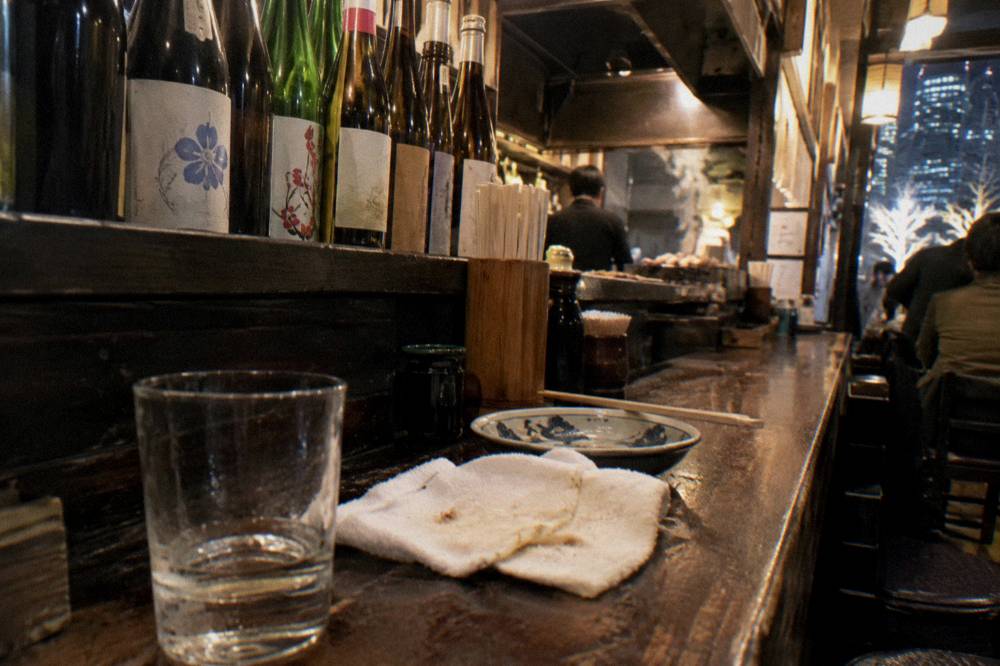
Smoking rules are strict and clearly posted. Since April 2020, restaurants must display at the entrance whether smoking is allowed, and indoor smoking happens only in designated rooms; under-20s may not enter them. You will see the signs at eye level on doorways throughout Ginza, and a family with teenagers should read them before choosing a venue.
Allergies need proactive handling. Japan's specified allergen labelling list covers packaged processed foods and now runs to nine items, with cashew nuts added in April 2026, according to the Consumer Affairs Agency. Restaurant dishes are generally not required to carry such labels, so the list is a starting point for a conversation with your guide, not a guarantee. Message the operator before booking with any allergy; guides can often reroute a stop, but not mid-tour on the night.
Reservation culture rounds out the picture. Casual spots in the backstreets work first-come, first-served, while destination restaurants in Ginza may require booking and may charge for late cancellation. A guided walk neatly sidesteps all of this: the guide holds the plan, and you hold a single booking.