Where To Eat In Asakusa
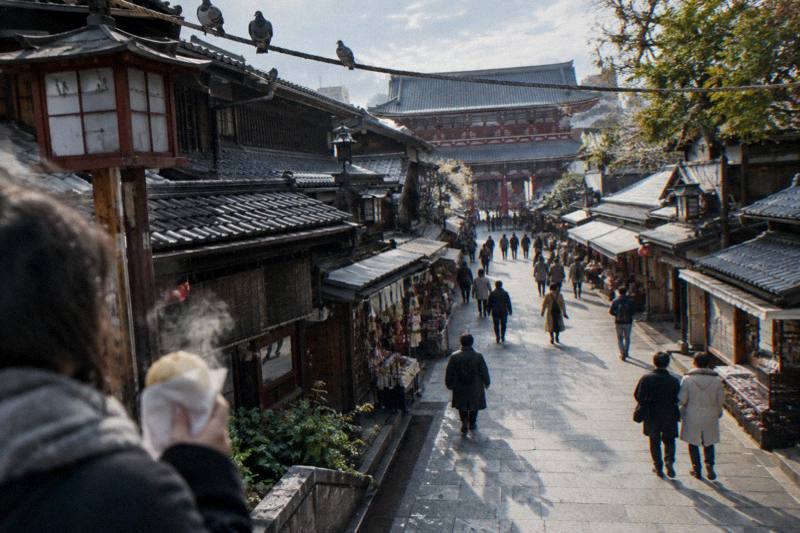
Asakusa is Tokyo's old entertainment district, and it still eats like one: skewers under lanterns, tamagoyaki on a stick, standing sushi counters, and an izakaya lane that only wakes up after sunset.
Short answer
Eat street snacks along Nakamise and the Senso-ji approach, sit down for tempura or unagi at lunch, then head to Hoppy Street after dark for izakaya food and drinks. Casual yakitori skewers and rice bowls are among Asakusa's budget-friendly bites, and a guided walk such as the Asakusa Walk, 12 Dishes runs from $75.30 per person.
Where Should You Eat In Asakusa First?
Start at the Senso-ji temple approach and work outward: Nakamise-dori for grab-and-go snacks like ningyo-yaki and senbei, the side lanes east of the temple for tempura and unagi sit-down lunches, and Hoppy Street, the izakaya lane behind the temple, once the lanterns come on. Asakusa is compact enough that everything worth eating sits within a ten minute walk of Kaminarimon gate, which makes it one of the few Tokyo districts where you can genuinely eat your way through a whole afternoon on foot. The pattern that works is snacks first, a real seated meal at lunch, a pause, then a drinking evening.
That order matters more than most visitors expect. Nakamise-dori, the approach street to Senso-ji, is at its most crowded from late morning through mid afternoon, and the snack stalls there are built for exactly that flow: small, cheap, eat-as-you-walk items. The sit-down restaurants around the temple, especially the older tempura and unagi houses, handle lunch seatings in waves and thin out by early afternoon. Hoppy Street, formally Naka-dori but known to everyone by its signature drink, does not properly open its shutters until evening. A visitor who arrives at 10 a.m. and expects dinner atmosphere will find the lane asleep.
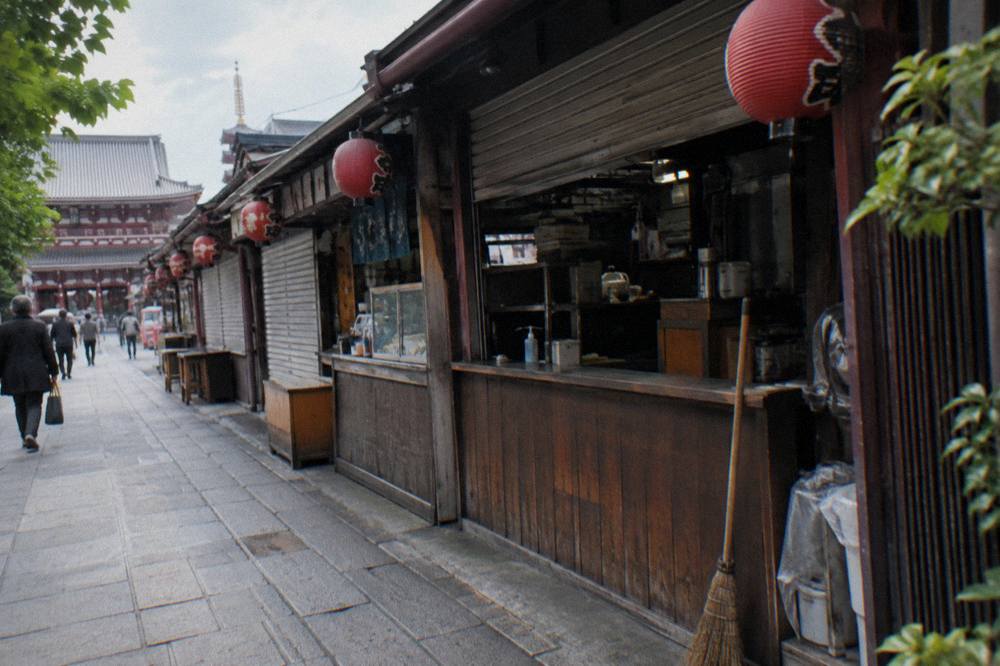
The district rewards slow movement. Between the temple and the Sumida River there are barely a dozen blocks, but they hold centuries of eating history: Asakusa was Tokyo's main entertainment quarter before the war, the part of the city where ordinary people went to snack, drink and wander. That legacy survives in the mix. A single afternoon can take in a grilled rice cracker, a fresh tamagoyaki omelette roll, a tempura set lunch, a hoppy-flavoured highball with stewed beef tendons, and a convini onigiri for the walk back, and none of it feels out of place.
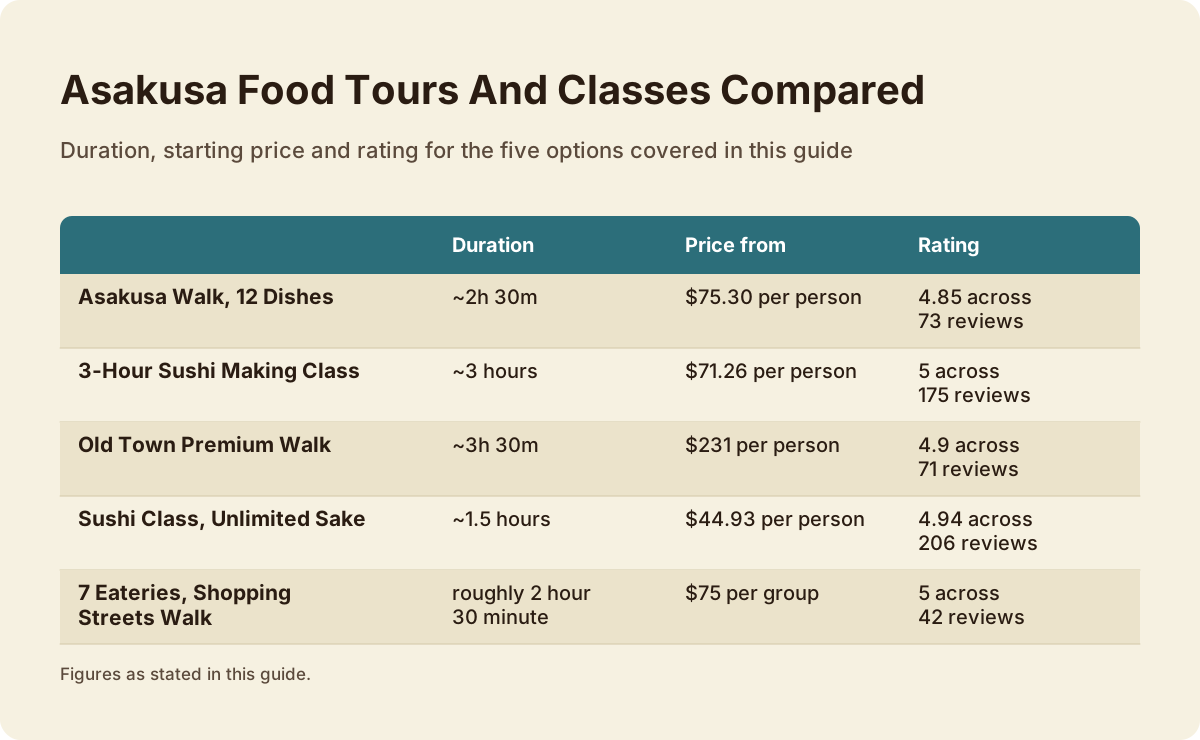
For a structured version of that crawl, the Asakusa eating walkthrough on this site goes dish by dish, and the Asakusa Walk, 12 Dishes, a guided tour with 12 dishes at local eateries, compresses the same territory into about 2 hours 30 minutes from $75.30 per person, rated 4.85 across 73 reviews. It is a sensible shortcut for anyone who does not read Japanese menus, since the guide handles the ordering.
What Is The Best Street Food On Nakamise Street?
The reliable Nakamise staples are ningyo-yaki (small filled cakes stamped with doll and lantern shapes), senbei (grilled rice crackers brushed with soy), age-manju (deep-fried buns on a stick), and tamagoyaki, the sweet layered omelette sold on skewers, with most single items priced in the low hundreds of yen. None of these need a table, a reservation or a word of Japanese: you point, pay, and eat standing near the stall. That is precisely what the street was built for, since Nakamise has been feeding temple visitors for well over a century.
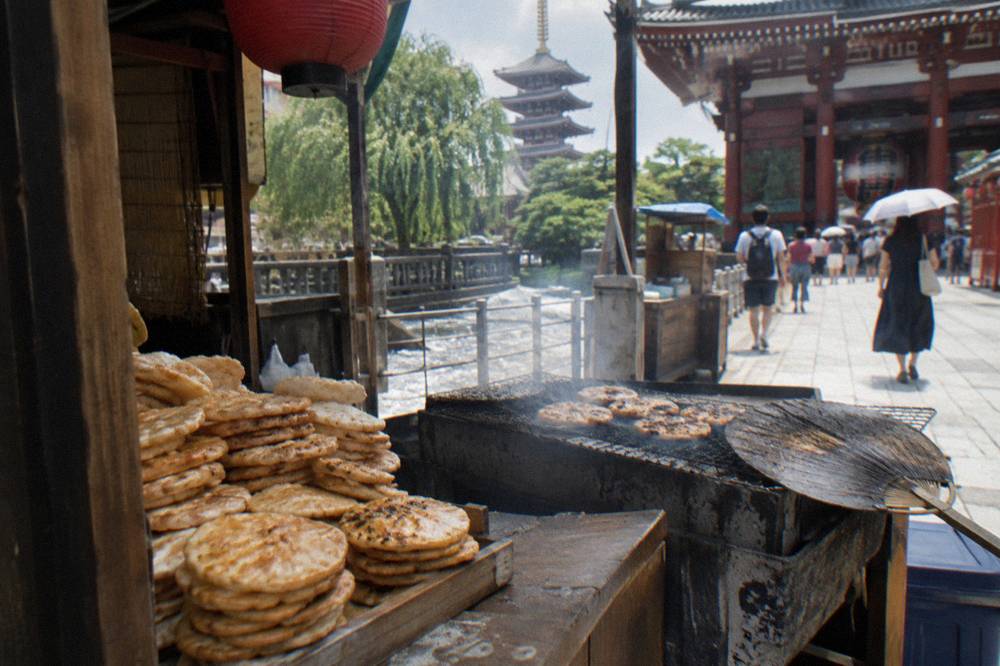
Ningyo-yaki is the most photographed of the set, and for good reason: the cast-iron molds turn out bite-size cakes filled with sweet red bean paste in the shapes of the lantern and the pigeon you just walked past. Senbei is the other classic. Vendors grill the cracker in front of you, paint it with soy sauce so it crackles, and hand it over wrapped in a strip of paper. It is salty, smoky and best eaten within a minute, while the surface is still crisp.
Around the edges of Nakamise and in the lanes just off it, the snack range widens. Melon pan, the sweet bread with a cookie crust, has a famous bakery on the corner near the temple; grilled squid skewers and steamed sweet potatoes appear seasonally; and in warmer months kakigori, shaved ice with syrup, moves to the front of the counters. The honest planning range for street snacks here is roughly 150 to 400 yen per item, matching the common counter price for a casual yakitori skewer, and two or three items make a decent walking lunch if a seated meal is not on the schedule.
Two practical warnings. First, eating while walking is frowned on in the tighter temple streets, and around markets it is explicitly discouraged: the practice at Tsukiji Outer Market, where visitors are asked to eat inside the eatery or in front of the store, sets the tone for the whole city. Buy the snack, step to the side of the stall, finish it there. Second, cash still matters. Many independent snack stalls and older counters prefer or require it, so carry a few thousand yen in coins and small notes for a snack crawl.
| Snack | What it is | Rough price range |
|---|---|---|
| Ningyo-yaki | Small cake filled with sweet red bean, molded into lantern and pigeon shapes | 200 to 500 yen for a pack |
| Senbei | Grilled rice cracker brushed with soy sauce | 150 to 300 yen each |
| Age-manju | Deep-fried sweet bun on a stick | 150 to 300 yen each |
| Tamagoyaki | Sweet layered omelette on a skewer | 100 to 200 yen |
| Melon pan | Sweet bread with a crisp cookie crust | 200 to 400 yen |
Which Asakusa Food Tour Or Class Is Worth Booking?
The best-value structured options are the Asakusa Walk, 12 Dishes, from $75.30 per person for 12 dishes across local eateries in about 2 hours 30 minutes, and, if you would rather cook than walk, the Asakusa Tokyo Sushi Making Class from $44.93 per person, rated 5 across 175 reviews. A tour makes sense in Asakusa when three things line up: you want a full meal rather than snacks, you cannot read Japanese menus, and you want the back-lane places that have no English sign and no intention of getting one.
The Asakusa Walk, 12 Dishes is the closest match to the district itself: a guided walk through local eateries with, as the name says, twelve dishes, rated 4.85 across 73 reviews and priced from $75.30 per person. The Old Town Tokyo Food Tour explores a different corner of old Tokyo, longer at 3 hours 30 minutes and priced from $231, about 3 hours 30 minutes from $231 per person, rated 4.9 across 71 reviews, for visitors who want a deeper, more expensive evening rather than a quick orientation. Between them, the choice is mostly about budget and appetite. Eating by neighborhood is easier when The Tokyo Food List shows you what is within a 10-minute walk on a map.
The class route deserves more attention than it usually gets. Asakusa hosts several hands-on options, and the Asakusa sushi class with matcha and unlimited sake, about 1.5 hours from $44.93 per person and rated 4.94 across 206 reviews, is one of the cheapest full experiences in the district. Sitting down to eat something you shaped yourself, with tea and sake poured alongside, is a different kind of Asakusa meal, and on a rainy day it beats an umbrella crawl.
| Option | Format | Duration | Price (from) | Rating |
|---|---|---|---|---|
| Asakusa Walk, 12 Dishes | Guided walk, 12 dishes | ~2h 30m | $75.30 per person | 4.85 across 73 reviews |
| 3-Hour Sushi Making Class | Hands-on class, small group | ~3 hours | $71.26 per person | 5 across 175 reviews |
| Old Town Premium Walk | Premium guided walk | ~3h 30m | $231 per person | 4.9 across 71 reviews |
| Sushi Class, Unlimited Sake | Class with matcha and sake | ~1.5 hours | $44.93 per person | 4.94 across 206 reviews |
What Does A Meal Cost In Asakusa?
Plan on roughly 600 to 1,000 yen for a basic ramen bowl, 1,500 to 3,000 yen for a conveyor sushi meal, and 2,000 to 3,000 yen per person for a casual izakaya grazing session with drinks, with seated tempura or unagi set lunches starting from around 2,000 yen upward at the district's older houses. Those figures line up with Tokyo-wide survey data: in one survey of 81 ramen shops in the Takadanobaba-Waseda area, the average basic bowl cost 993 yen and the cheapest was 600, while nigiri sushi as restaurant food averaged 1,592 yen per serving nationally.
Two layers sit under those numbers. Tax is one: dining in attracts 10 percent consumption tax while takeaway food carries the reduced 8 percent rate, per the National Tax Agency's published rates, and the agency has stated the rate on food and drink sales will be lowered for the two years from 1 April 2027 to 31 March 2029. Tipping is the other: it is not customary in Japanese restaurants, bars or taxis, so the bill on the table is the whole bill, and any extra left by mistake may well be chased down the street to be returned.
The seated-lunch tier is where Asakusa earns its reputation. The district has old tempura and unagi houses where a set meal costs more than the street snacks but delivers a proper table, tea and a slower hour. Reservations matter at the popular and high-end end of that scale: no-shows and late cancellations can incur fees, so notify the venue if plans change. A mid-range set lunch plus an evening crawl adds up to a few thousand yen for a full eating day, generally less than the price of a booked walking tour. The wider set of guides lives on Tokyo Food Tours.
| Meal type | Typical spend per person | Notes |
|---|---|---|
| Street snack crawl | 500 to 1,500 yen | 2 to 4 items from stalls |
| Ramen bowl | 600 to 1,000 yen | National average 750 yen |
| Conveyor sushi meal | 1,500 to 3,000 yen | Plates from 110 to 150 yen |
| Izakaya evening on Hoppy Street | 2,000 to 3,000 yen plus cover charge | Otoshi seating charge common |
| Tempura or unagi set lunch | From around 2,000 yen upward | Reservations advised at top houses |
Where Do Locals Eat In Asakusa After Dark?
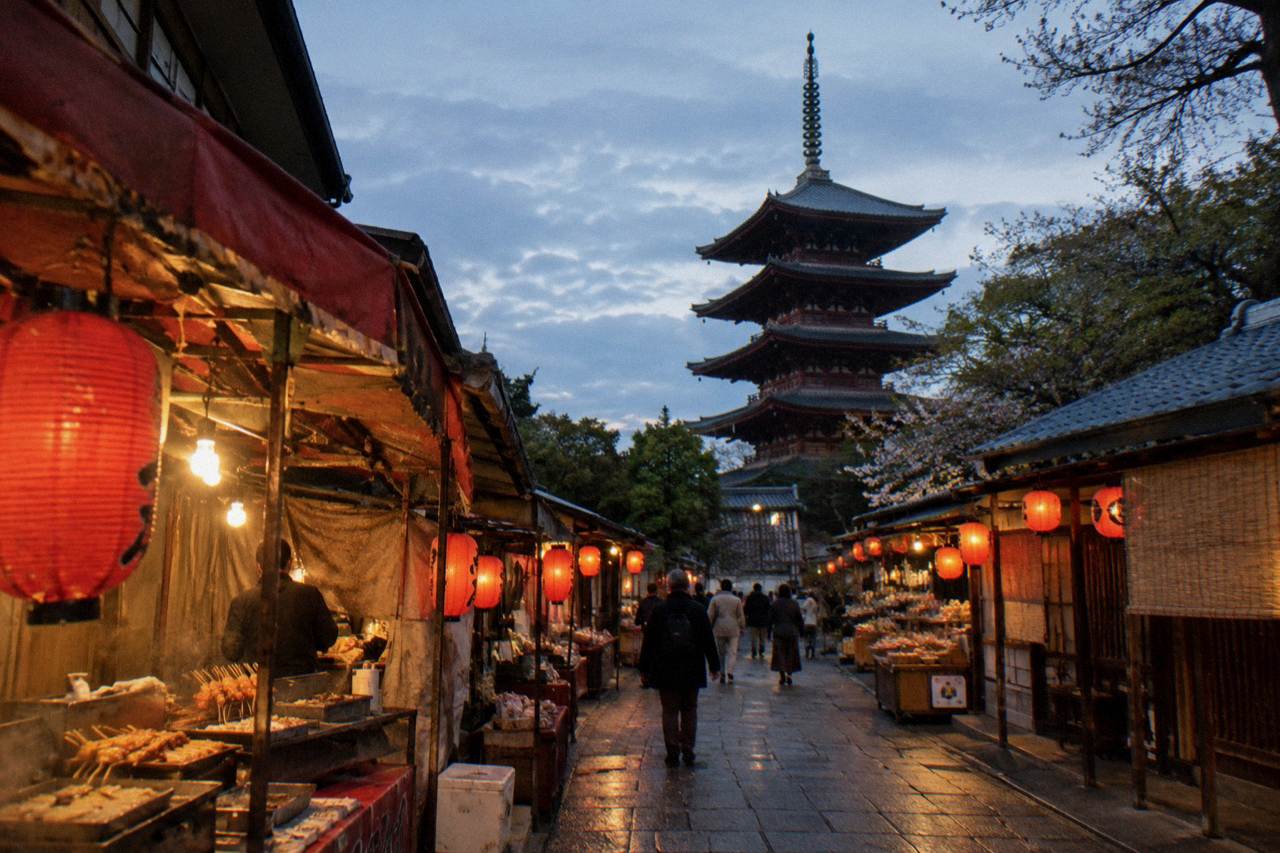
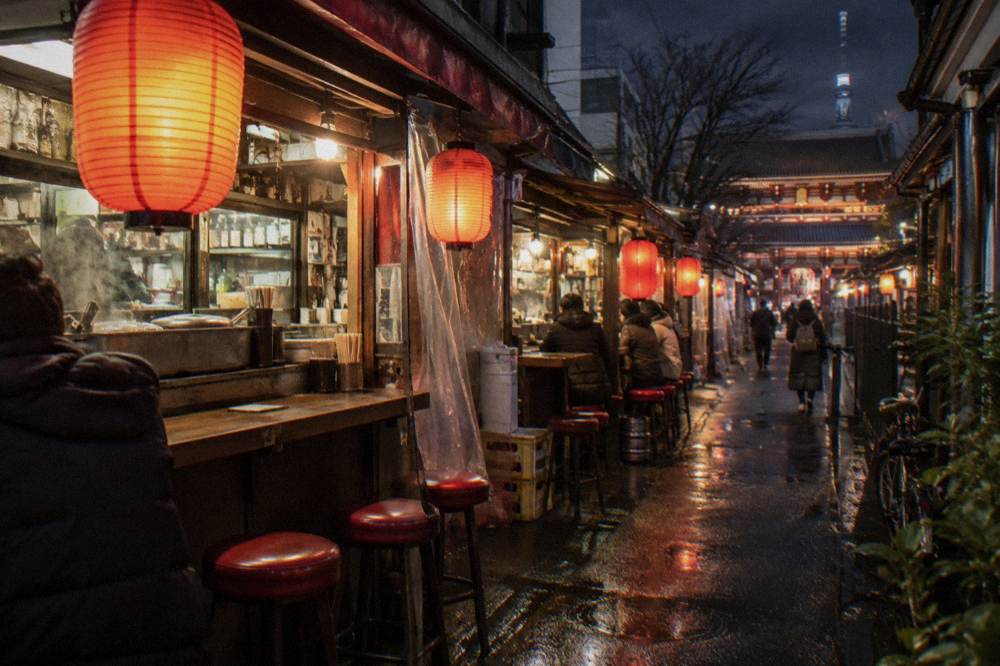
After dark the centre of gravity shifts to Hoppy Street, the open-air izakaya lane west of Senso-ji, where dozens of tiny counters serve stewed dishes, skewers and the namesake hoppy drink, and where an otoshi seating charge of a few hundred yen per person is standard practice rather than a scam. This is working Asakusa: the lanterns come on, the red vinyl stools fill up, and the tables order motsu-ni (beef tendon stew), sashimi plates and fried lotus root by the round. The lane's bars are small, genuinely local, and friendlier than their cramped doorways suggest. If the vocabulary is new to you, our guide to Japan's tiniest restaurants explains what izakaya, yokocho counters and standing bars actually mean, and what a night in them costs.
Hoppy, the drink, deserves a sentence of explanation because the lane is named for it. It is a near-beer malt beverage traditionally mixed at the table with shochu to make a low-sugar highball; ordering "naka" gets you the shochu, "soto" the hoppy, and you combine them yourself. It is an old Tokyo ritual, cheap by the glass, and part of the lane's identity. If it does not appeal, the counters pour standard beer, sake and shochu without ceremony.
The otoshi charge catches some visitors off guard, so know it in advance. Many izakaya, including plenty on this lane, place a small unordered appetizer on the table as a per-person seating charge, typically listed on the bill; it is not a tip and not a mistake. At Omoide Yokocho in Shinjuku, for comparison, the equivalent charge runs about 300 to 500 yen with a small starter included, and the typical spend for skewers and drinks there is 2,000 to 3,000 yen per person. Expect Asakusa's lane to sit near that same band.
If a guided evening sounds easier than solo lane-hopping, the Tokyo izakaya options cover the format in depth, and the 7 Eateries, Shopping Streets Walk, a roughly 2 hour 30 minute street food tour rated 5 across 42 reviews from $75 per group, is the rare tour priced per group rather than per person, which changes the arithmetic completely for families.
How Do You Plan A Full Eating Day In Asakusa?
A workable day: street snacks on Nakamise between 10 a.m. and noon, a seated tempura or unagi set lunch just after the midday rush, a walk along the Sumida River or a sushi class in the afternoon, then Hoppy Street from around 6 p.m. onward, with a snack crawl, set lunch and izakaya rounds together costing well under the price of a booked walking tour. The district is small, so the plan is less about distance and more about pacing your appetite, which is exactly what a schedule protects.
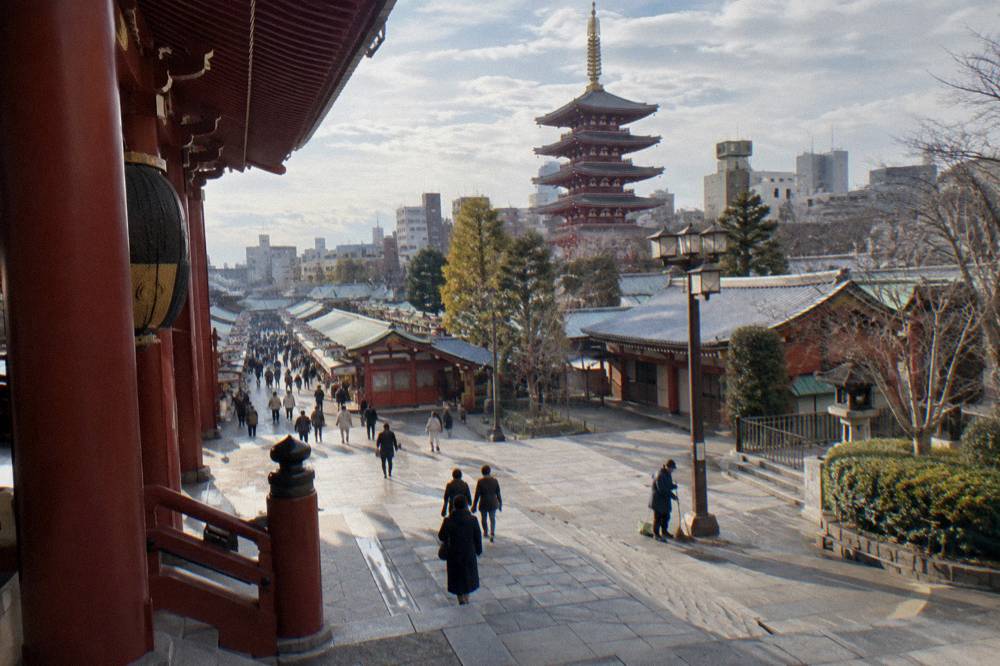
Getting in is simple. The Tokyo Metro Ginza Line serves Asakusa station directly, and the district's core sits within a short walk of the exit. Once there, the vertical element matters: rooftop and upper-floor restaurants around the station offer tempura and monja with a view for not much more than street level, a good fallback when the lanes are packed. The nearest monjayaki cluster, Tsukishima, is a separate district to the south, where association shops list typical dishes around 1,500 yen tax included, but several Asakusa counters serve monja too.
A pair of nearby alternatives fills out the day if Asakusa itself runs dry. The Tsukiji Outer Market eating guide covers Tokyo's other great snack district, reachable in about half an hour by train, where the Tsukiji Market, 5 Tastings walking tour runs about 3 hours from $97.17 per person and is rated 4.9 across 3,868 reviews. Closer to hand, Ueno's Ameyoko market street offers a rougher, louder crawl, covered by the Ueno and Ameyoko eating guide on this site.
What Should You Know Before Eating In Asakusa?
The short list: carry cash for small counters, do not tip, expect a seating charge at izakaya, finish what you order since leaving food is poor form, check the smoking sign at the entrance because restaurants must display their policy, and tell any tour operator about allergies before booking rather than on the day. None of these are obstacles; all of them are things visitors regret not knowing an hour too late.
The allergy point deserves its emphasis. Japan's allergen labelling rules now cover nine specified items on packaged processed food, with cashew nuts added as a specified material on 1 April 2026, but that duty applies to packaged goods, not restaurant dishes, per the Consumer Affairs Agency's allergen page. Restaurant-side allergy information is still being studied by the agency, so a tour guide told on the morning of a walk has far fewer options than one told at booking. Message the operator first.
Smoking and payment rules round out the picture. Since the Tokyo ordinance and amended national law took full effect in 2020, restaurants must post a sign at the entrance showing whether smoking is allowed, and indoor smoking is restricted to designated rooms; under-20s may not enter smoking rooms. On payment, cards and cashless options are increasingly common at mid-range and chain venues, but many independent counters and ramen shops still prefer cash. A few thousand yen in notes and coins solves an entire evening.
Common Questions About Eating In Asakusa
Where Should You Eat In Asakusa First?
Start with street snacks on Nakamise-dori, the approach to Senso-ji, then move to a seated tempura or unagi lunch in the side lanes, and finish on Hoppy Street after dark. The whole eating district fits inside a ten minute walk of Kaminarimon gate.
How Much Does A Meal Cost In Asakusa?
Street snacks run roughly 150 to 400 yen per item, a basic ramen bowl sits between 600 and 1,000 yen with the national average at 750 yen, conveyor sushi meals total 1,500 to 3,000 yen, and a set lunch at an older tempura or unagi house starts from around 2,000 yen upward.
Is It Rude Not To Finish Food In Japan?
Leaving substantial food uneaten is considered poor form, so order in rounds rather than all at once. The custom is practical too: smaller orders let a group try more dishes across an evening on Hoppy Street.
Do You Tip In Asakusa Restaurants?
No. Tipping is not customary in Japanese restaurants, bars or taxis. Pay the bill as printed; any service charge at upscale venues appears on the bill itself and is not an optional extra.
Why Is There An Extra Charge On The Izakaya Bill?
That is otoshi, a small unordered appetizer that functions as a per-person seating charge, typically listed on the bill. It is standard practice at izakaya and not something to dispute, but ask if a line is unclear.
Can You Do A Food Tour Or Cooking Class In Asakusa?
Yes. The Asakusa Walk, 12 Dishes runs about 2 hours 30 minutes from $75.30 per person and is rated 4.85 across 73 reviews, while a sushi making class with matcha and unlimited sake runs about 1.5 hours from $44.93 per person, rated 4.94 across 206 reviews.