Best Sushi In Tokyo: Counters, Conveyor Belts And Classes
Tokyo sushi runs from 110-yen conveyor plates to multi-course omakase counters, and the best choice depends on budget, time of day and how much involvement you want. Here is how the tiers stack up.
Short answer
The best sushi in Tokyo spans three tiers: conveyor-belt meals of 1,500 to 3,000 yen, standing bars selling nigiri from about 90 to 500 yen a piece, and booked counters. Hands-on sushi classes start from $44.93 per person, and a 3-hour small-group class runs from $71.26.
Sushi in Tokyo is not one experience but at least four, and they barely resemble each other. A conveyor-belt chain in Shibuya can fill you for the price of a coffee and a pastry in most Western capitals. A booked counter in Ginza can cost more than a night in a good hotel. Between those poles sit standing bars, market stalls and, increasingly popular, hands-on classes where you shape the nigiri yourself.
The national average price for a serving of nigiri sushi at restaurants was 1,592 yen in the official retail price survey, which tells you the middle of the market is far more affordable than the mythology suggests. The trouble is that the famous names, the ones every search returns, sit at the top of the price ladder and often need reservations months ahead. This guide walks the whole ladder instead: what each tier costs, which districts deliver it, and where a class fits if you would rather learn than just eat.
A word on approach before the details. The tiers below are not a quality ranking so much as a set of formats, and Tokyo diners move between them without ceremony. The same office worker who eats at a conveyor chain on Tuesday might sit at a counter on a Friday night, and neither choice reads as better or worse in the city's own terms. Visitors get more out of the city when they adopt the same flexibility, sampling at least two formats instead of gambling a whole trip's sushi budget on a single famous seat. If you are still tempted to chase one famous name, this look at what fame actually means for Tokyo restaurants explains why the question resists a tidy answer.
What Are The Best Ways To Eat Sushi In Tokyo?
The best ways to eat sushi in Tokyo are conveyor-belt chains, standing sushi bars, market and neighborhood counters, booked omakase seats, and hands-on making classes. Each tier serves different budgets, from 110-yen conveyor plates to premium counters, and the strongest trips usually combine two of them, for example a cheap market lunch and an evening class or omakase seat.
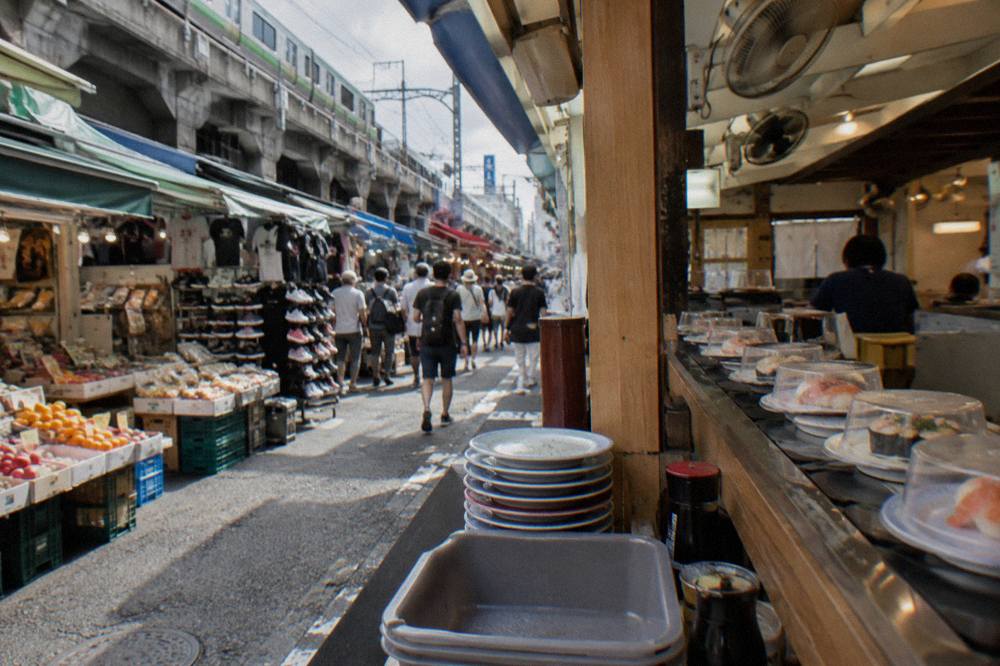
Conveyor-belt chains are the entry point. Plates start from 110 to 150 yen in Tokyo, and a typical meal lands between 1,500 and 3,000 yen. They are fast, need no reservation, and are genuinely good now; the quality gap between chains and mid-range counters has narrowed dramatically over the past decade. Order touchscreens with English menus are standard at the big chains, which removes the language anxiety that once kept visitors away. Families with children tend to do especially well here, because pacing is self-serve and there is no long wait between arriving and eating.
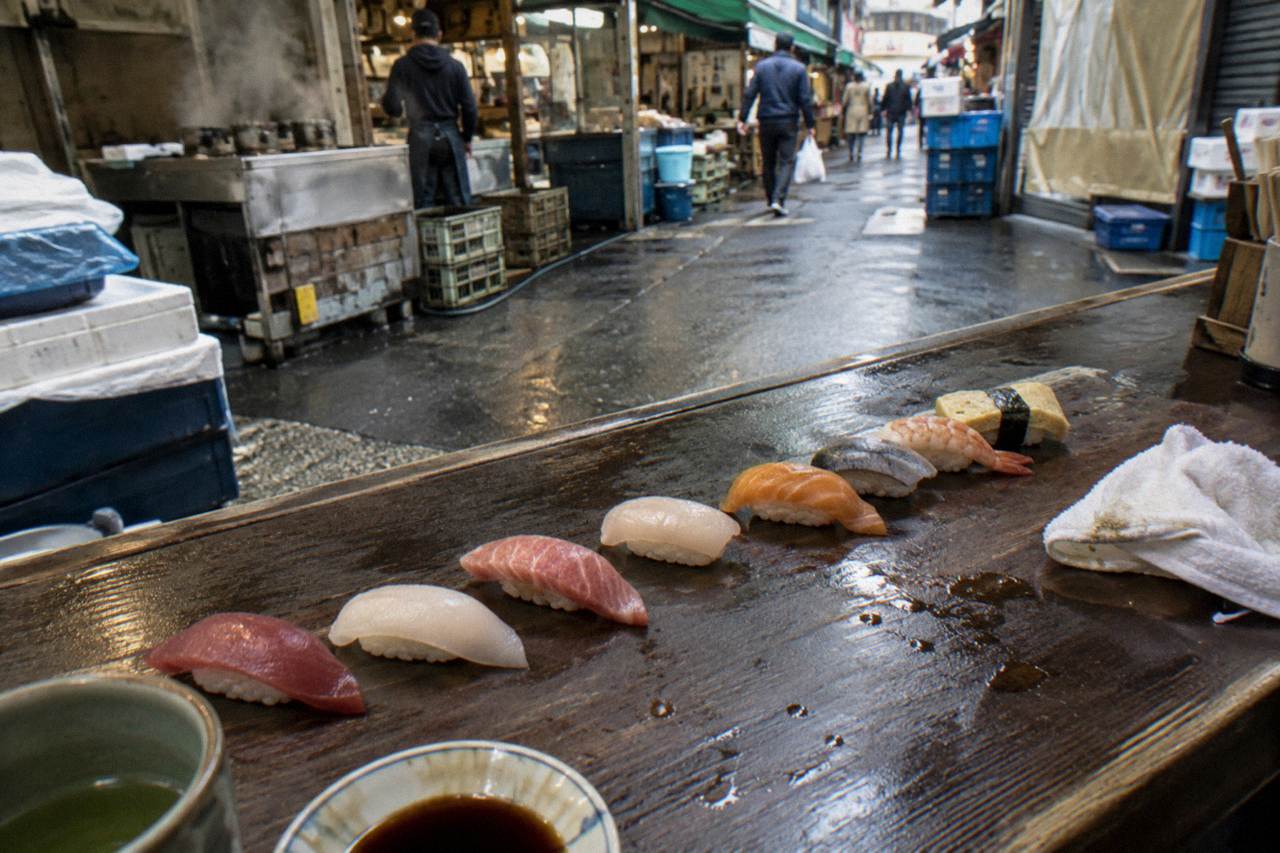
Standing bars are the locals' shortcut. Near the markets, standing sushi bars sell individual nigiri pieces from roughly 90 to 500 yen each, and you order two or three pieces at a time until you are done. It is the cheapest way to eat fish cut in front of you, and it is how many Tokyo workers actually eat sushi on a weeknight. The format rewards decisiveness: glance at the case, point or name what looks good, eat it standing, pay, and step out. A whole visit can take less than twenty minutes, which makes it possible to graze several bars in one evening the way you might crawl bars in Shinjuku.
Then come the counters. Here a chef composes your meal piece by piece, either from a set menu or omakase, meaning the chef decides. This is the tier Tokyo is famous for, and the tier where reservations, prices and expectations all rise together. The counter rewards diners who engage, ask questions, and trust the sequence rather than steering it. Finally there are classes, where you sit on the other side of the counter and learn to shape, season and slice. For a fuller walk through the district famous for market-fresh fish, see the Tsukiji Outer Market food tour guide on this site.
How Much Does Sushi Cost In Tokyo?
Expect 1,500 to 3,000 yen for a conveyor-belt meal, roughly 90 to 500 yen per piece at standing bars, and several times that at booked counters. The official survey average for a restaurant serving of nigiri is 1,592 yen. Booked experiences in USD start from $44.93 per person for a class and from $130.73 for a premium omakase and wagyu tour.
| Tier | Typical spend | Reservation | Best for |
|---|---|---|---|
| Conveyor-belt chain | 1,500 to 3,000 yen per meal | None | Speed, families, low risk |
| Standing sushi bar | About 90 to 500 yen per piece | None | Quick, chef-cut fish |
| Market or neighborhood counter | Mid-range set menus | Sometimes | A proper lunch without booking far ahead |
| Omakase counter | High, varies by venue | Usually required | A splurge occasion |
| Sushi making class | From $44.93 per person | Book ahead | Learning, groups, rainy days |
Two costs sit outside the menu price. Consumption tax is 10 percent when you dine in and 8 percent on takeaway, a distinction the National Tax Agency spells out on its consumption tax page. The difference is small on a single bowl but compounds quickly on a market haul or a family order. And many izakaya-style venues add an otoshi, a small unordered appetizer that works as a per-person seating charge; it is standard practice, not a scam, but it does add a few hundred yen to a bill if you were not expecting it. The appetizer itself is usually edible and sometimes genuinely good, so treat it as a cover charge with a snack attached rather than an imposition.
One more planning note: the tax authority has announced that the rate on food and drink sales is due to be lowered for the two years from April 2027 to March 2029, so anyone traveling after that window opens should recheck the arithmetic closer to the date. Prices in this guide are stated plainly, without that speculation folded in.
For readers mapping a whole trip budget, the how much does a Tokyo food tour cost guide breaks down what guided experiences include at each price level.
Which Sushi Experiences Are Worth Booking Ahead?
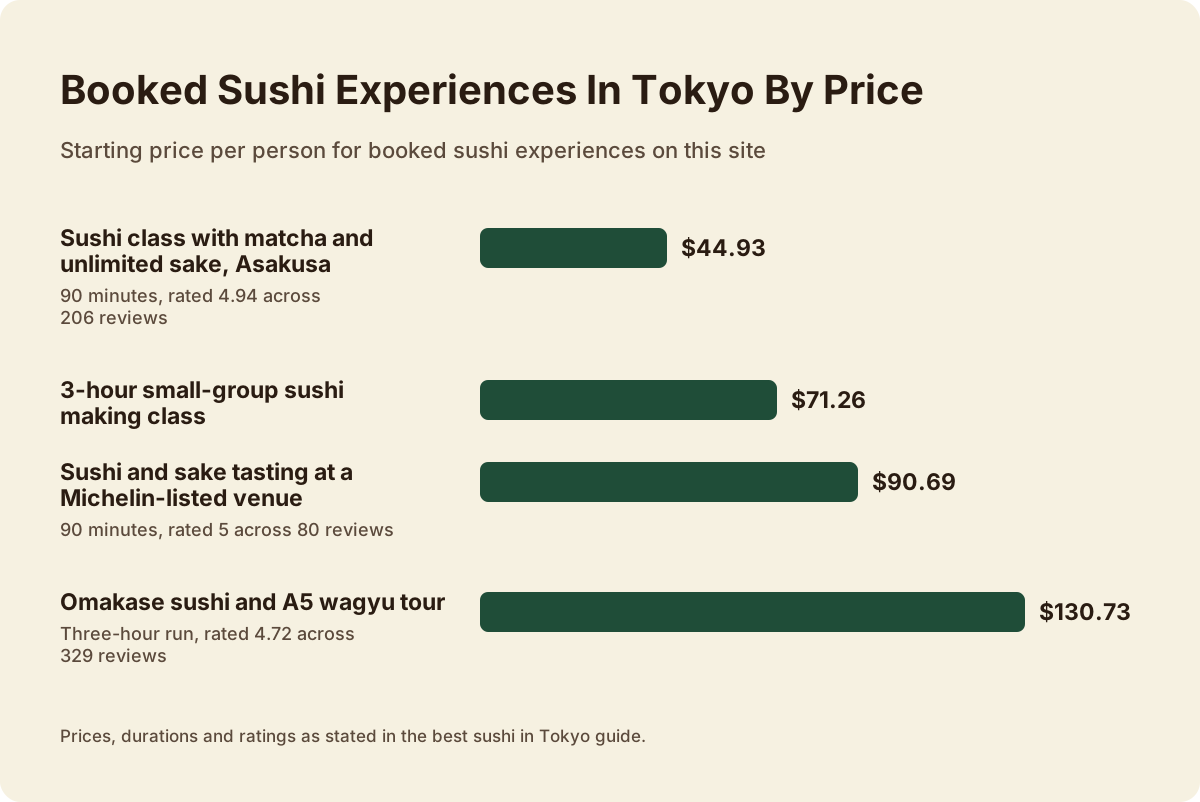
Three booked experiences stand out on value: the 3-hour small-group sushi making class from $71.26 per person, the omakase sushi and A5 wagyu tour from $130.73 per person, and the sushi and sake tasting at a Michelin-listed venue from $90.69 per person. Each converts a meal into something you could not arrange alone, which is the honest test of a booking.
A plain restaurant meal rarely needs a middleman. What justifies booking an experience is access, translation, or structure you cannot self-serve: a teaching kitchen, a counter seat in a venue that is hard to find, or a route through a district where an English-speaking guide changes what you notice. The three below pass that test.
The omakase tour pairs sushi with A5 wagyu in a single three-hour run, rated 4.72 across 329 reviews, and it exists precisely because securing that combination independently, in English, across multiple venues, is a genuine chore. The Michelin-listed hidden gem session runs 90 minutes from $90.69 per person, rated 5 across 80 reviews, and folds a sake tasting into the making session. The class, meanwhile, is the one repeated throughout this guide because it is the closest thing to a default recommendation: mid-priced, consistently rated, and useful to almost any traveler type.
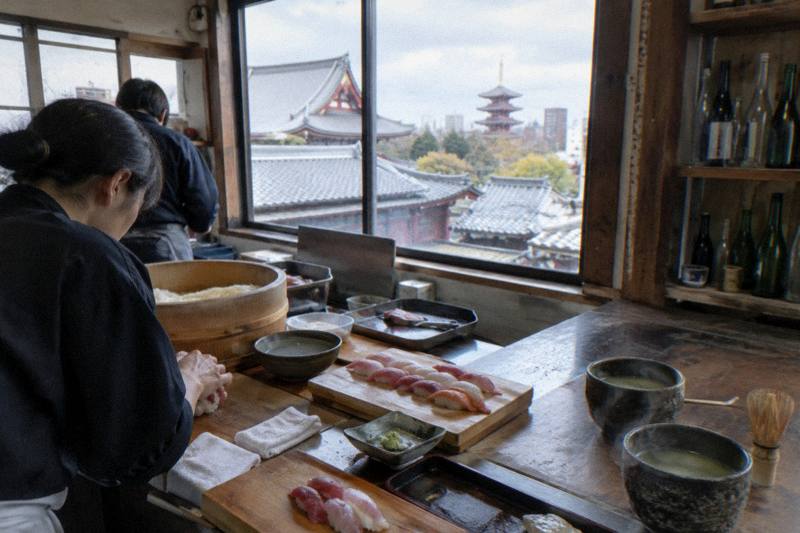
For travelers based near Asakusa, there is also a sushi class with matcha and unlimited sake, 90 minutes from $44.93 per person, rated 4.94 across 206 reviews. It is the cheapest booked sushi experience on this site, and the unlimited sake explains a good share of its popularity. Check the booking page for the meeting point and the current schedule.
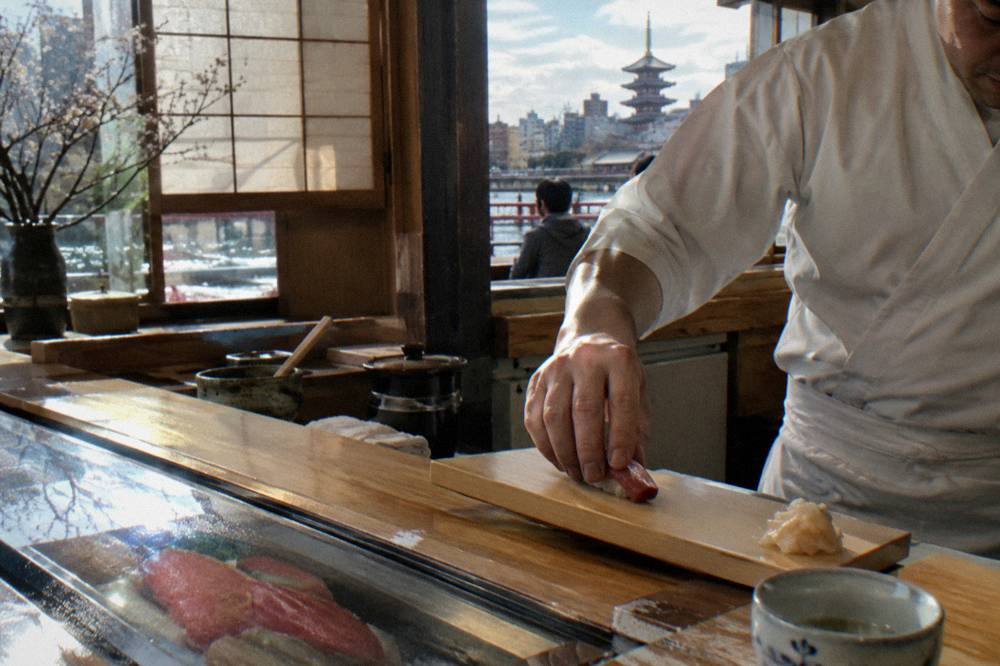
Is Tsukiji Still The Place To Go For Sushi?
Yes, Tsukiji Outer Market remains one of the best sushi stops in Tokyo, with hundreds of independent shops, easy transit access, and opening hours vary from shop to shop. Professional buyers have priority until 9:00 a.m., many shops close Sundays, holidays and some Wednesdays, so timing matters more than the neighborhood itself.
The market's own guidance asks visitors to eat inside the eatery or directly in front of the store rather than while walking, to skip bargaining, and to ask before photographing. These are small rules that keep the lanes workable, and they are published on the official market manners page. The site also carries the closure calendar, which follows the Tokyo Central Wholesale Market's closing days, and it is the single most useful link in this article for anyone planning a visit. Guides leading tours through the market are asked to consult the Plat Tsukiji information centre first, a sign of how seriously the district manages its visitor load.
| Tsukiji planning item | What to know |
|---|---|
| Retail hours | Roughly 9:00 to 14:00 for general visitors; after that, shops decide individually |
| Buyer priority | Professionals have priority until 9:00 a.m. |
| Common closures | Sundays, national holidays and selected Wednesdays, per shop |
| Transit | Toei Oedo Line Tsukijishijo Station or Metro Hibiya Line Tsukiji Station, about a 1-minute walk |
| Visitor rules | Eat at the shop, no bargaining, ask before photos, designated smoking areas only |
Standing sushi bars around the market sell nigiri from roughly 90 to 500 yen a piece, which makes Tsukiji one of the cheapest places to eat genuinely fresh fish in the city. The market's shop categories run from fresh and processed seafood to dried foods, tamagoyaki specialists and kitchenware sellers, so a visit doubles as a walking tour of Japanese food culture even between bites. A guided walk adds context to the lanes, and the Tsukiji market walking tour with 5 tastings, three hours from $97.17 per person and rated 4.9 across 3,868 reviews, is this site's most reviewed market option. For the full district briefing, see the dedicated guide linked above.
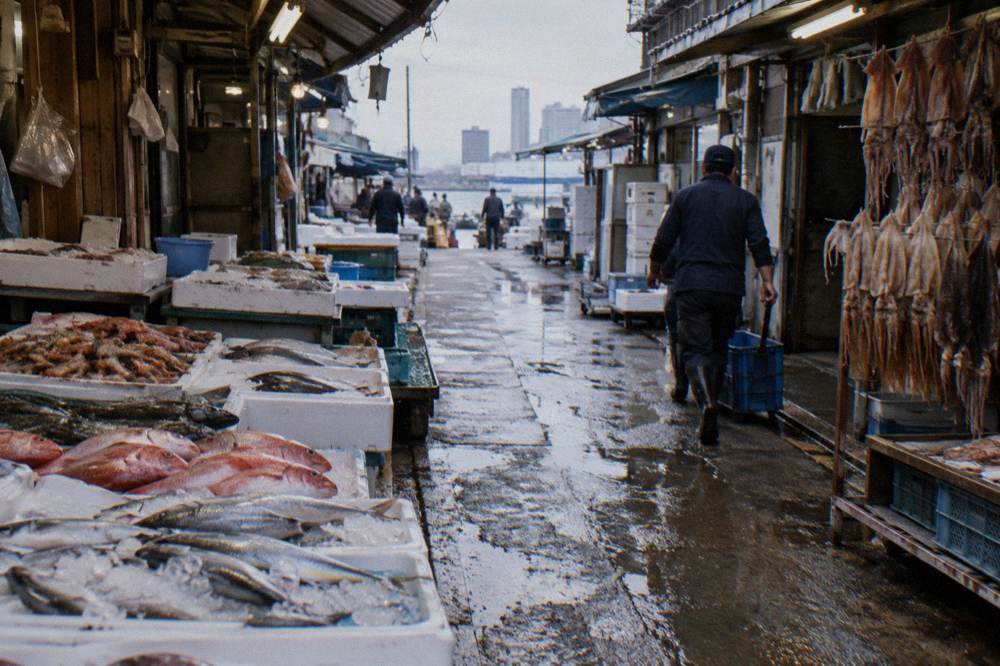
What Is Omakase Sushi And Is It Worth The Price?
Omakase means the chef decides: you surrender menu control and receive a sequence built that day around the best available fish. In Tokyo it is worth the price when you want counter craftsmanship and conversation, and the booked tour version from $130.73 per person bundles omakase-style sushi with A5 wagyu, rated 4.72 across 329 reviews across three hours.
The counter format is the point. You sit within arm's reach of the chef, pieces arrive one at a time at the temperature and seasoning the chef intends, and the pacing is part of the product. That intimacy is also the constraint: seats are few, bookings fill far ahead at famous names, and dietary restrictions are hard to accommodate mid-sequence because the menu is not fixed until the day. Anyone with a serious allergy should tell the operator before booking rather than at the counter, since the sequence cannot easily be rewritten on the night.
The tour version trades a little of that purity for practicality. Over about three hours it moves between sushi and premium wagyu, with a guide handling the logistics, which suits travelers who want the high-end tasting experience without researching individual counters in Japanese. Reviews at 4.72 across 329 are strong rather than flawless; the tour carries a 4.72 rating across 329 reviews, the recurring praise is the quality of both proteins in one evening.
It helps to set expectations about what omakase is not. It is not an all-you-can-eat format, it is not usually a place for substitutions, and it generally runs longer than a standard dinner, so arrive without a hard stop an hour in. Diners who treat it as a performance to watch, rather than a meal to rush, consistently report better value from the same seat.
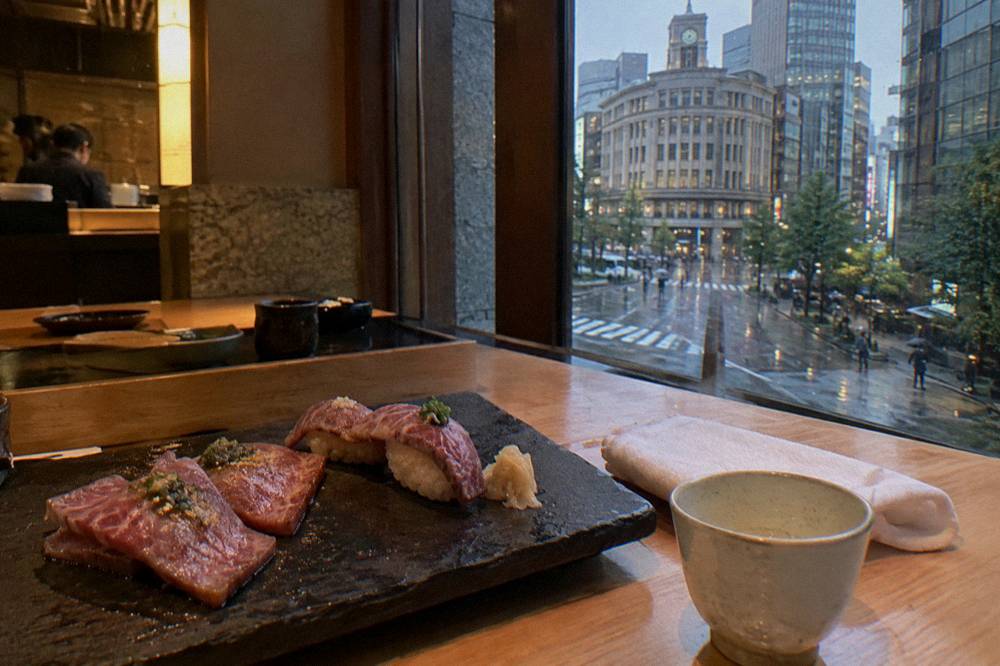
Can You Learn To Make Sushi In Tokyo?
Yes, and it is one of the best-value sushi experiences in the city. The 3-hour small-group class runs from $71.26 per person, rated 5 across 175 reviews, and teaches shaping nigiri and rolls in a real teaching kitchen. Classes suit families, groups and anyone who wants a souvenir skill rather than another restaurant meal.
The class works because it inverts the counter dynamic. Instead of watching a chef with two decades of knife work, you are the one with wet hands and a ball of seasoned rice, and an instructor corrects your grip until the piece holds together. Small-group sizing keeps the corrections coming. Three hours is long enough to make a real meal of the results, and the rating, a clean 5 across 175 reviews, reflects how consistently the format lands.
Class booking deserves the same care as counter booking. Sessions sell out in peak seasons, allergy needs should be messaged to the operator in advance, and the booking page states the exact meeting point. Japan's allergen labelling rules cover packaged food, with cashew nuts added to the specified list of nine items in April 2026, but restaurant and class kitchens fall outside that labelling duty, so a direct message before booking is the reliable route for anyone with allergies. For a wider comparison of hands-on formats, from ramen to wagashi, see the Tokyo cooking class guide on this site, or the dedicated Tokyo sushi making class page. Beyond this bowl, The Tokyo Food List lists 980+ restaurants sorted by cuisine and Google rating, with what to order at the ramen counters.
Classes also solve a specific Tokyo problem: the rainy day. The city's best cheap eating is outdoors, in market lanes and standing bars, and a week of weather can wash out half a food itinerary. A three-hour indoor session with a meal at the end converts a lost afternoon into the highlight of a trip, which is why many travelers now slot one into every visit regardless of forecast.
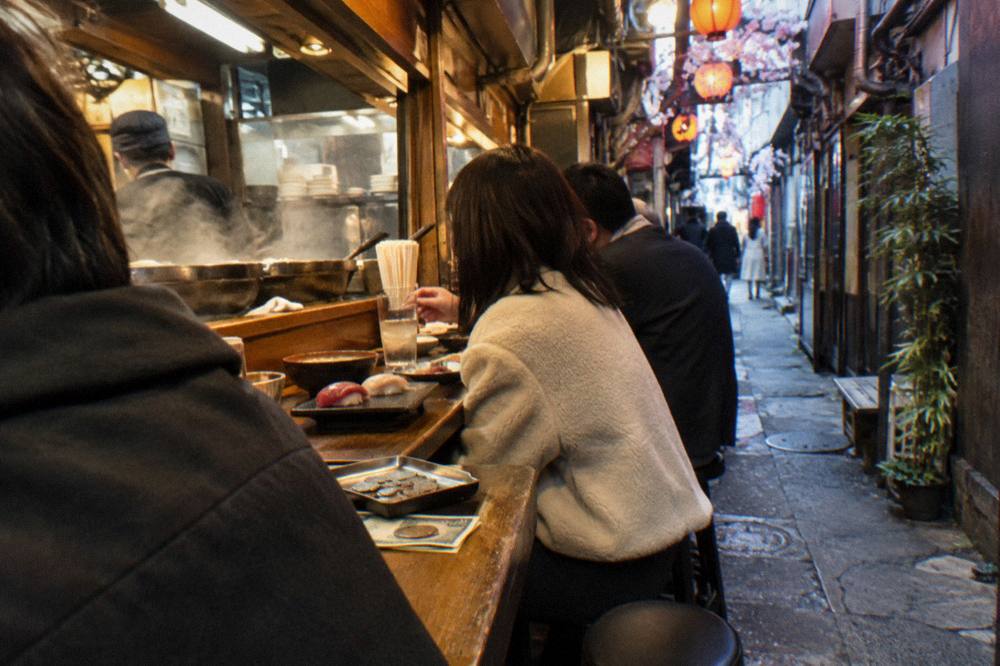
Where Do Locals Actually Eat Sushi?
Locals mostly eat sushi at conveyor chains, standing bars and neighborhood counters rather than famous destinations, spending 1,500 to 3,000 yen at chains and ordering single pieces at standing bars until full. Reservations matter mainly at high-end venues, while casual spots run first-come, first-served, often with cash preferred at independent shops.
Cash still matters more than many visitors expect. Independent restaurants and older counters often prefer it, even as mid-range and chain venues take cards and cashless payment without fuss. Cover charges and otoshi appear at izakaya-style places rather than sushi counters as a rule, but the habit of checking the door for a seating-charge notice before sitting down is a good one anywhere in the city. An ATM withdrawal before a market morning saves the scramble. If you're wondering what a full evening of eating should actually cost, the guide to typical Tokyo dinner prices lays it out from standing noodle counters to izakaya crawls.
| Local habit | What it looks like | What to do |
|---|---|---|
| Conveyor chain dinner | Touchscreen orders, plates from 110 to 150 yen | Slide in at off-peak times, no booking |
| Standing bar stop | Order two or three pieces at a time | Eat, pay, move on within 20 minutes |
| Neighborhood counter | Set lunch menus mid-range in price | Look for lunch deals, arrive early |
| Cash preference | Older independent venues | Carry yen, especially at markets and small bars |
Tipping is not part of the culture. The Japan National Tourism Organization states plainly that tipping is not common for services in bars, cafes, restaurants, taxis and hotels, and staff may chase you down to return money left by mistake, so pay the exact bill and leave it there. The same authority notes a rare custom called kokorozuke, a gratuity given from the heart in special situations, but visitors should assume it never applies to them. For a deeper dive into local eating patterns and where residents actually go, the where do locals go to eat in Tokyo post on this site covers the neighborhoods visitors usually skip.
Which Sushi Experience Should You Pick?
Pick a conveyor chain or standing bar for cheap everyday sushi, Tsukiji for market atmosphere in the morning, an omakase tour from $130.73 per person for a splurge evening, and a making class from $44.93 to $71.26 per person for a skill you keep. Budget travelers get the most from standing bars; families get the most from classes.
The honest frame is time of day. Mornings belong to the market: Tsukiji's shops are liveliest before early afternoon, and a guided walk there fills a morning cheaply. Evenings belong either to a counter, omakase-style, or to a class, because most teaching kitchens run afternoon and early-evening sessions that end with you eating your own work.
Budget is the second filter. Nothing in this guide's cheap tiers requires booking anything, which is exactly why they are the locals' tiers. Everything above the street-food price band is a booked product, and at that point the question is which structure you want: eating, watching, or doing. On that last point, this site's own take, laid out across Tokyo Food Tours, is that the doing versions hold up best as memories.
Party composition is the third filter, and the one travelers forget. Solo diners thrive at standing bars and counters, where single seats are normal. Couples splitting a splurge get the most from the omakase tour. Families with children do best in a class, because a teaching kitchen tolerates fidgeting in a way a silent counter does not. Match the format to the group before matching it to the budget, and most disappointment disappears.
Common Questions About Sushi In Tokyo
What Are The Best Ways To Eat Sushi In Tokyo?
Conveyor-belt chains for speed and price, standing bars for cheap chef-cut nigiri, market counters at Tsukiji for atmosphere, booked omakase counters for a splurge, and hands-on classes if you want to make it yourself.
How Much Does Sushi Cost In Tokyo?
A conveyor meal typically totals 1,500 to 3,000 yen, standing-bar nigiri runs about 90 to 500 yen per piece, and the official survey average for a restaurant serving of nigiri is 1,592 yen. Booked experiences start from $44.93 per person for a class.
Is Tsukiji Still Worth Visiting For Sushi?
Yes. The Outer Market keeps hundreds of independent shops, opening hours that vary by shop, and some of the cheapest fresh fish in the city. Check the official closure calendar before you go, since many shops close Sundays, holidays and some Wednesdays.
Can You Learn To Make Sushi In Tokyo?
Yes. The 3-hour small-group class runs from $71.26 per person and is rated 5 across 175 reviews, and a 90-minute Asakusa class with matcha and unlimited sake starts from $44.93 per person.
Do You Need Reservations For Sushi In Tokyo?
Only at popular and high-end counters, where booking ahead is sometimes required and no-shows can carry fees. Conveyor chains, standing bars and most market stalls are first-come, first-served.
Is Tipping Expected At Sushi Restaurants In Tokyo?
No. Tipping is not common in Japanese restaurants, and staff may return money left by mistake. Pay the exact bill, and expect any service charge to be stated on the bill itself.